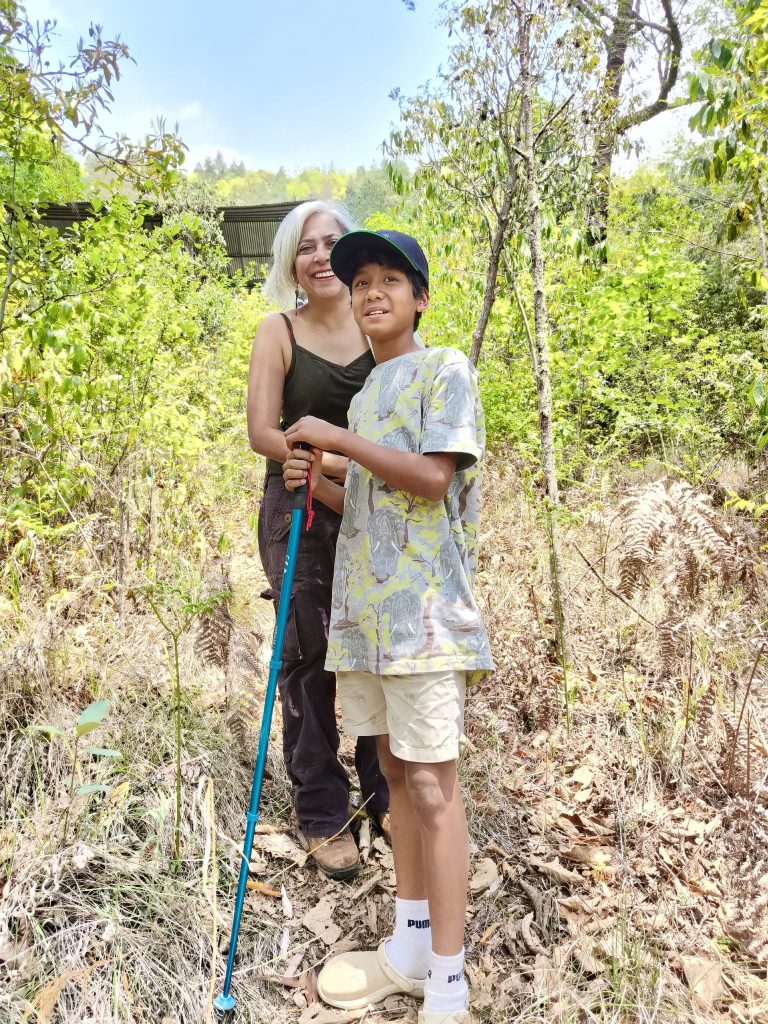
This story began as a journey with my children, when they were seven and eight. We had gone for a farm stay in Shergaon that bred rainbow trout, walked through an old juniper-covered forest, climbed toward ancient ruins, crossed suspension bridges, and visited one of the oldest gompas of the region. Later, the journey became a poem we wrote together.
The children remembered the puppies, the pebbles, the horses, and the waterfall. I remembered the butter tea, the hostesses, the prayer flags, and the feeling that nature had spoken to all of us in the same language.
Shergaon
Into the mountains we went, walked along streams of gurgling waters,
dappled in sunlight and mist.
Lost in the forest of old trees, we counted 32 shades of green at a glance,
while birds with iridescent feathers flit among juniper trees.
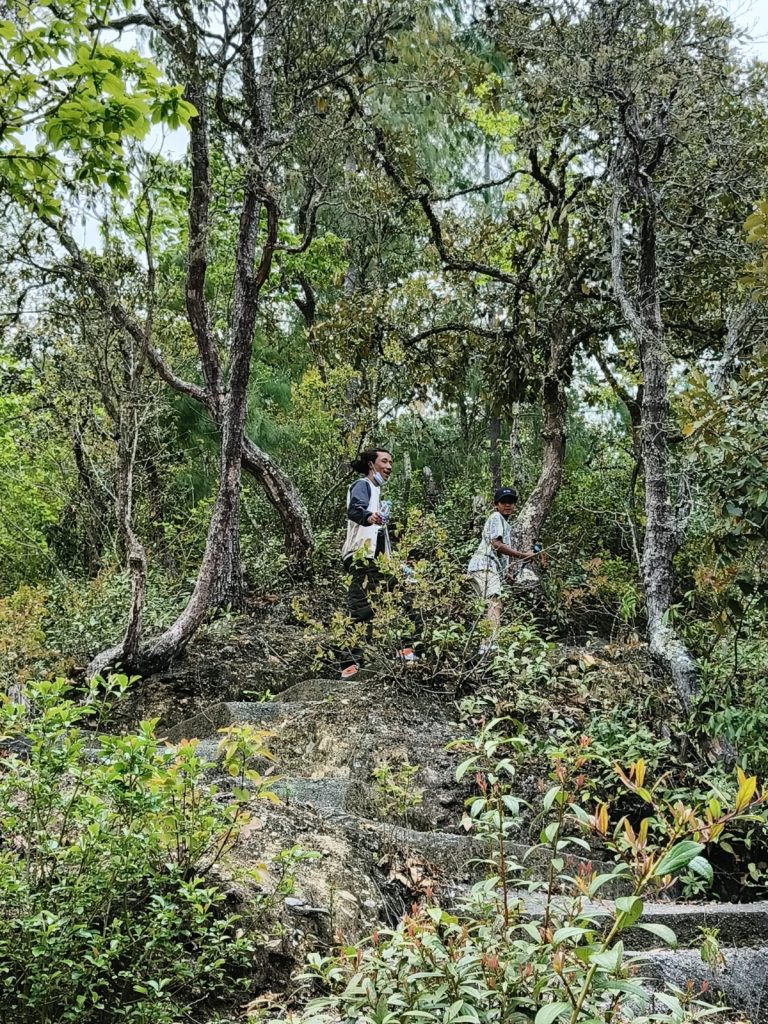
Climbed steep slopes full of pine and rhododendron to
explore ancient ruins.
Hopped over boulders smoothened by the river, to wade under the waterfall,
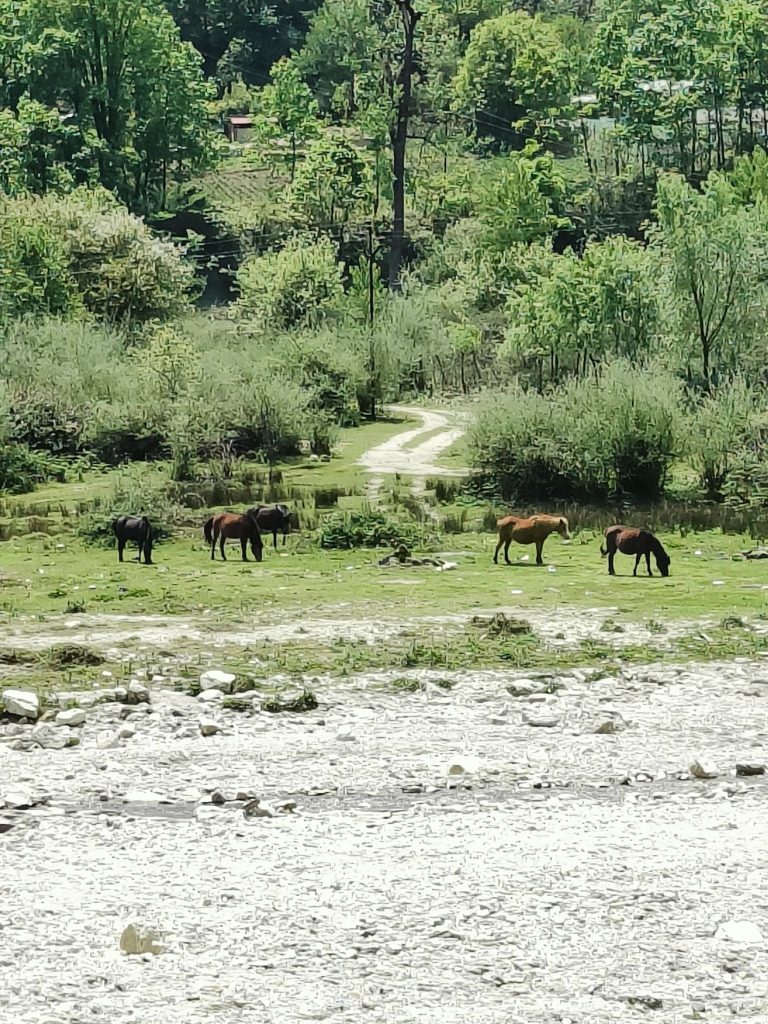
and skipped pebbles by a meadow while horses grazed nearby.
Hostesses offered me butter tea and showed their finery while
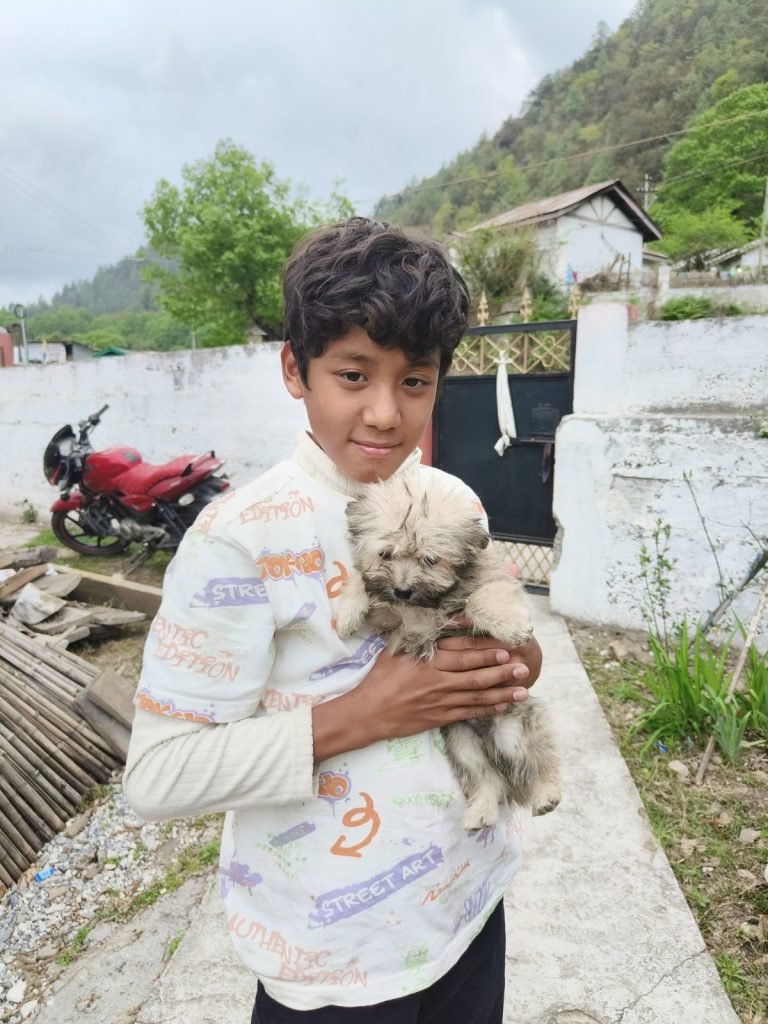
kids played with furry puppies.
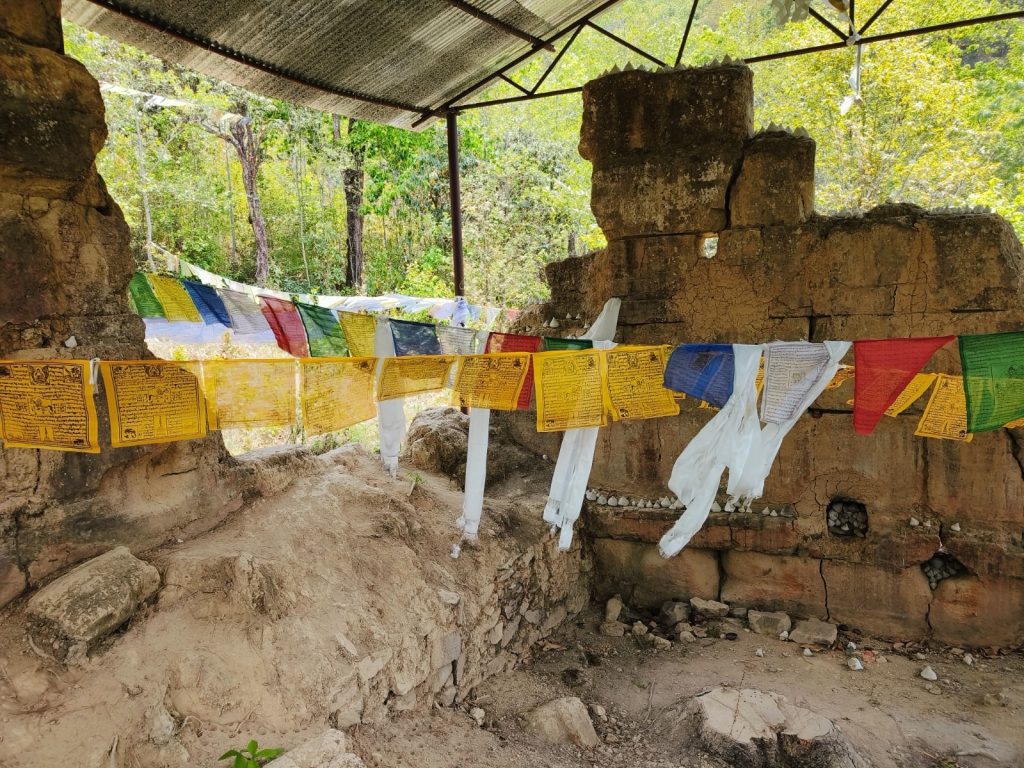
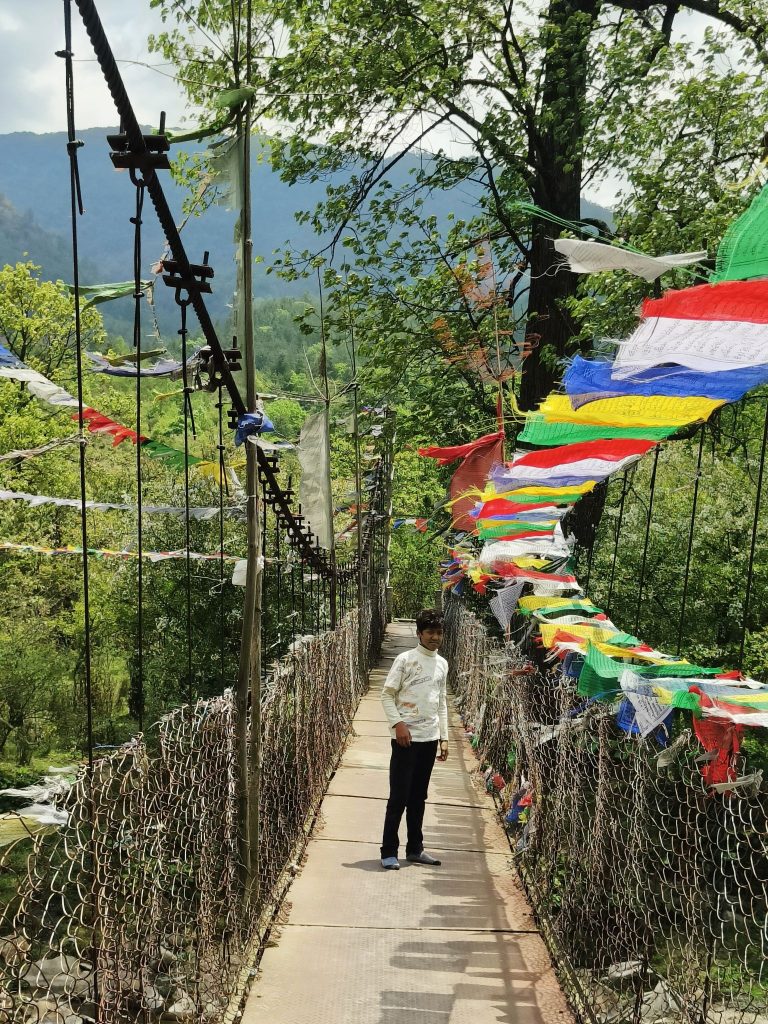
Swayed on suspension bridges, decorated with colourful prayer flags, to
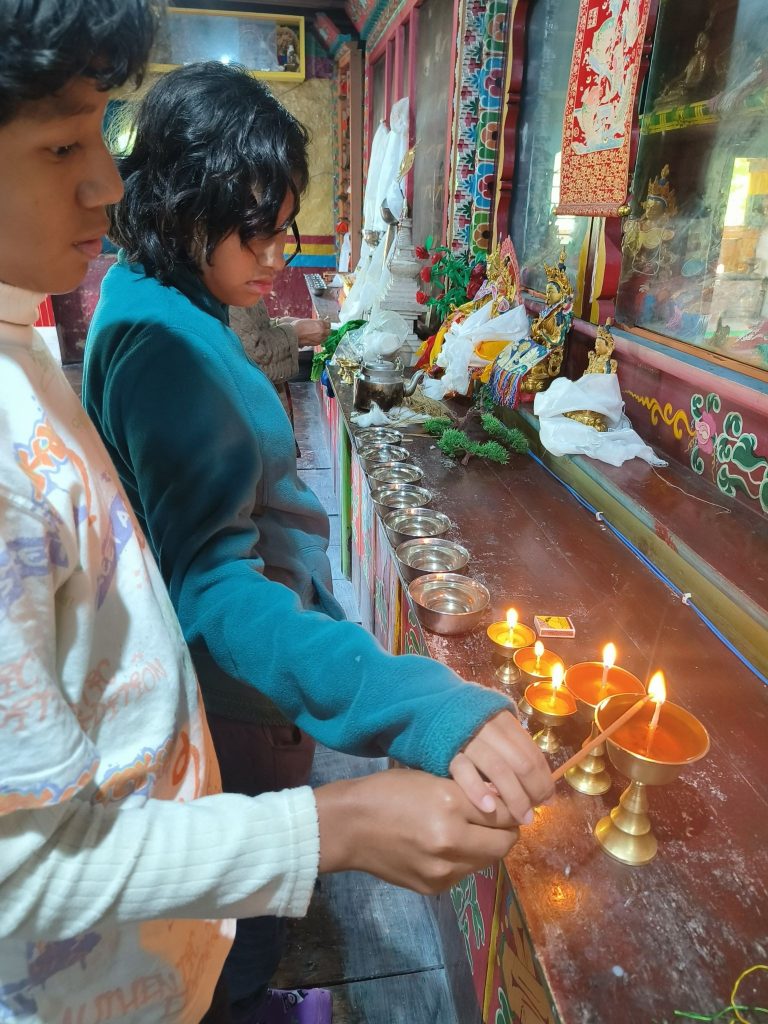
light oil lamps in a 500-year-old Buddhist monastery and expressed our gratitude.
Slept in a farm full of apple trees, sheep, rainbow trout, and oh, the view
made me realize it didn’t matter how old we were — nature enthralled us all.
Good God! Did we just spend two days in paradise?
A Valley That Teaches You to Walk Slowly
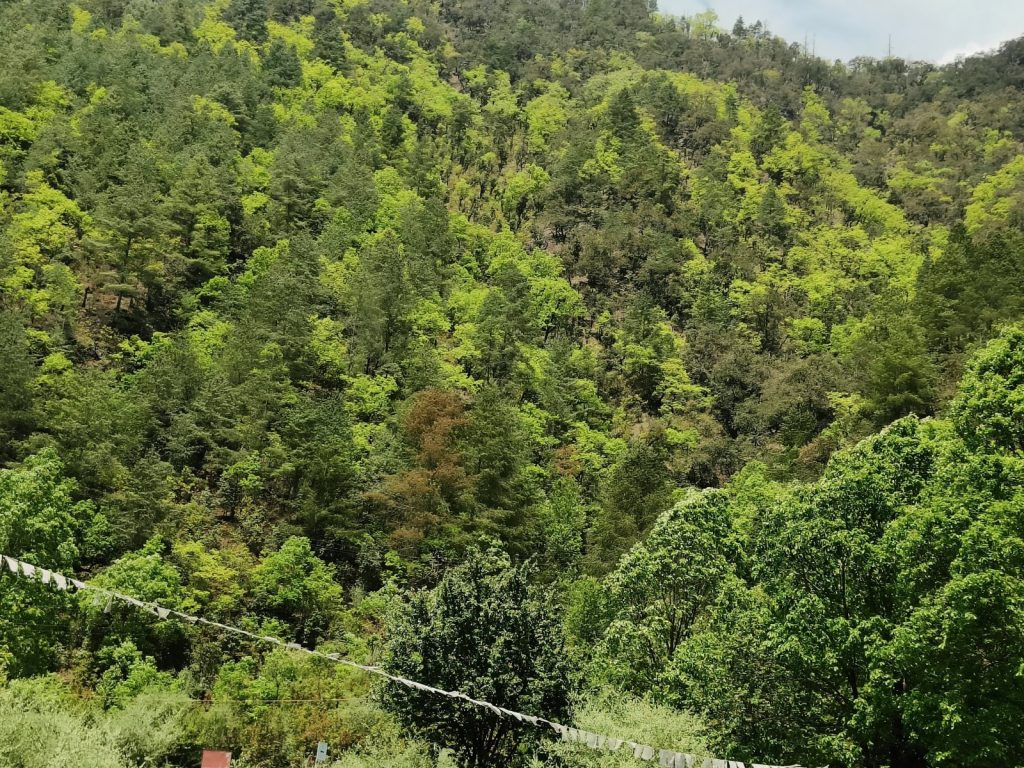
Shergaon is not a destination to be consumed in a checklist. It is better understood as a place of pauses. A stream forces you to stop and listen. A forest trail asks you to notice the difference between pine, rhododendron, moss, and juniper. A monastery courtyard slows your speech. Even the mist seems to have its own discipline, arriving without drama and leaving without farewell.
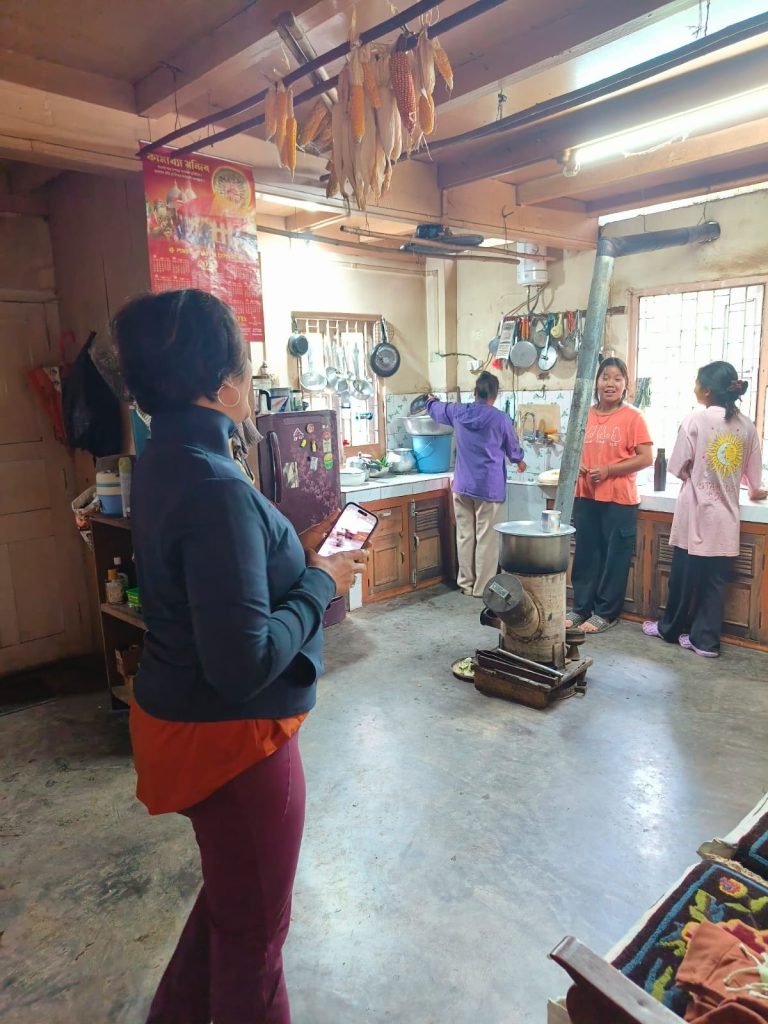
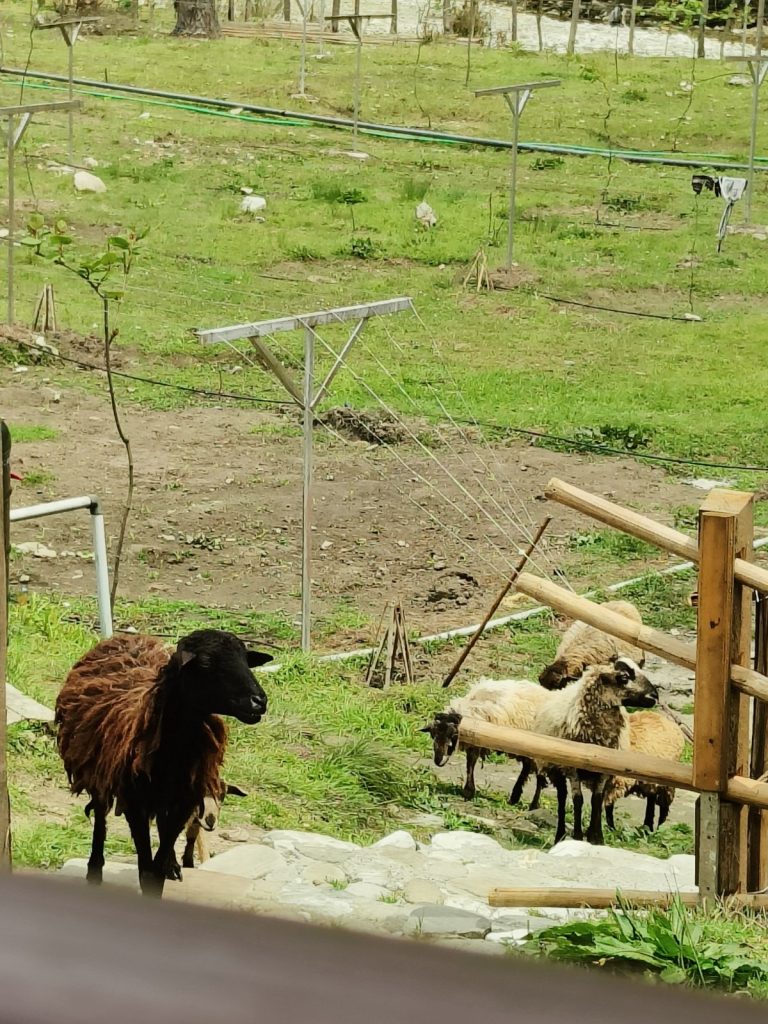
The Sherdukpen landscape is often described through its relationship with orchards, rivers, and forests. Arunachal Living Heritage notes that Sherdukpen habitats such as Rupa, Jigaon, and Shergaon lie in orchard valleys with kiwi, walnuts, grapes, plum, rhododendrons, and sparkling streams. These details are not merely scenic. They explain why Shergaon feels intimate rather than grand. The beauty here is close to the body: a cup of butter tea in the hand, damp leaves underfoot, puppies tumbling in a courtyard, oil lamps glowing inside a gompa.
Shergaon and the Sherdukpen World
To write about Shergaon responsibly is also to write about the Sherdukpen people. The Sherdukpens are one of Arunachal Pradesh’s indigenous communities, living in the mountains of West Kameng. Their traditional houses were built using local bamboo, wood, and stone, an architectural knowledge system closely tied to climate, available materials, and community life.
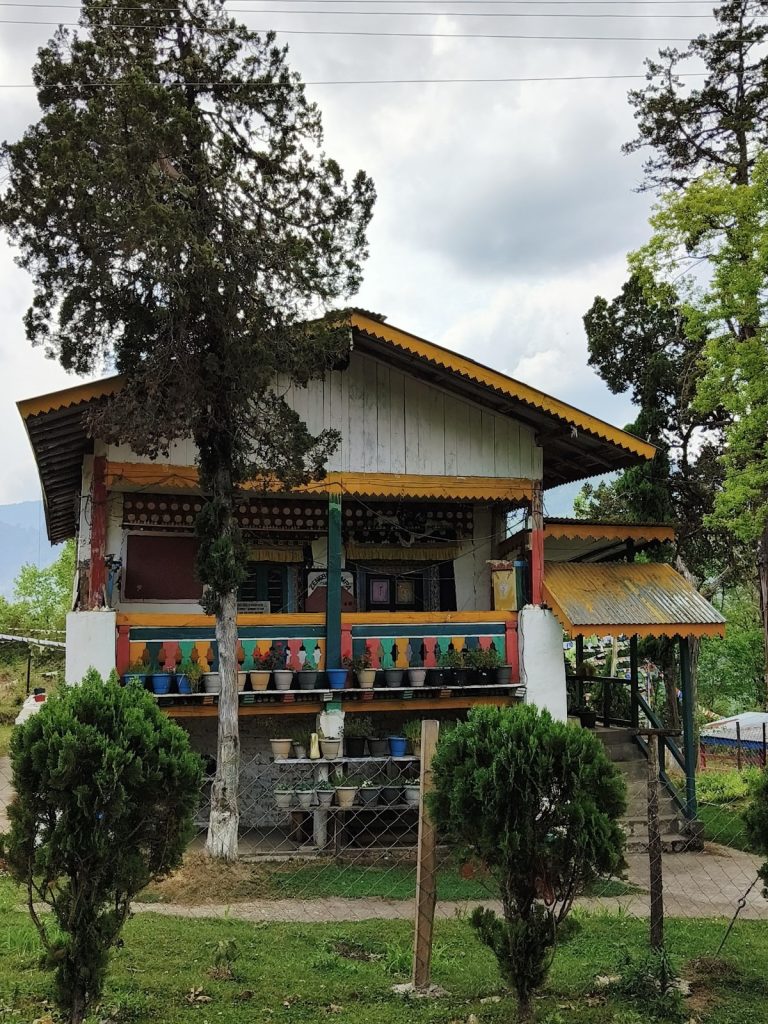
Their spiritual life also reflects layers of continuity and change. Arunachal Living Heritage records that the Sherdukpens traditionally worshipped nature and were animists, and later adopted Mahayana Buddhism in the 17th century. Today, Buddhist rituals, monasteries, festivals, and nature reverence continue to shape cultural life. In the experience of travel, this means Shergaon should never be treated merely as a “hidden gem.” It is a lived homeland, and the traveller’s role is to arrive with humility. A good journey in Shergaon is not only about where you go. It is about who helps you understand what you are seeing.
Closing Reflection
Shergaon gave us two days that felt larger than their duration. It gave us a farm, a forest, a monastery, and a poem. It gave my children the memory of being small in a big landscape without feeling lost. It gave me the reminder that travel, at its best, does not make us conquer distance. It makes us more grateful for closeness: to land, to people, to silence, and to each other.
Some journeys are too abstract for children. Shergaon was not. It offered everything a child understands instinctively: water to touch, stones to jump on, animals to watch, trees to count, bridges to cross, butter tea to taste, lamps to light, and a farm to sleep in. The old juniper forest became a lesson without becoming a lecture. The monastery became gratitude without needing explanation.
When we returned, the poem became our way of keeping the journey alive. The line about 32 shades of green still feels like the most accurate description of Shergaon. Not because we counted scientifically, but because the children were trying to say something adults often forget: nature is never one colour, one mood, or one meaning.
Good God — did we just spend two days in paradise?
Why a Good Local Guide Matters
Shergaon rewards curiosity, but it does not reveal itself fully to the unguided eye. A knowledgeable local guide can transform a simple walk into a layered experience. The old forest is not just a forest; it may carry stories of plants, weather, trails, birds, and village use. A gompa is not just an old building; it is a living sacred space with etiquette, history, and ritual meaning. A suspension bridge, a farm, a meadow, or a ruin can all become meaningful when interpreted by someone who knows the land from within.
A good guide also helps guests travel respectfully. They can advise when to remove shoes, when photography is inappropriate, how to greet elders, which trails are safe after rain, and how to avoid disturbing village routines. In remote Himalayan regions, the guide is not an accessory; the guide is the bridge between visitor and place.
How to Reach Shergaon from Guwahati
For many travellers, Guwahati is the most practical entry point because it is well connected by flights and trains. The official West Kameng district page states that travellers can reach West Kameng via Guwahati and Tezpur in Assam, then continue by road toward Bomdila, with Bhalukpong serving as an entry and exit point into Arunachal Pradesh.
From Guwahati, travellers usually hire a private cab or travel by a combination of public transport and local taxi. A six-hour drive from Guwahati there are two main road options. The first goes through Guwahati–Nagaon–Tezpur–Balipara–Charduar–Bhalukpong–Tenga–Rupa–Shergaon. The second goes through Guwahati–Orang–Balemu–Kalaktang–Shergaon. In practice, mountain travel times can vary with weather, roadwork, landslides, check gates, and stops, so it is wise to begin early and avoid planning a rushed arrival.
How to Reach Shergaon from Itanagar
Travelling from Itanagar or the nearby Hollongi/Donyi Polo Airport is also possible, especially for those already in Arunachal Pradesh. From Itanagar, travellers can either arrange a private cab or combine state transport services with local transfers.
Where to Stay in and Around Shergaon
Shergaon is best experienced through stays that keep you close to the land. A farm stay is especially meaningful for families because children do not merely visit a destination; they inhabit it. They wake to animals, orchards, trout ponds, morning mist, and the changing light on the hills. Homestays also help travellers experience local food, family rhythms, and village hospitality.
Practical Planning Notes
Travellers to Arunachal Pradesh should check current Inner Line Permit requirements, local transport schedules, weather conditions, and road updates before departure. Mountain itineraries should allow buffer time, especially when travelling with children or older family members. Shergaon can be combined with Rupa, Bomdila, Dirang, Sangti Valley, or onward routes toward Tawang, but it also deserves to be experienced as a destination in its own right.
Above all, do not arrive in Shergaon only to pass through it. Stay. Walk. Listen. Take a guide. Drink the tea offered to you. Let the children lead you toward the stream. Let the mist decide the pace of the day.