In Nagaland’s Angami village, a heritage walk moves from terraced rice fields and warrior history to honesty shops, a living morung, women’s lullabies, and a forest shaped by conservation.
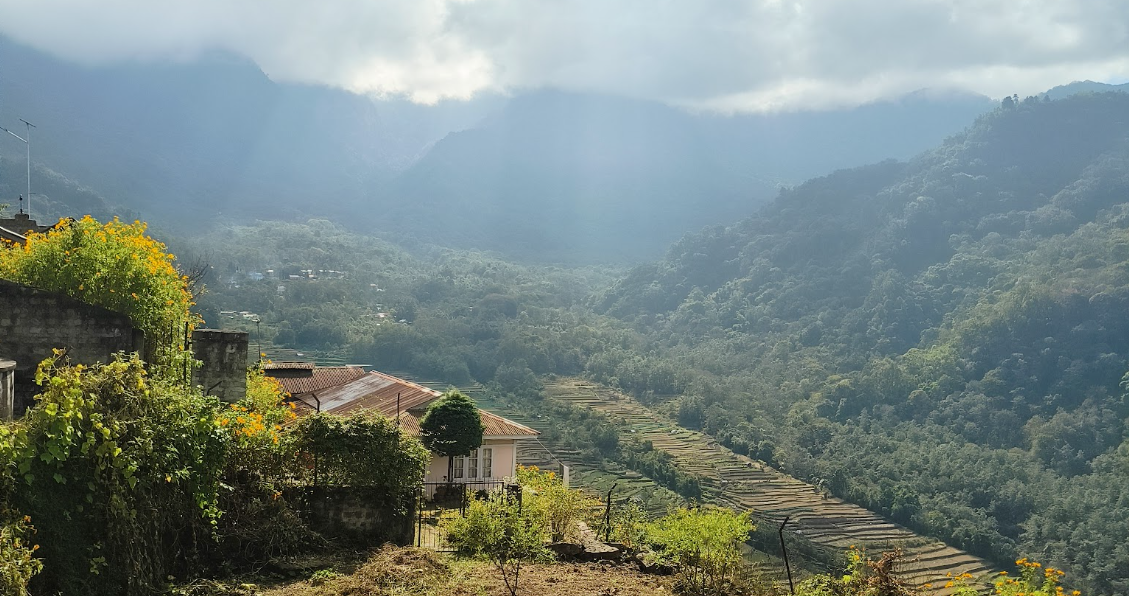
Khonoma, from the road, appeared on the green shoulder of the hills, with houses rising in layers above the paddy fields. Forest climbed the slopes beyond them. The busy streets of Kohima were only about 20 kilometres away, but the pace here felt entirely different. Away from the loud traffic, congested roads and the concrete urbanization, I remember catching my breath – here is the Nagaland I dreamt of seeing.
My team had arranged a heritage walk with local guides, and I quickly understood why Khonoma is best explored on foot. The village is not a single monument that can be photographed and ticked off. Its history is spread through steep lanes, stone steps, terraces, homes and community spaces. The Angami settlement is often described as around 700 years old, and it is remembered for its resistance to British colonial rule. Even the landscape seems to carry that memory. Khonoma does not present its past as a distant chapter; it lets you encounter it in the paths you climb, people you cross path with carrying baskets, child giggling and playing in the corners. An old man sat on a wall overlooking the paddy fields below sipping his tea slowly with no curiosity on our eager glances.
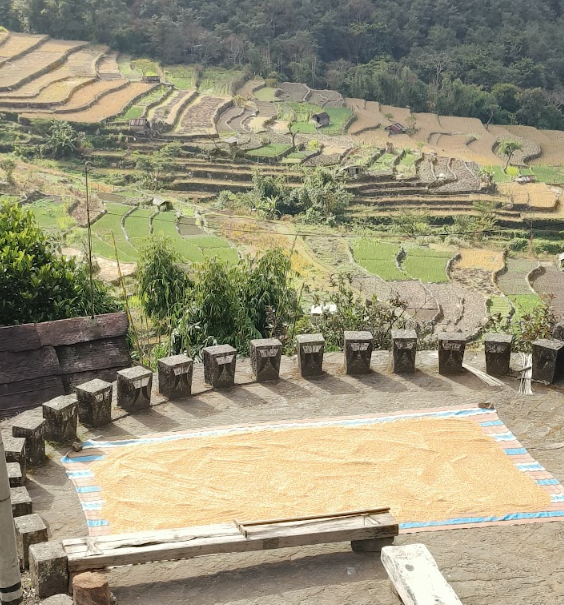
The paddy-field wall
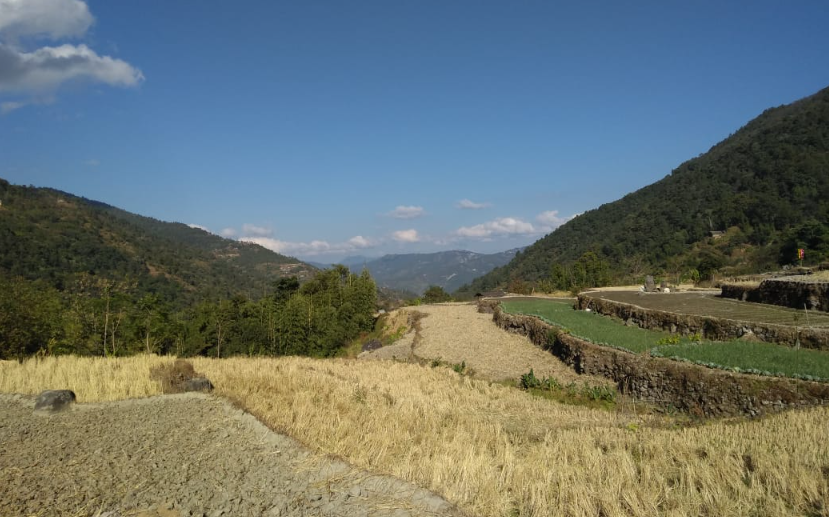
The first part of the walk took us down towards the terraced rice fields. I stopped beside a low stone wall that held one level of the paddy landscape above another. It was a modest structure, weathered and practical, but it changed the way I saw the valley. The terraces were not simply beautiful green shapes from a viewpoint. They were working fields, carefully held in place by generations of labour and local knowledge.
Water, soil and slope had been made to cooperate. The wall marked the edge of a field, but it also seemed to mark a relationship between the village and its surroundings. Research on Khonoma describes terrace paddy cultivation, alder-based jhum farming and protected forest as interdependent parts of one local system. Standing there, I could see the idea without needing a lecture: the village, the farms and the forest were not separate attractions.
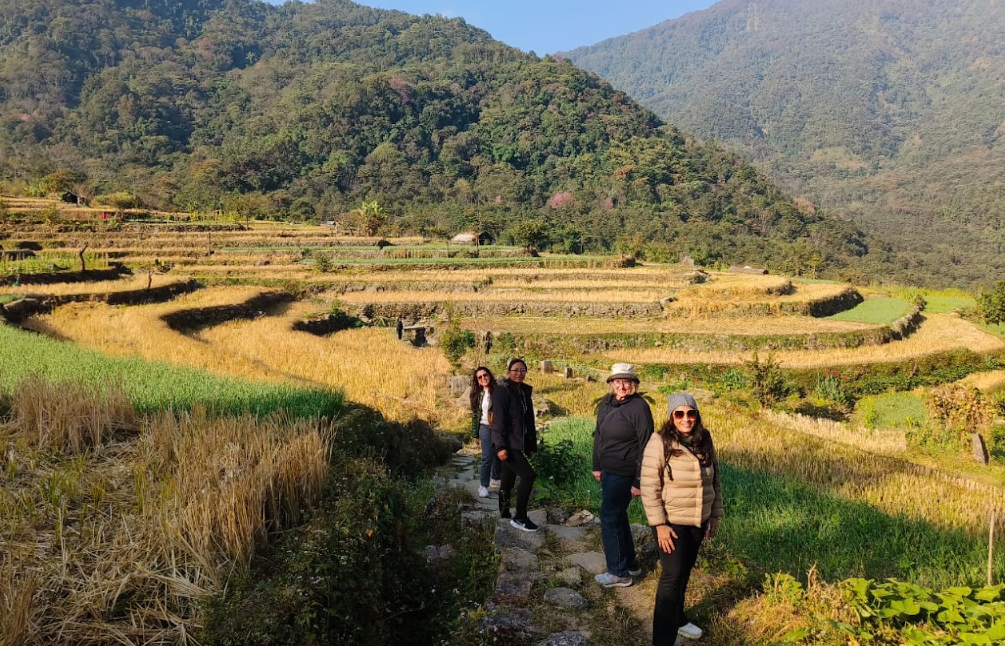
The walls also made the walk wonderfully slow. A heritage trail in Khonoma is a series of pauses. You look across the fields, then turn to notice a carved detail on a house. You hear a bird somewhere beyond the path. You step aside for someone carrying a basket. The landscape keeps interrupting the itinerary in the best possible way.
Homes, lanes and a village that trusts you
Back in the village, the lanes rose and narrowed between houses. Stone, timber, bamboo and metal roofs came together in an architecture that felt both sturdy and warm. Some homes had the steep, practical character of mountain buildings, while bamboo details softened the harder surfaces. The older village houses were traditionally built from mud and bamboo, although many homes today are made from brick and concrete with tin roofs.
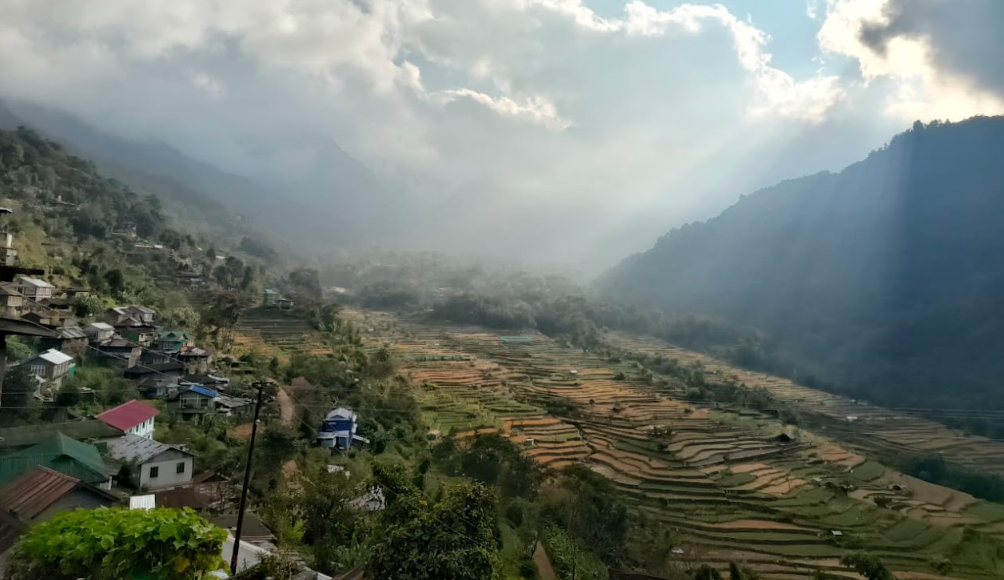
That mixture of old and new is part of Khonoma’s charm. It is easy to romanticise a village by imagining it frozen in a perfect traditional past. Khonoma is more interesting than that. It is inhabited, adapting and working. Its architecture shows continuity without pretending that life has stood still.
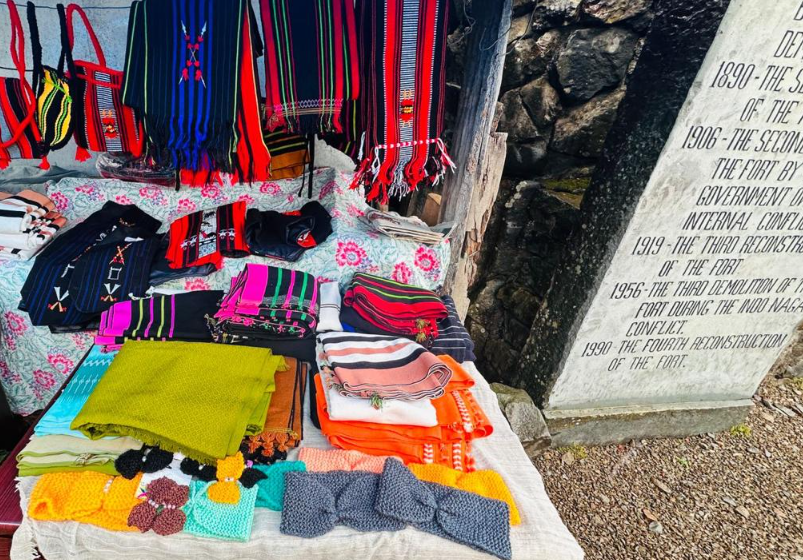
Then we came across the open-air shops. There was no attendant behind a counter, no shopkeeper calling out, and no queue. Produce and small local goods had been arranged in the open. A price list explained what each item cost. Beside it sat a jar or cash box. We chose what we wanted, worked out the total and placed our money inside.
The simplicity of the arrangement made it quietly extraordinary. It depended on the buyer being honest when nobody was watching. The shopkeeper’s absence was not a lack; it was the whole point. In a place that receives visitors, trust has been made visible in a very practical form.
A lullaby in the village
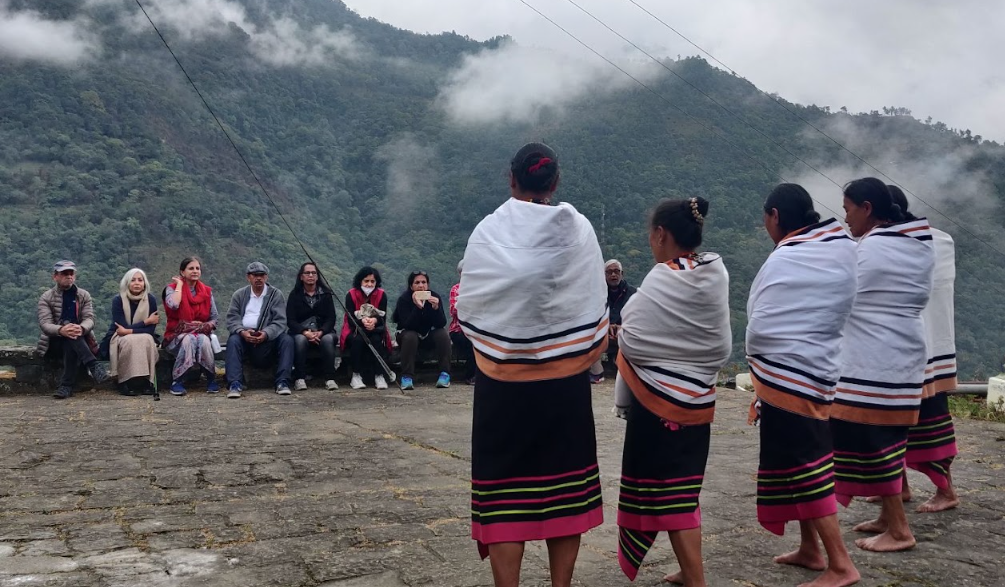
Later, the women’s performance brought another kind of quiet to the day. They sang a traditional lullaby, their voices carrying the song’s tenderness and restraint. I could not understand every word, but I understood the feeling of a song passed through memory: something made for comfort, belonging and the intimacy of home.
It would have been easy to treat the performance as a colourful cultural stop on a tour. Instead, the women’s voices made me think about how much of a place survives through ordinary acts. A lullaby is not usually performed for an audience. It belongs to childhood, family and repetition. Hearing it in Khonoma felt like being allowed a glimpse of a living tradition rather than being shown a museum piece.
The performance also changed the mood of the walk. The village’s history includes battles, hunting traditions and conservation debates, but its culture is not only made of heroic stories. It is also made of songs, weaving, food, work and the ways people care for one another.
Inside the Morung
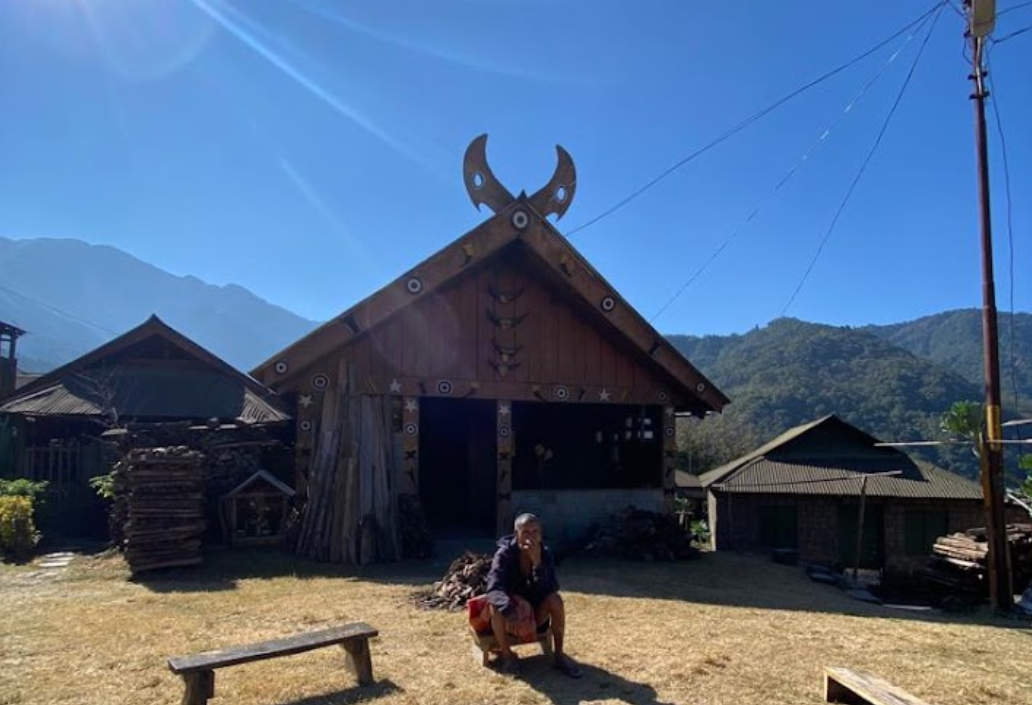
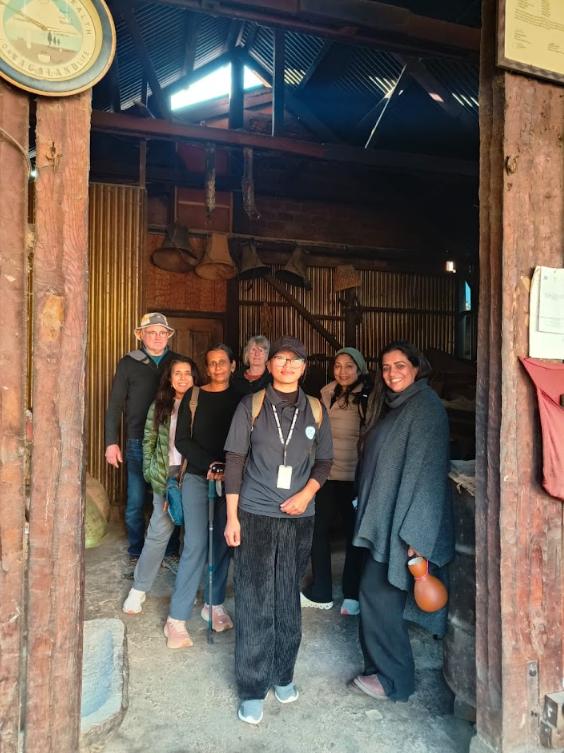
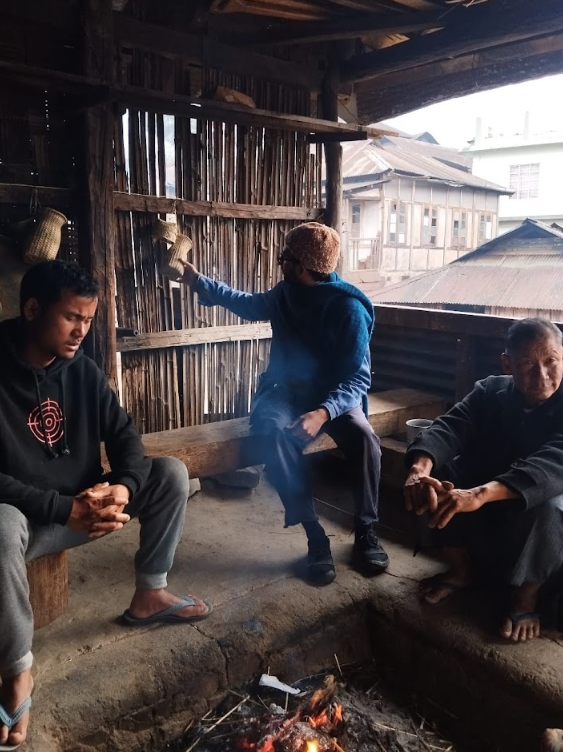
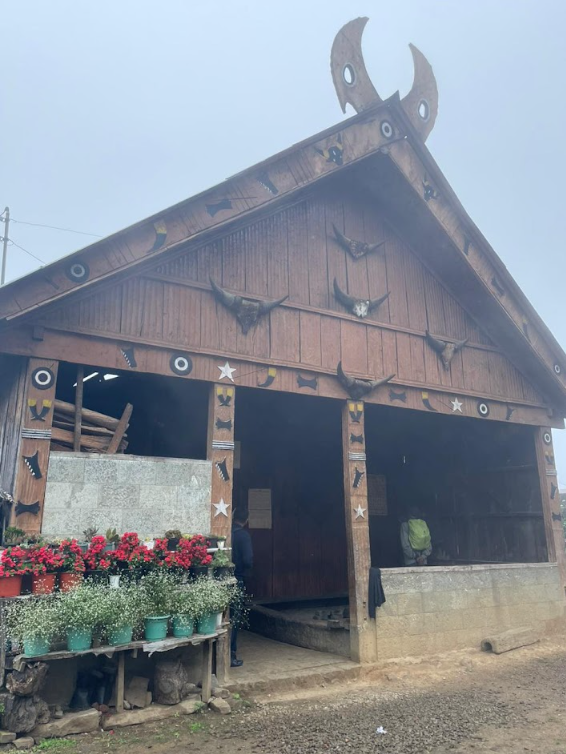
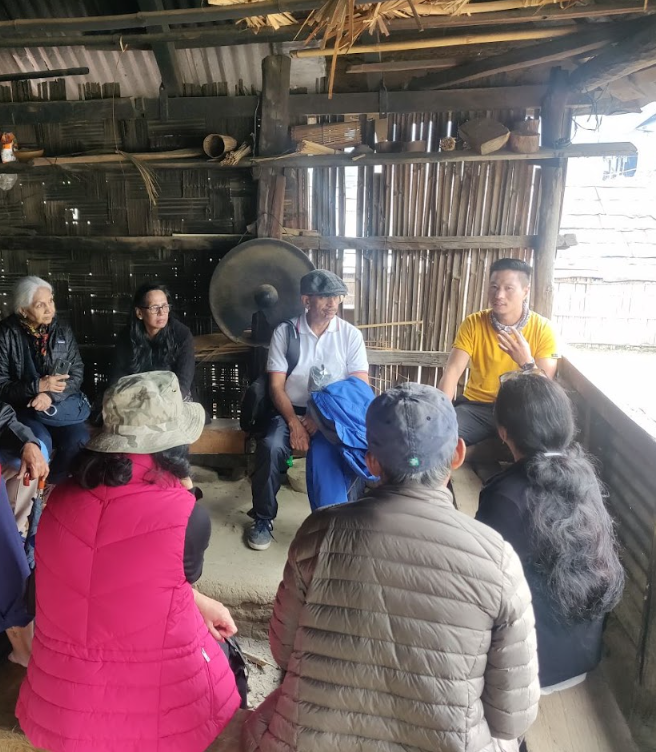
We also entered a morung, one of the spaces that helped me understand the social structure behind Khonoma’s public life. Traditionally, the morung was associated with young men, initiation and the training of warriors.
Inside, the space felt communal rather than decorative. I imagined how knowledge would once have moved through such a room: through stories, instruction, craft, memory and the presence of older people. The morung was not just a building. It was a way of preparing the next generation to take part in the life of the village. Also help to gather the young men quickly in the old days if the village fell to attack.
That sense of collective responsibility appears elsewhere in Khonoma too. Families, age groups and community bodies have long shared responsibilities during village events. The idea of belonging is not expressed only in speeches; it is organised into everyday life.
Why Khonoma is called a Green Village
Khonoma’s green reputation is not simply about clean lanes or a dramatic forest backdrop. It comes from a difficult community decision. In 1998, the village established the Khonoma Nature Conservation and Tragopan Sanctuary to protect the endangered Blyth’s tragopan and other wildlife and plant species. A wider ban on hunting and logging followed in 2001.
The change mattered because hunting had been part of Angami life. It was not a rule imposed on an unrelated landscape. It was a village debating how to protect its future while confronting a practice embedded in its past. The sanctuary covers about 20 square kilometres of subtropical forest, and the conservation model is community-led.
The forest is also part of the village economy and food system. Khonoma’s fields produce rice and other crops, while alder trees are used within farming systems that help renew the soil. In the jhum cycle described by the Dastkari Haat Samiti collection, plots are cultivated for a few years and then left fallow so they can regenerate.
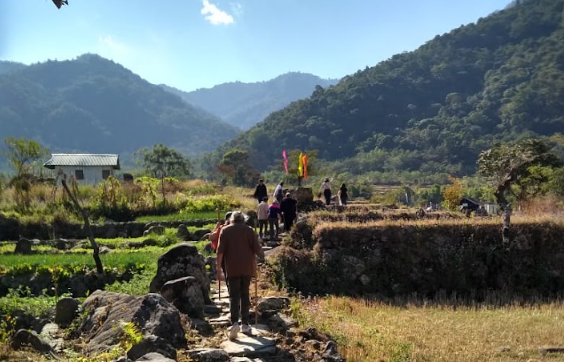
As we walked towards the forest, wild apple trees became part of the conversation. Khonoma’s community forest is known for its variety of wild fruits; one study recorded 57 species. The fruit is not an ornamental detail in this story. It can be eaten, processed and sold, connecting biodiversity to food and livelihood.
We also heard about the village’s mithuns, the sturdy cattle of the Naga hills. Khonoma now has a community-participatory mithun conservation and propagation unit, where traditional knowledge is combined with more controlled, semi-intensive management. The ICAR National Research Centre on Mithun reports about 600 animals at the Khonoma facility. This was a useful reminder that conservation is not only about keeping people out of forests. It is also about finding better ways for people, animals, farms and forests to continue together.
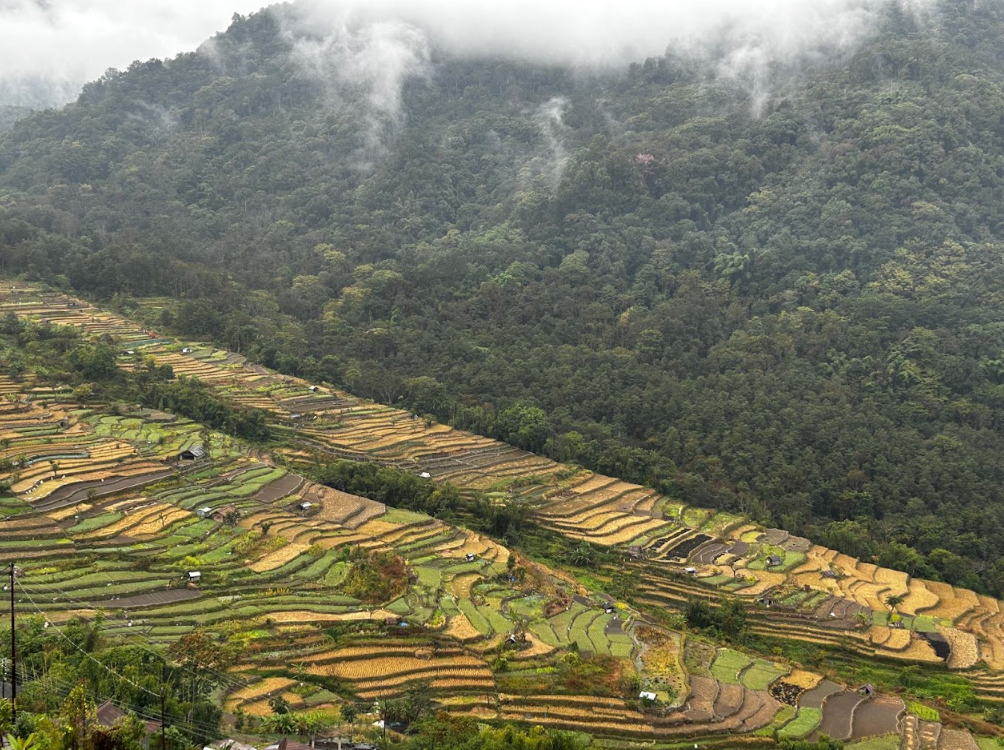
The forest itself felt larger than a sightseeing stop. The green canopy holds the possibility of birds, rare plants and mammals that are easy to forget when a landscape is reduced to a view. The Khonoma sanctuary is recognised as a site of biodiversity importance, including habitat for Blyth’s tragopan and species such as hoolock gibbon, serow and barking deer.
Leaving Khonoma
By the time we began walking back, the village had gathered into a single impression: stone walls holding rice terraces; timber and bamboo details along steep lanes; a jar waiting for an honest payment; women’s voices carrying a lullaby; a Morung holding the memory of collective education; and forest beyond the houses, protected because the community decided that its future depended on protection.
Khonoma is often introduced as Asia’s first Green Village, but that label can make the place sound finished. My visit suggested something more active. The village is still negotiating the balance between tradition and change, tourism and local life, conservation and livelihood. Its achievement is not that it has escaped modern pressures. It is that the community continues to face them through institutions and choices of its own.
I was grateful to the adventure team and local hosts who made the walk possible, but the strongest guide was Khonoma itself. It asked me to look closely: at the wall beneath the paddy field, the price written beside the produce, the grain of a wooden beam, the expression of a singer, and the forest line beyond the last house. By the end of the day, I had stopped seeing these as separate experiences. They were all parts of the same story—one in which culture, trust, agriculture and conservation are held together by the people who call Khonoma home.
References
[1] [1] Khonoma Village — Tourism Nagaland
[2] [2] How India’s First ‘Green Village’ Turned Hunters Into Conservationists
[3] [3] Idyllic Khonoma: Sustainable Village Life — Google Arts & Culture
[4] [4] Bioresources of Nagaland: A Case of Wild Edible Fruits in Khonoma Village Forest
[6] [6] Khonoma Nature Conservation and Tragopan Sanctuary — Key Biodiversity Areas Factsheet