Some festivals entertain us; others rearrange how we see a place. Nagaland’s Hornbill Festival belongs to the second category. I arrived expecting colour, textiles, drums, and dance, but left with a deeper understanding: culture is not a performance assembled for visitors. It is a living relationship between people, land, memory, food, music, and pride.
Held each December at Kisama Heritage Village near Kohima, the ten-day festival was conceived in the year 2000 by the Government of Nagaland to bring the state’s traditions together. Nagaland Tourism calls it the “Festival of Festivals,” with performances, games, handicrafts, cuisine, music, village walks, outdoor activities, and cultural exchange. Yet the most affecting moments are intimate: a pause before a dance, an explanation of a woven motif, or an invitation to taste something unfamiliar.
More than a colourful spectacle
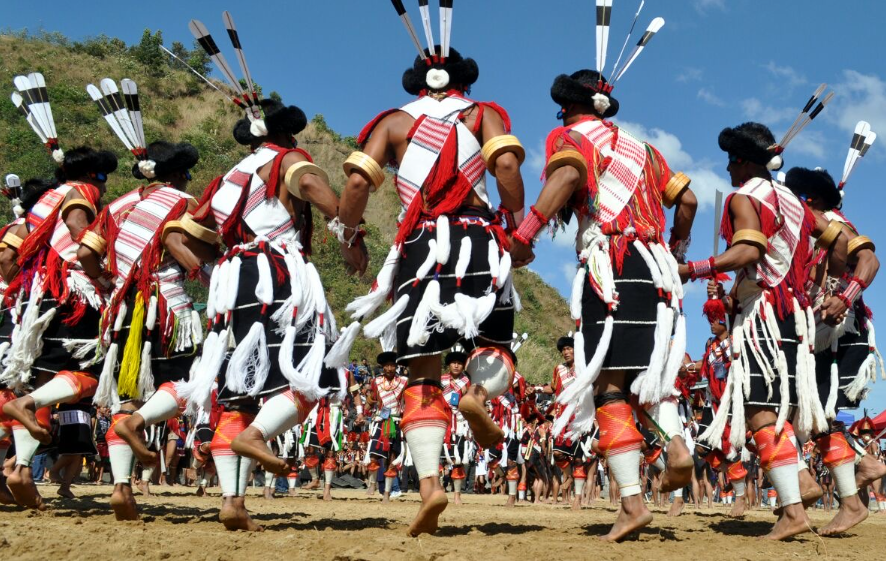
What I find most compelling about Hornbill is the tension between unity and individuality. Communities including the Angami, Ao, Lotha, Sumi, Konyak, Khiamniungan, Phom, Yimchungrü, Zeliang, and Chakhesang gather here, each retaining its own visual language, rhythms, foods, and stories. A vigorous dance can lead to a conversation about shawls, beads, bamboo, farming, or the meaning of an ornament.
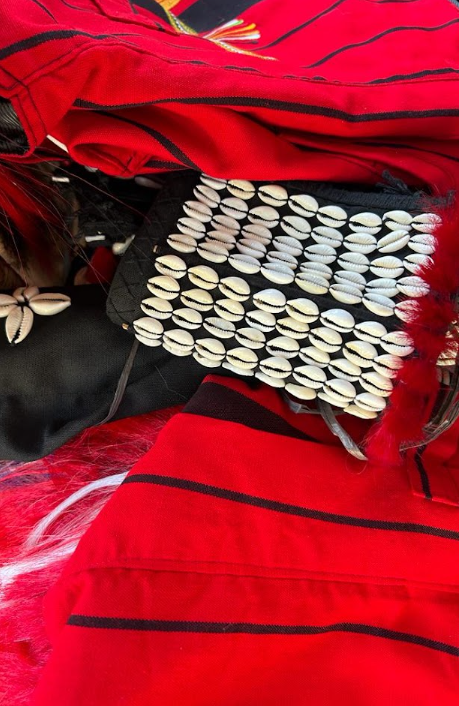
The retail section is not an optional stop. I would give it real time: the quality of the textiles, bamboo, terracotta, and jewellery is striking. Flavoured teas and perfumes sit alongside traditional craft, showing that heritage is not frozen in the past but being redesigned and carried forward by young Naga makers.
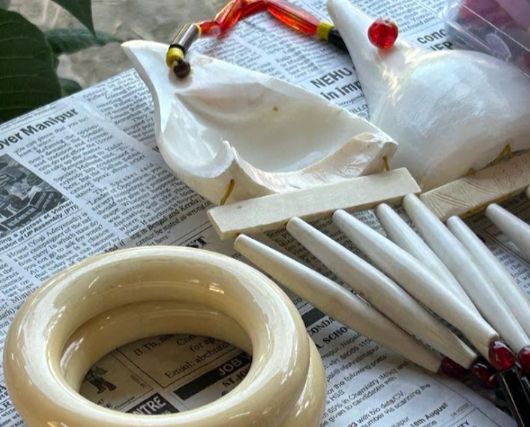
That variety is not simply decorative. It reflects Nagaland’s mountainous geography and history, where distinct communities remain connected through trade, kinship, agriculture, and shared public life. The festival’s deeper lesson is that unity does not require sameness; it creates space where difference is visible and valued.
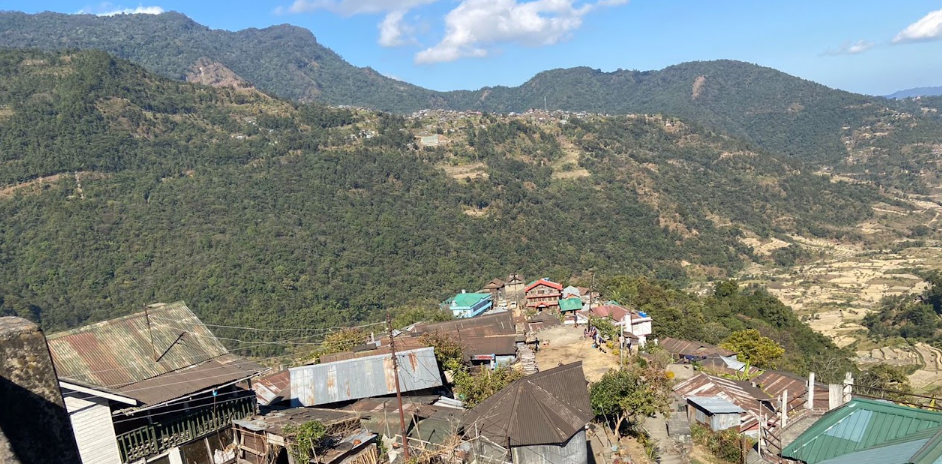
Khonoma, at two different speeds
I would explore Khonoma at two speeds. A heritage village walk reveals its gateways, houses, stories, and Angami history. Then I would slow down in the terraced paddy fields. From the lanes, the terraces look like a beautiful pattern; among them, one notices the labour, water, seasons, and knowledge that make it possible.
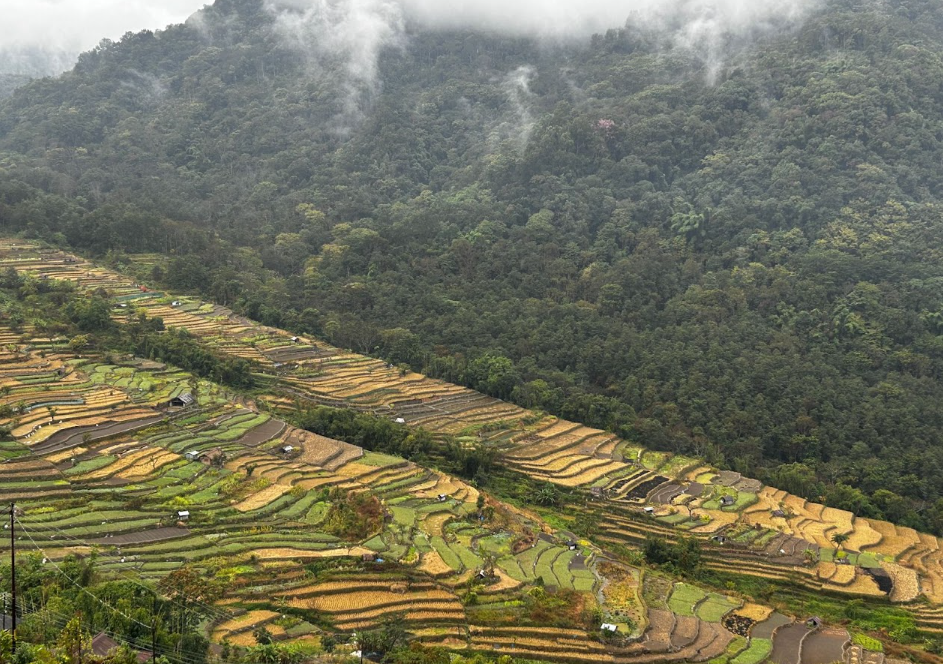
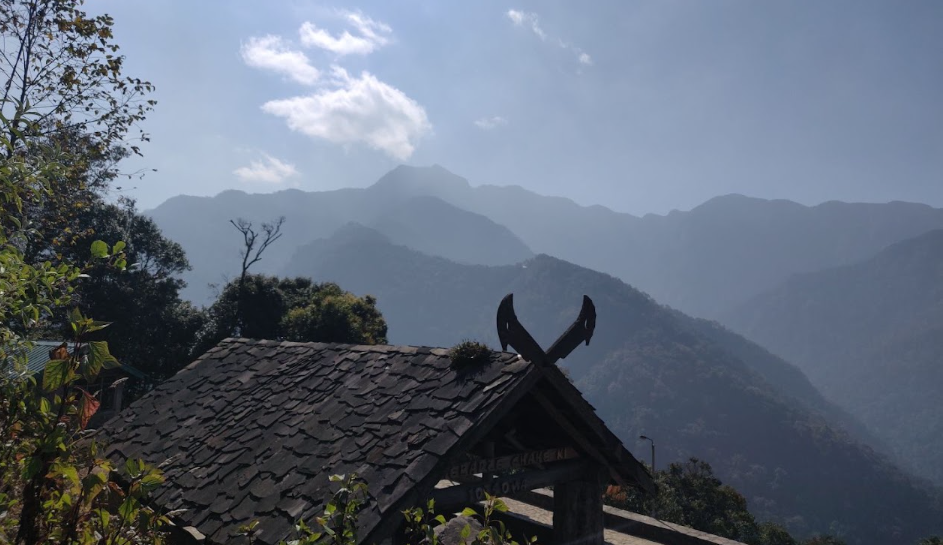
Curtain Call Adventures’ itinerary places Khonoma, Jakhama, Kohima, and Mount Shurho alongside Kisama. Their fields, forests, and village paths offer a counterpoint to the festival’s intensity. The landscape begins to explain the culture: hills shape settlements, forests frame daily life, and terraced cultivation make patience visible. For the trekking enthusiast Mount Japfu and Dzoukou valley should be part of their itinerary.
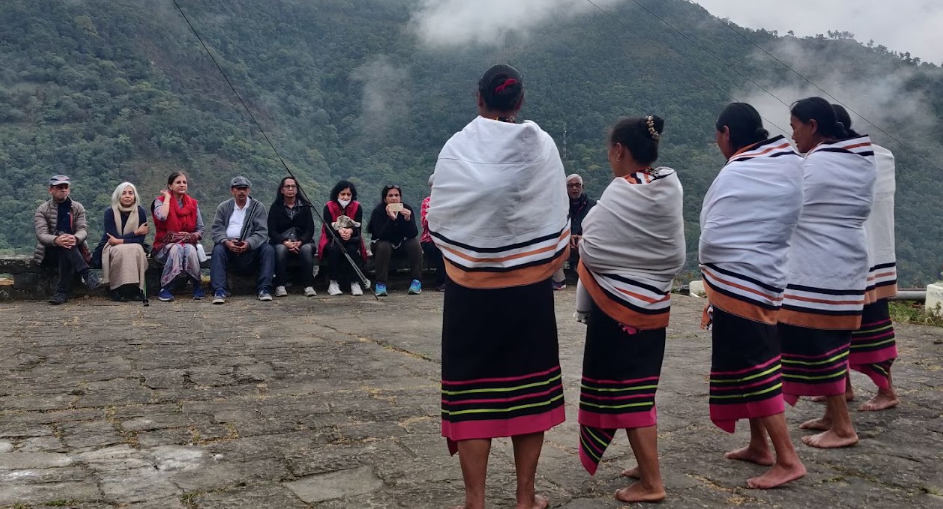
The day should not end when the festival grounds are empty. Acoustic evening music is a must. Many young performers have choir training, and their clear, beautiful voices reveal another side of Nagaland. Later, around a bonfire under the stars, the day settles into memory: voices, warmth, darkness, and the outline of the hills.
A Naga kitchen in Dimapur
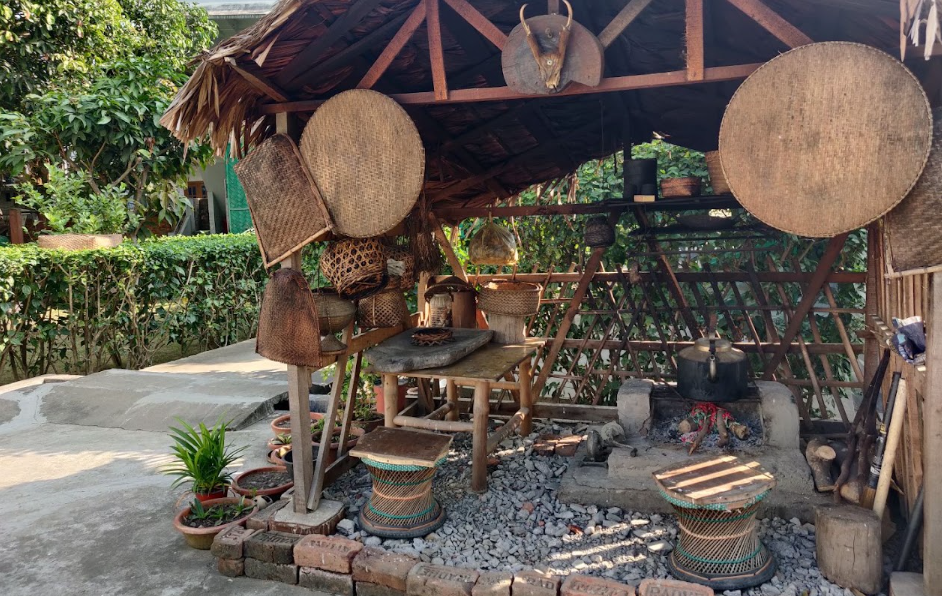
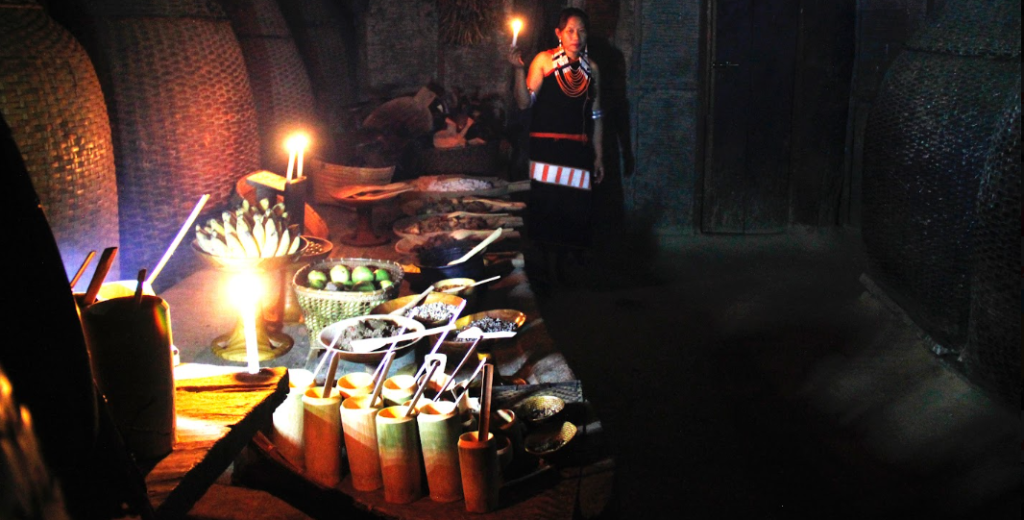
One of my favourite ways to understand a culture is through its kitchen. A meal in the homes of local chefs in Dimapur offers a glimpse into how food is prepared and shared. A large Naga kitchen may have a modern gas-stove section alongside a wood-fired area for grilling and smoking. At beautiful wooden tables, I would linger, ask questions, and notice how smoke, preservation, seasonality, and hospitality shape the meal.
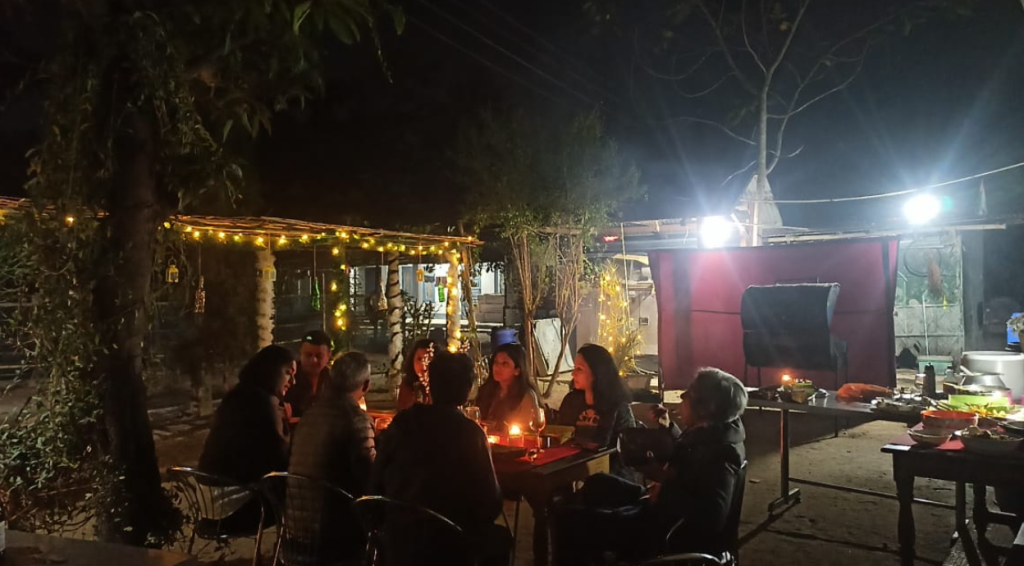
Curtain Call Adventures suits travellers who want this slower approach. We work with local experts, artisans, hosts, guides, and transporters, combining comfort with responsible travel. I see it as a culture curator and risk-reducer partner: helping visitors navigate a complex region while creating the conditions for listening.
Getting there: the airport route
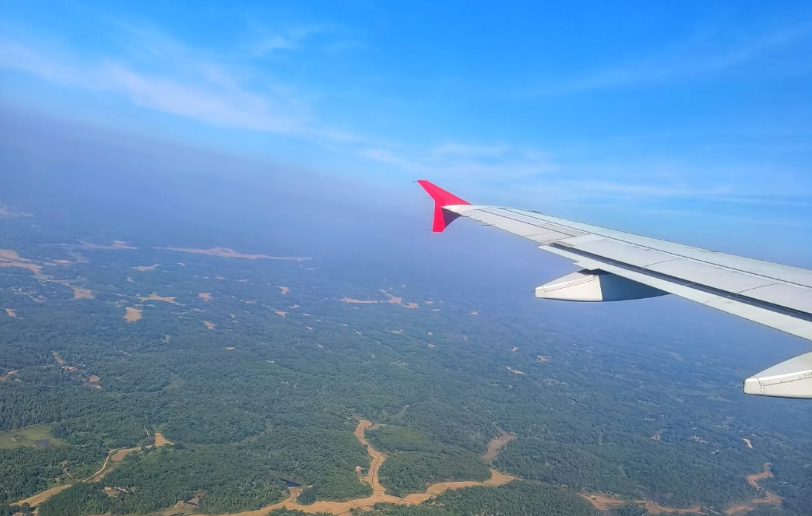
For most air travellers, the gateway is Dimapur Airport, Nagaland’s only civil airport. The tourism department says it has direct flights to Kolkata, with connections from cities including Delhi. Travelers then continue by road to Kohima and Kisama. The airport is about 7 km from Dimapur city and the railway station, with taxis and auto-rickshaws available.
| Arrival point | What to know |
|---|---|
| Dimapur Airport | Nagaland’s only civil airport; local taxis and auto-rickshaws are available. |
| Dimapur to Kohima | About 69.4 km by road; arrange a taxi in advance during the busy festival period. |
| Kohima to Kisama | Kisama Heritage Village is about 12 km from Kohima |
| Guwahati alternative | A longer road journey is possible; Nagaland Tourism estimates roughly 8–9 hours to Kohima. |
The mountain road deserves respect. I would travel in daylight, allowing time for festival traffic. Book transport and accommodation early for December.
Permits: what travellers should arrange
Permit rules are essential. Indian visitors, including domestic tourists, must obtain an Inner Line Permit (ILP). Since 1 January 2025, applications are online through ilp.nagaland.gov.in or the Commissioner of Nagaland’s portal. Apply before travelling and keep digital and printed copies.
For foreign visitors, the District Administration states that the Protected Area Permit (PAP) relaxation ended in March 2025. Foreign tourists must obtain a PAP and register online through e-FRRO; no physical PAP permits are issued. Travellers from Afghanistan, China, and Pakistan, or those with origins in these countries, need prior Ministry of Home Affairs approval. Verify the latest rules before booking flights.
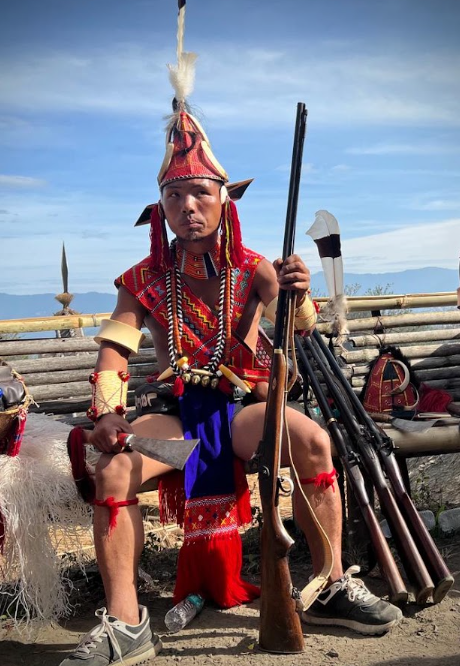
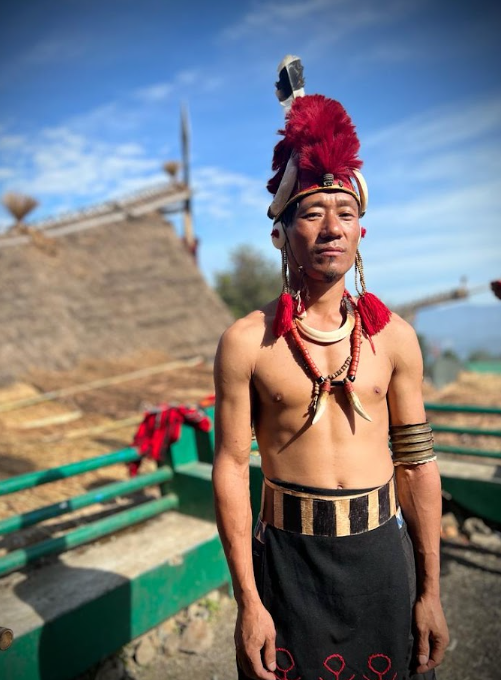
The Hornbill Festival stays with me because it resists easy interpretation. It is joyful but deliberate: a gathering that protects memory by sharing it, welcoming outsiders while asking them to pay attention. Arrive for the music and colour. Stay for the terraced fields, smoky kitchen, young makers, and quieter lessons—that meaningful travel begins when we stop looking at culture and start meeting it.
References
[1]: https://tourism.nagaland.gov.in/events/hornbill-festival/“Hornbill Festival — Nagaland Tourism”
[2]:https://www.instagram.com/p/C8tfg9cNzV5/“Discover the Rich Tapestry of Naga Tribes at the Hornbill Festival — Curtain Call Adventures Instagram”
[3]:https://curtaincalladventures.com/nagaland-the-hornbill-festival/“Nagaland & The Hornbill Festival — Curtain Call Adventures”
[4]:https://curtaincalladventures.com/“Curtain Call Adventures — Curated Tours of Northeast India”
[5]:https://tourism.nagaland.gov.in/how-to-get-there/“How to get there — Nagaland Tourism”
[6]:https://dimapur.nic.in/tourist-information/“Tourist Information — District Dimapur, Government of Nagaland”
[7]:https://tourism.nagaland.gov.in/entry-permits/“Entry Permits — Nagaland Tourism”
[8]:https://www.instagram.com/curtaincalladventures/ “Curtain Call Adventures — Instagram profile”