

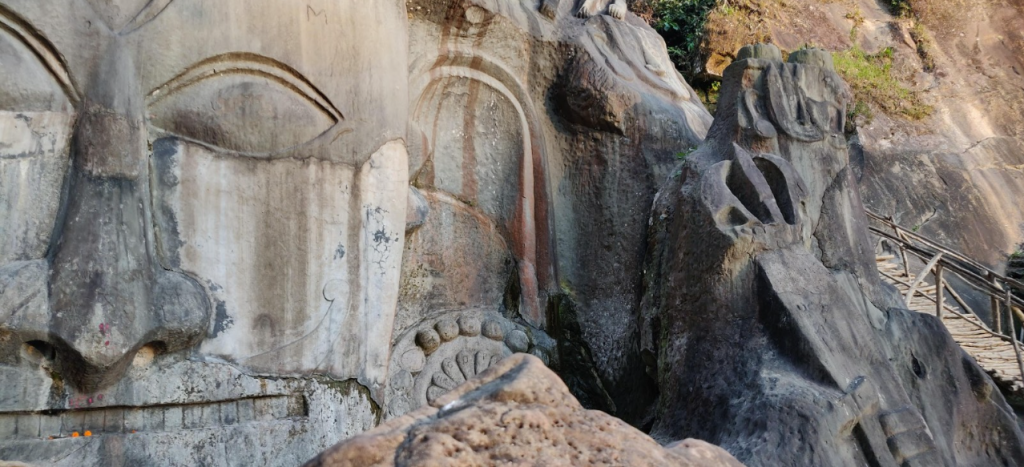
The approach to Unakoti reveal itself after 5 hours of driving from Agartala, moving through Tripura’s green northern landscape when suddenly in the middle of a forest, a clearing has been made to park vehicles and a ticket booth. A flight of steps and forest paths opens onto colossal faces carved into a hillside. Here, stone, water, trees and belief occupy the same space. The result is an archaeological monument and a living cultural landscape where pilgrimage, local memory, indigenous craft and the quiet drama of the forest meet.
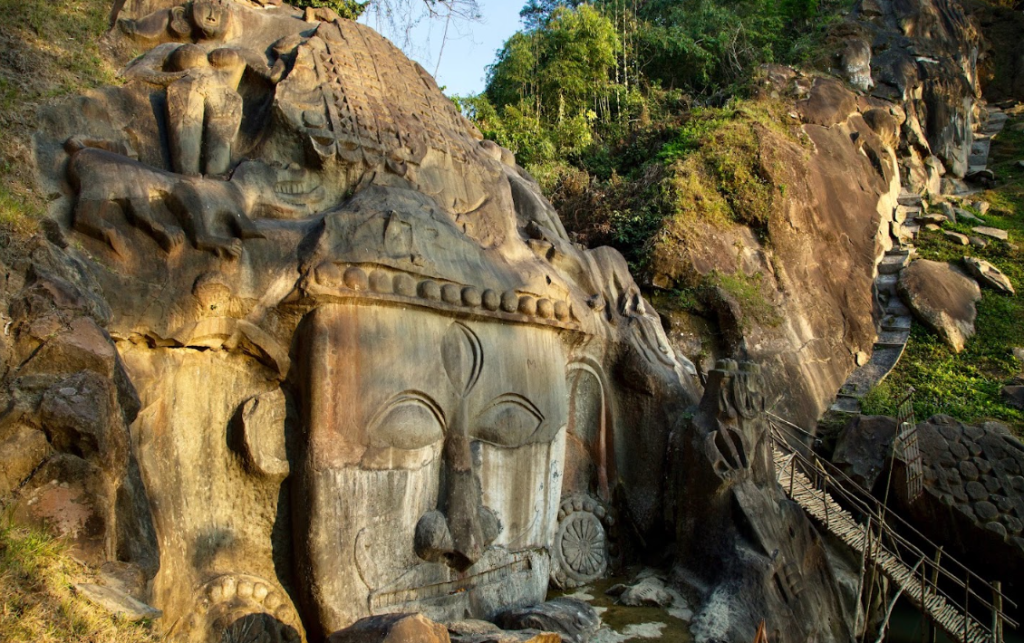
I was awestruck by the sheer size of the cravings, the detailing of the hair, earrings and the location – nothing prepares you for the sheer size and beauty of these reliefs until you start walking down the steps – no glimpses along the way. Each of the reliefs aged by water streaks, heat blend in with the natural rock surrounding them.
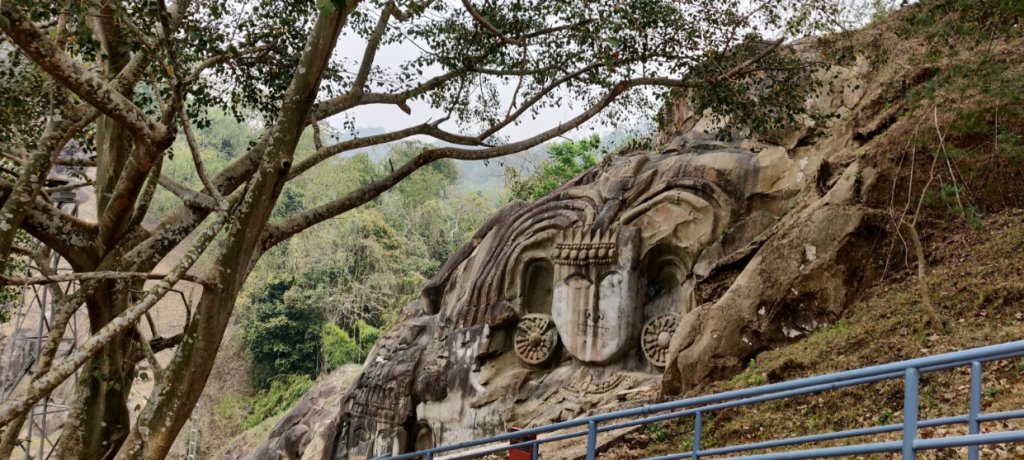
There is a lot of mystery on how these craved reliefs came to be here, some say a sage passing by influenced a tribal chief, some say Lord Shiva cast them but actual facts are missing adding to the enigma. It is archaeologically dated to the 7th -9th century based on the stylistic analysis of the cravings while the natural stones that they are carved into belong to Tertiary period. At the time of my visit INTACT that just taken over the site and were marking the sculptures.
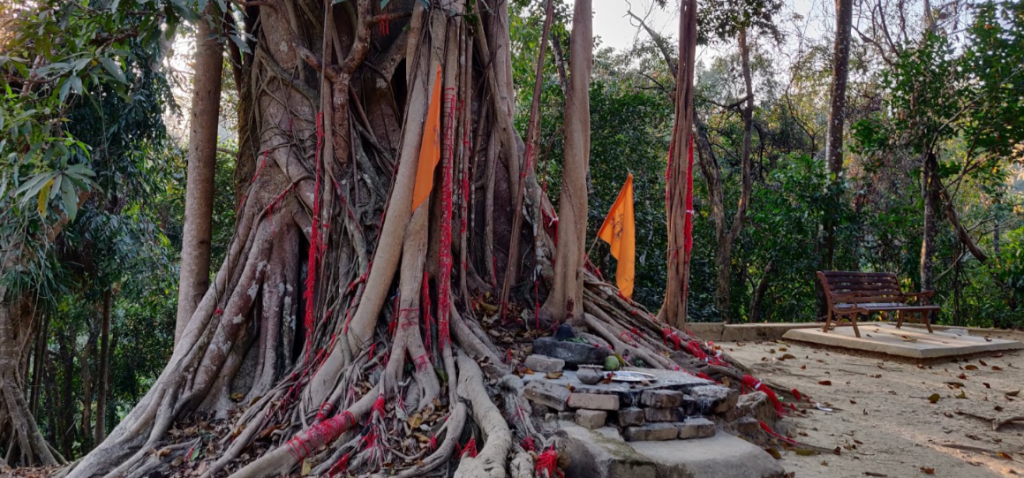
Beautiful old trees and small shrines around some of the carvings and rounded stones plus a small pool of water from an underground water source near the center which has a large relief of a carved face. The style of the carved ornaments does resemble a bit to the tribal jewelry worn by the Darlong and Reang tribe who live in area and that might be a link to solving the mystery but the tribes themselves have no knowledge too on the existence of these reliefs.
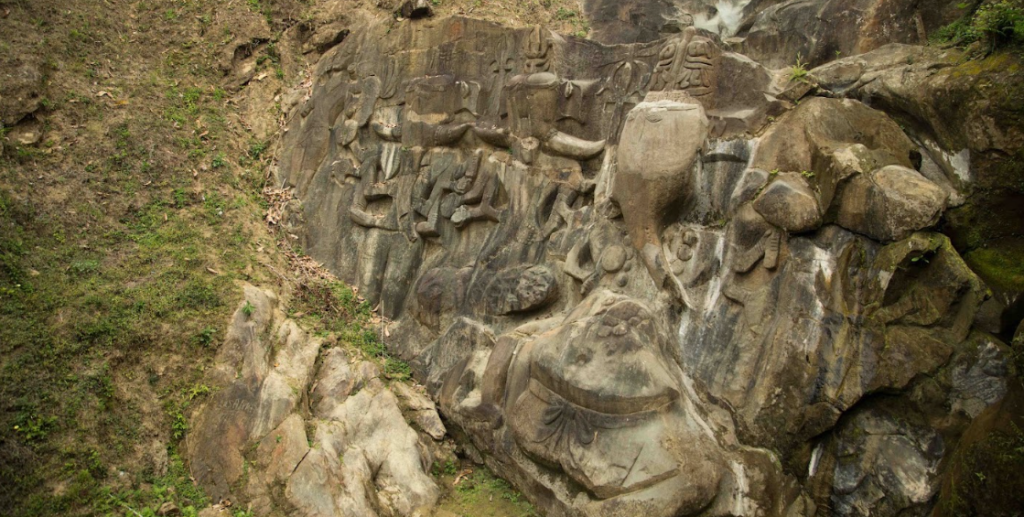
The site was first formally documented in 1910 – 1911 by K. Chaudhuri and Captain Williams. The Archaeological Survey of India officially presented a report in 1922.
A forest of stone and stories
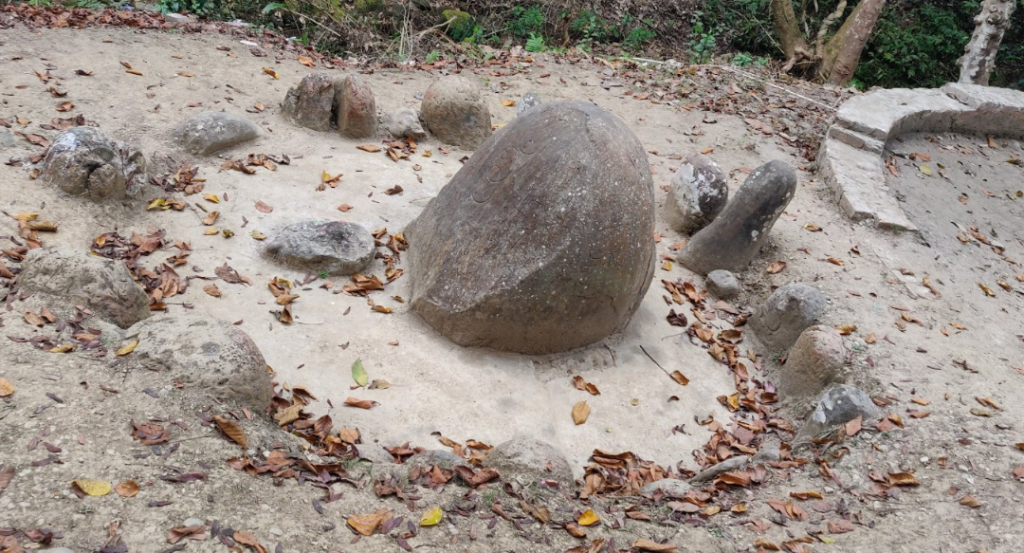
Located near Kailashahar in Unakoti district, Unakoti is a Shaiva, or Shiva-centred, pilgrimage site whose principal reliefs are generally dated to the seventh–ninth centuries CE, UNESCO’s Tentative List describes the site as evidence of early medieval Shaiva worship and notes the distinctive influence of local tribal art in the ornaments and headgear of its deities. That observation is important: Unakoti is not a detached copy of a distant artistic tradition. Its sculptors appear to have translated a wider Hindu iconography through the visual language of the hills they knew.
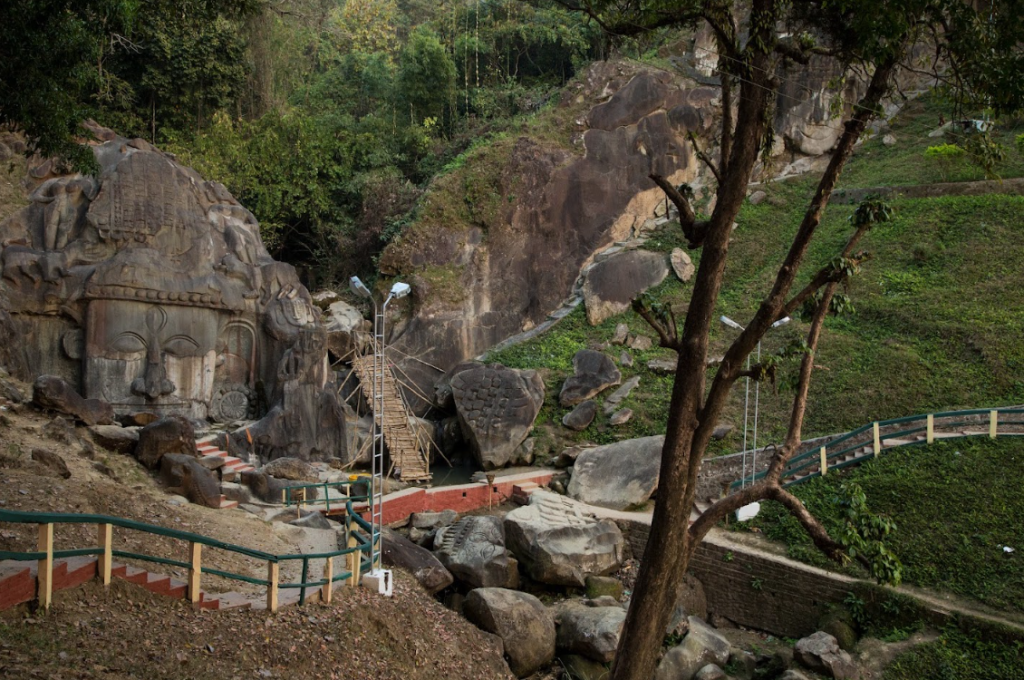
The name means “one less than a crore”—traditionally, one fewer than ten million images. The familiar legend says that Shiva and his companions stopped here overnight on their way to Kashi. Shiva rose before dawn; the others remained asleep and were turned to stone. The legend explains the name, but the sculptures themselves resist a single explanation. The central Unkotiswara Kala Bhairava, a roughly 30-foot-high Shiva head, dominates the principal enclosure, while Ganesha, Durga, Nandi, Ganga and other forms appear across rock faces, boulders and loose stones. A stream descends through the site, forming sacred pools and reinforcing the sense that the landscape itself is part of the shrine.
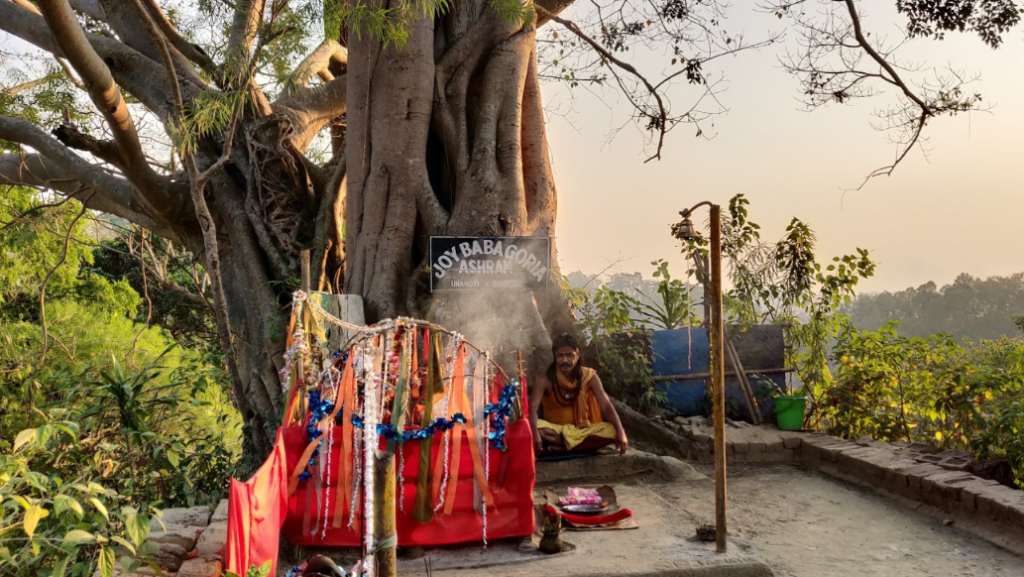
The annual Ashokastami Mela, held in the spring, brings pilgrims to this otherwise contemplative setting. At other times, the reward is slower: the changing light on weathered reliefs, the sound of water, and the recognition that these images have survived within a forest rather than inside a conventional temple complex.
Meeting the Darlong community
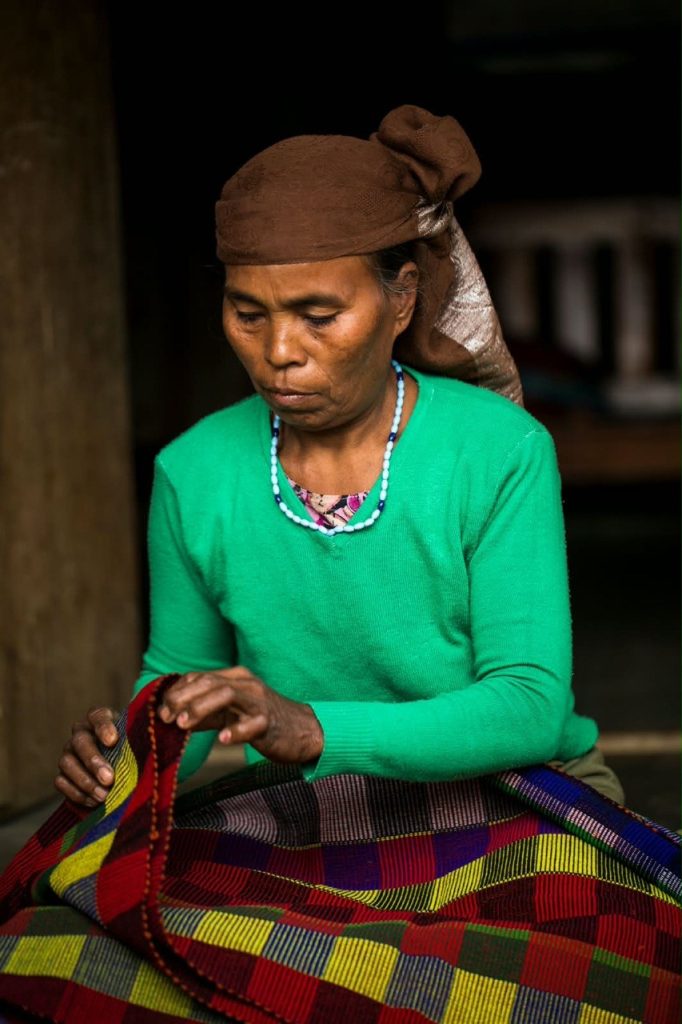
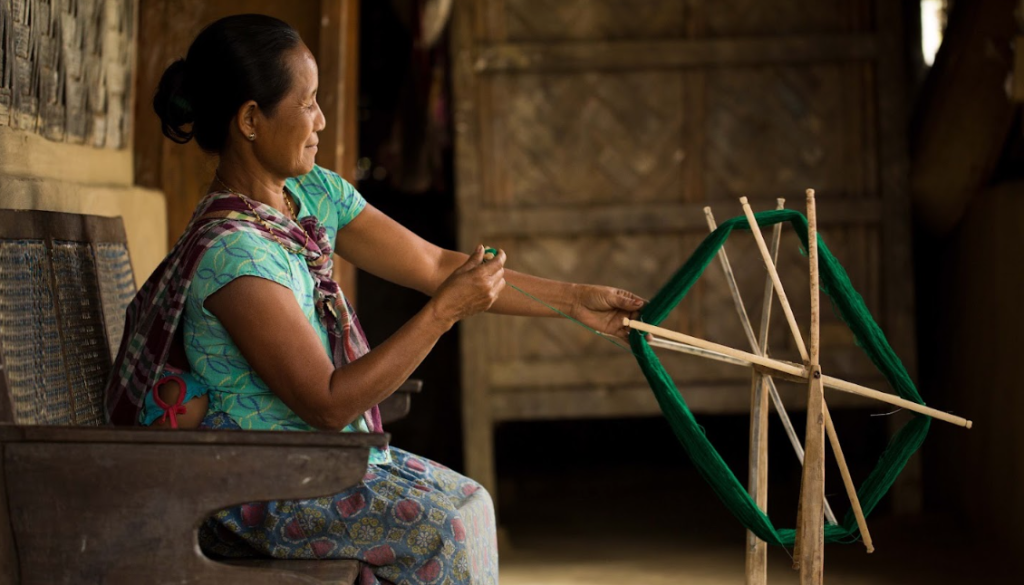
An impression of Unakoti is incomplete without the Darlong villages nearby. The Central Institute of Indian Languages identifies the Darlong as a Tibeto-Burman language community within the Core Central Kuki-Chin subgroup, living across Unakoti, Dhalai and North Tripura. Their presence adds a human dimension to the region’s heritage. A study of Darlong weavers in Unakoti describes weaving as both livelihood and cultural symbol, with traditional products such as Hnam Puan and Recop carrying knowledge across generations.
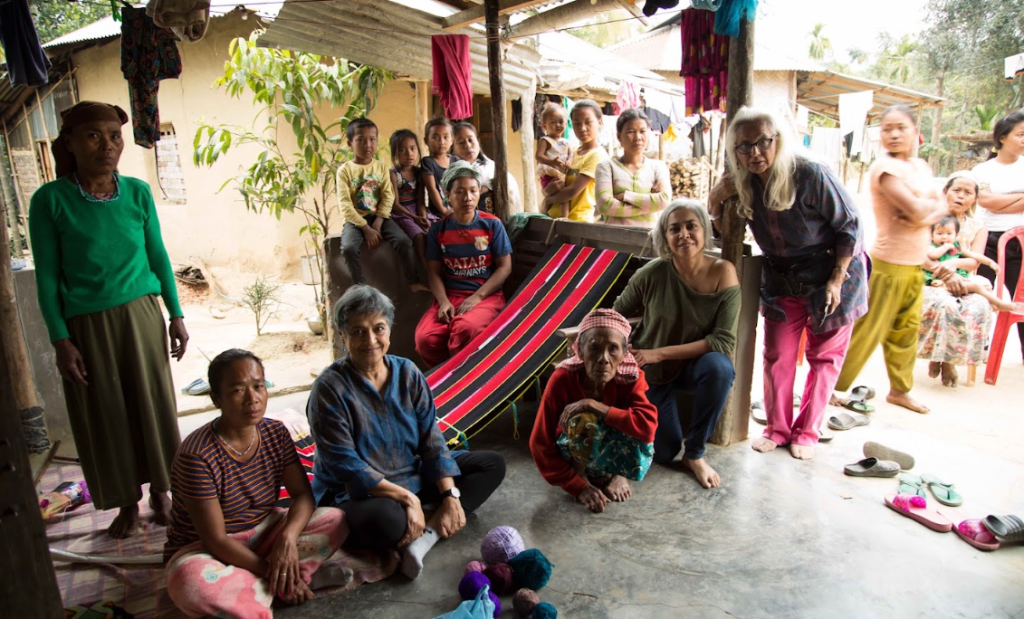
Our local guide took us to have lunch with a local family, about an hour’s drive from Unakoti. Surrounded by small patches of tea plantations and areca nut farms we started the short walk up the village, very scenic with ponds surrounding the start of the walk. Small village – home to about 15 houses.
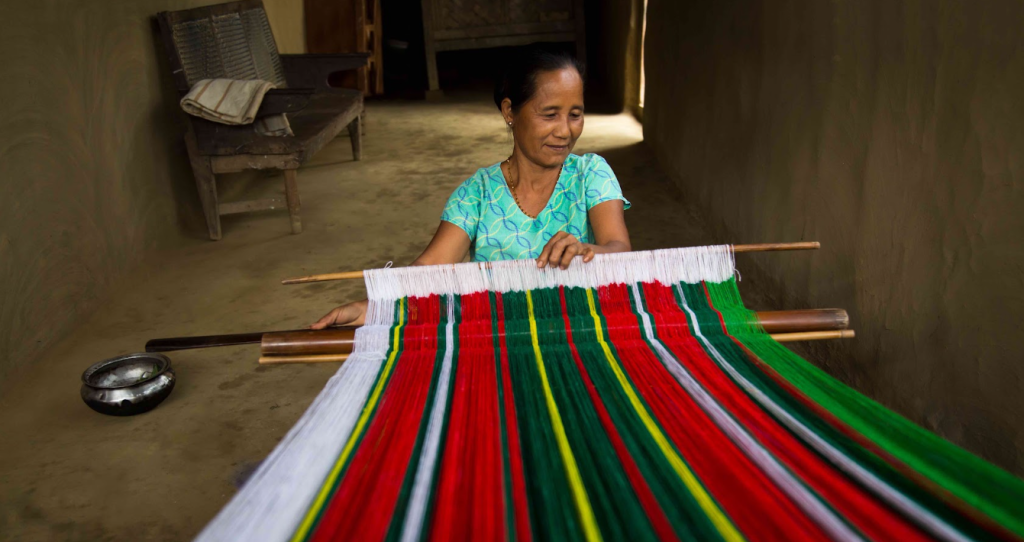
The family was waiting to welcome us for lunch, but we requested them to take us for a walk around as we saw women working on their looms outside their homes. A few said they were weaving cotton rough thick shawls from cotton grown in their farms, children gathered around the cameras, and it was truly a wonderful afternoon interacting with our hosts and the people we met in the village. Their homes are simple with the kitchen being the largest and main room in the house.
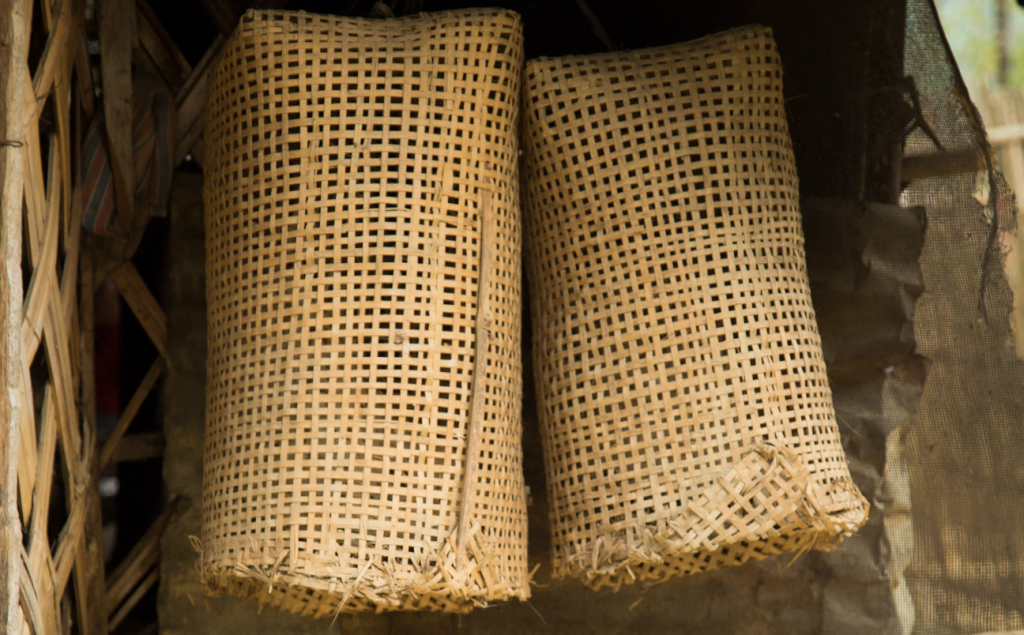
Each house has their own kitchen garden and the variety of baskets made with cane and bamboo used daily kept in the courtyards were worth the mention. Unfortunately, they did not have any extra to sell. The meal itself was simple, boiled rice, a plain soupy lentil and fried cabbage. They did make a spicy dry fish chutney too. Our hostess had her loom set inside the house and gave us a demonstration.

All the while local children kept flitting in and out with their contagious laughter. A fun afternoon and when we started talking about the carvings at Unakoti, our host mentioned that certain tribes used to visit the site when it was still a part of the forest before the clearing as a sacred spot.
A traveller should ask before photographing people, listen before interpreting dress or ritual, and understand weaving as work, identity and inheritance—not merely as a souvenir opportunity.
How to get to Unakoti
The practical gateway is Kailashahar. Government sources place Unakoti about eight kilometres from the town and roughly 178–185 kilometres from Agartala, depending on the source and measurement. Agartala is connected to other Indian cities by domestic flights. From there, travellers can take a regular bus towards Kailashahar or travel by train to Kumarghat and continue by road. Kumarghat is the nearest railway station, 26 kilometres from Kailashahar; local transport is needed for the onward journey to the heritage site. Buses also connect Kailashahar with Guwahati, Shillong, Silchar and other Tripura towns. Accommodation is limited, so it is sensible to arrange rooms and local transport in advance and recheck schedules before departure.

What Curtain Call Adventures organizes
Curtain Call Adventures presents Tripura as a curated combination of history, nature and community encounters. Our program highlights visits to tribal villages for weaving, costumes and jewellery; cane and bamboo craft; wildlife; temples; palaces; and Unakoti itself. Also river-side stops, village walks, hosted meals, handloom-cluster visits, a bamboo factory, portrait photography and a boat ride towards Neermahal.