
In my grandmothers’ days, Muga was worn as a house cloth. I remember my grandmother at work in her kitchen wearing her plain Muga Mekhla chador. Thick, durable, and sometimes rough to the touch, it was woven as a plain cloth or everyday life. Yet its distinctive gold sheen endured. What belonged to household rhythms is now a rare textile, treasured for its lustre and the knowledge held within each thread. Along the way it had motifs woven in, adding to its value.
Dhakuakhana, an evolving sub-divisional town in Assam’s Lakhimpur district, is one of them. I arrived curious about Muga silk and left with a renewed sense of how heritage survives through ordinary hands. One of the last hubs where Muga silk rearing and weaving is practiced daily.

In Mira Hazarika—an Ahom community member who leads the local cooperative—I found a guardian of this inheritance. She described Muga not as a commodity, but as a craft rooted in care: for silkworms, host plants, forest, and season. Muga flourished under Ahom patronage, when weaving and sericulture received royal support.[1]
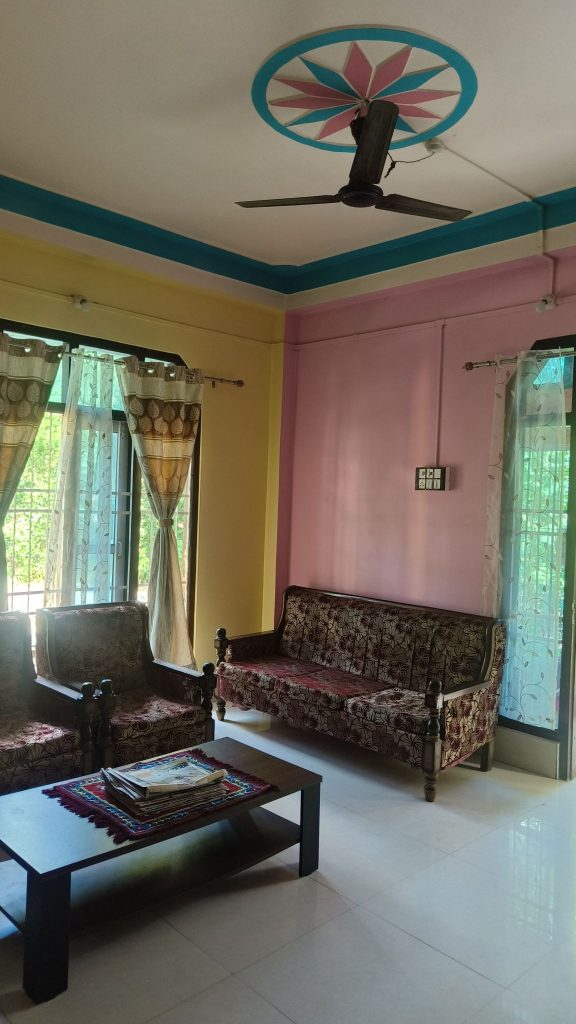
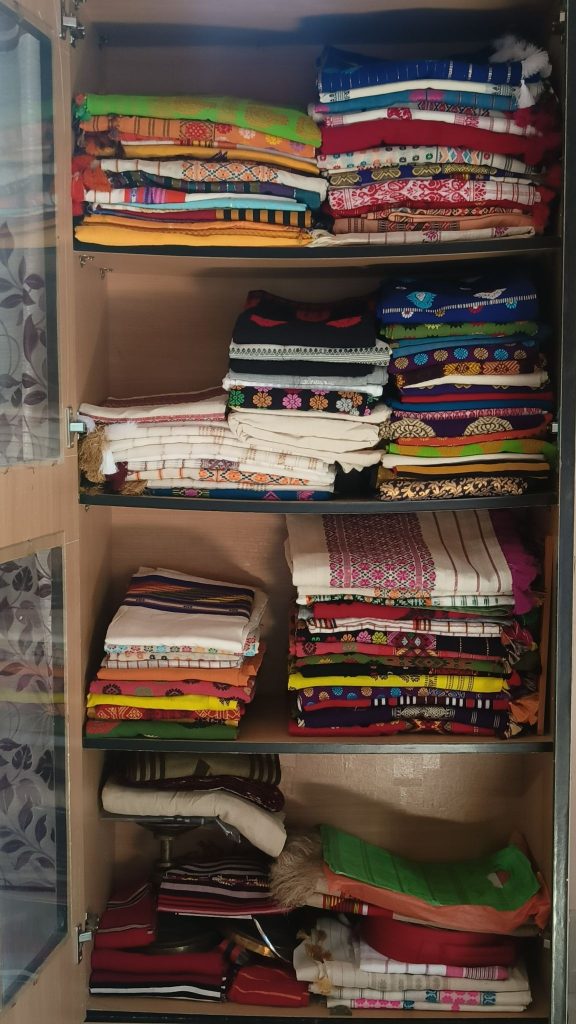
In Mina’s home – the cupboard where she stores all the pieces woven by her for her children’s trousseau
The Ahoms themselves arrived in the Brahmaputra valley in the thirteenth century under the leadership of Sukaphaa, a Tai ruler traditionally credited with founding the Ahom kingdom. Over centuries, they built a powerful polity while absorbing and being shaped by the peoples and landscapes of Assam. This history of movement and exchange is visible not only in chronicles and monuments but also in the everyday practices that endure: in the loom, the hearth, the granary, and the hospitality offered to a visitor. Today, that meeting of memory and place feels vivid in the intimacy of a meal.
At Mira’s home, that hospitality began with home-brewed rice wine. We sat around her dinner table, welcomed not as distant observers but as guests invited to share time, food, and conversation. Watching her cook felt like watching history come alive in a kitchen. She moved with quiet grace, explaining an ingredient, a method, a memory. There was no performance in it; the meal was simply an expression of what a home knows how to do.
Ahom food carries the memory of Tai-speaking origins and the long cultural pathways that link Assam with the broader worlds of Shan, Thai, and Burmese food traditions. Rice sits at its centre—as sustenance, ceremony, and drink. The cuisine also draws on herbs, leafy greens, fermented ingredients, smoked or preserved meats, and the clean, patient building of flavour rather than excessive spice. Traditional Tai-Ahom rice beer, known as xaaj or sajpani, is prepared through a distinctive fermentation process involving rice and a starter culture, and remains culturally significant in the region.[2]
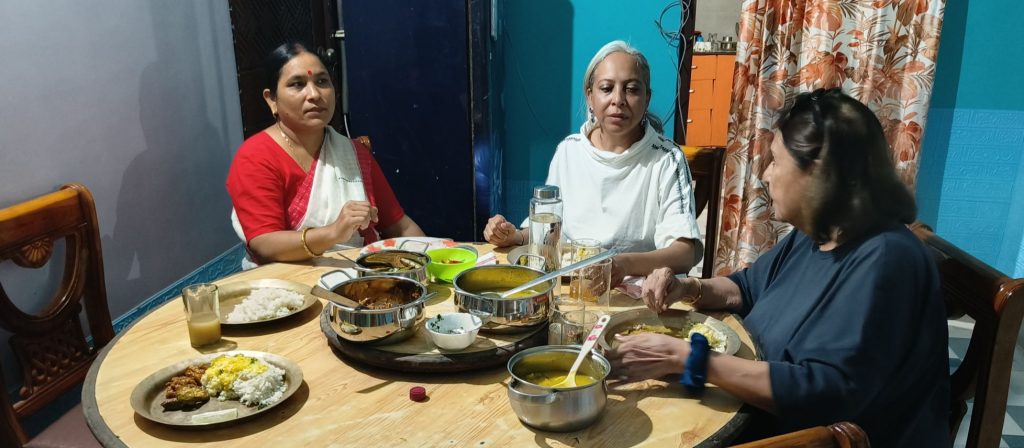
Mira spoke warmly of the Ahom fondness for meat, particularly pork, and of the place of rice wine in welcome and community. The dishes came to the table in small bell-metal bowls, modestly served yet full of character. The presentation was not about formality; it was about abundance with purpose. Every bowl seemed to offer a different register of taste: smoke, fermentation, fresh greens, the gentle fullness of rice, and the honest comfort of pork prepared with care.
This is what made the meal unforgettable. It was not only about eating traditional food, but about understanding that cuisine is an archive. Recipes preserve migrations; ingredients reflect landscape; methods carry the decisions of generations. In Mira’s kitchen, food became a living record of the Ahom journey into Assam and of the community’s continuing relationship with land, rice, forest produce, and one another.
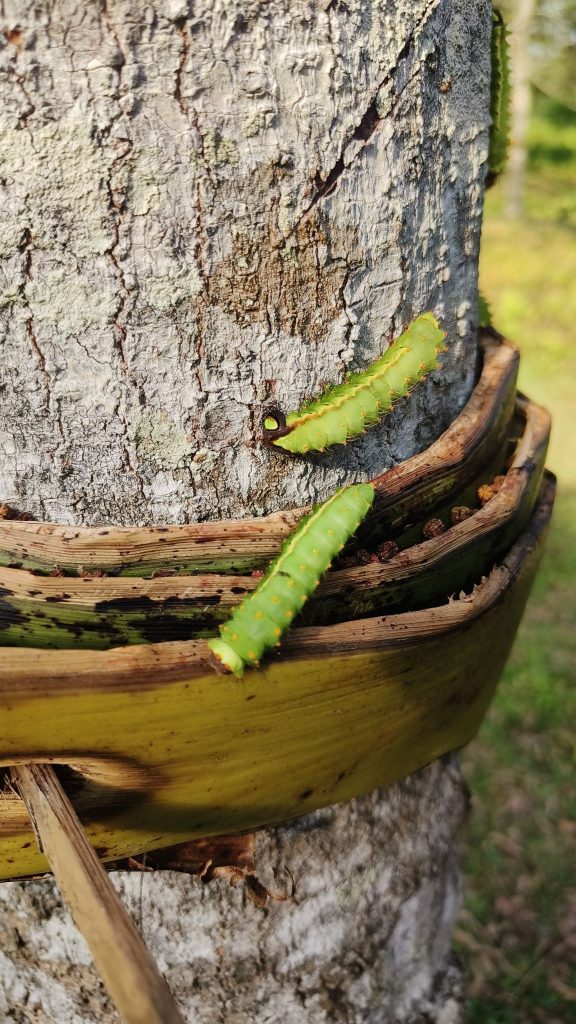
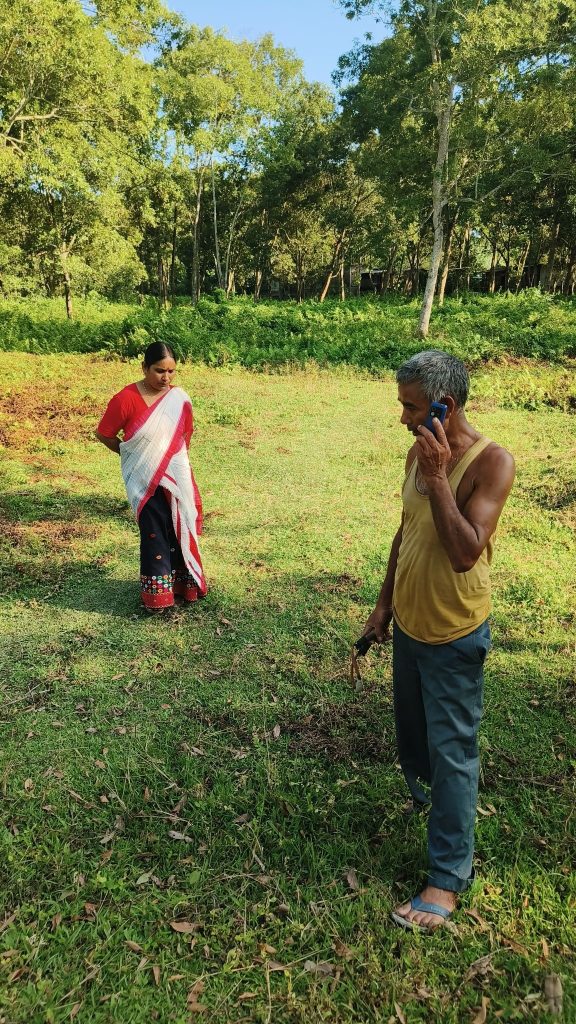
In the forest of Som trees where the muga silk worms ( Antheraea assamensis) are reared.
The same sense of continuity—and vulnerability—surrounds Muga. Mira spoke candidly about the pressures facing the cottage industry today. Changing weather patterns have unsettled the seasonal balance on which silkworm rearing depends. When the health of host plants, insects, and forests becomes uncertain, the labour of rearers, spinners, reelers, and weavers becomes more precarious. The rising value of Muga can bring recognition, but it does not remove the risks borne by those who produce it. Research on Muga sericulture likewise identifies ecological and environmental change as a serious challenge for the species and its production systems.[3]
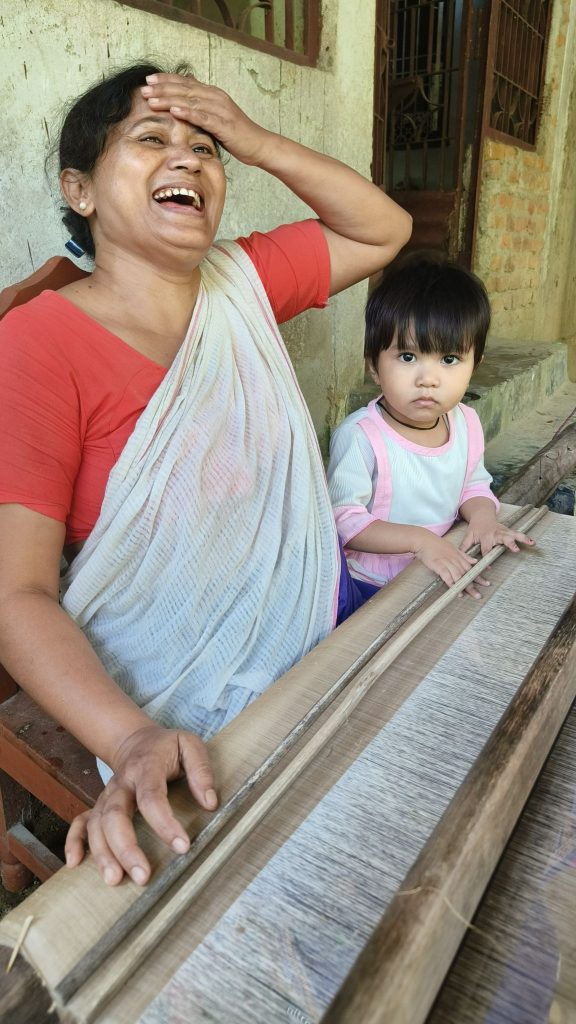
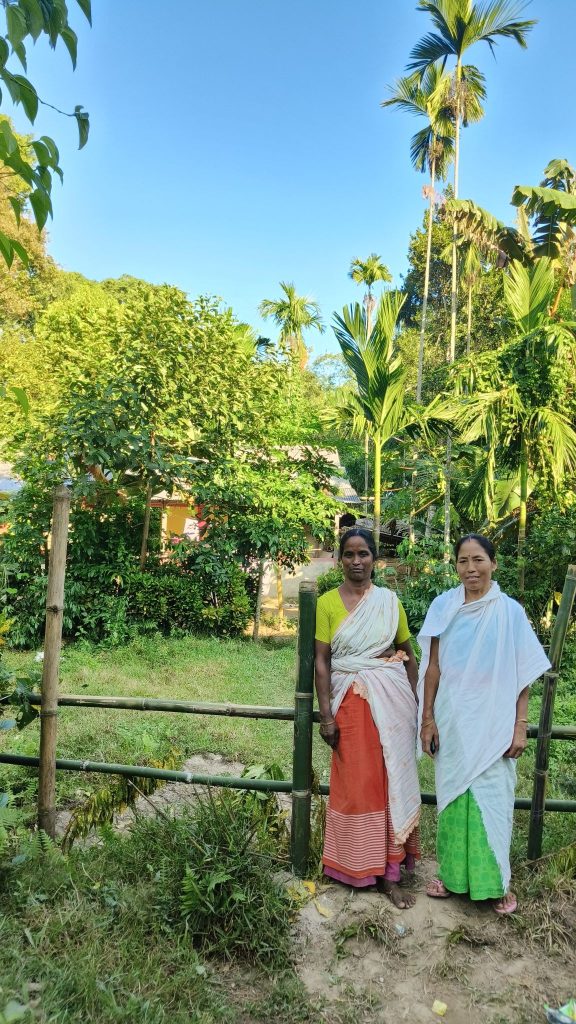
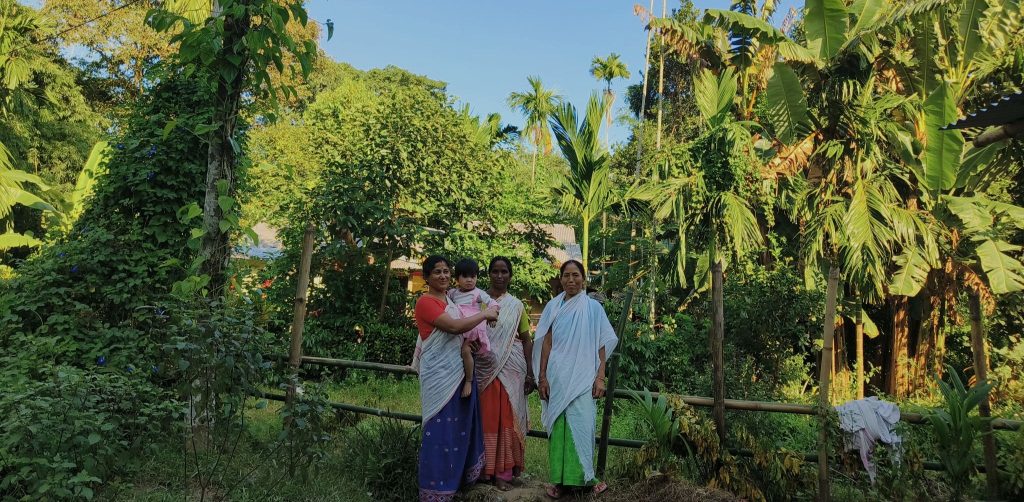
A light moment with a muga silk weaver, her daughter and neighbours who are also weave in their courtyards
This is why the cooperative that Mira leads matters. It is more than an economic arrangement. It gives those working across the Muga chain a way to support one another, share knowledge, face uncertainty together, and speak with greater strength. It protects the dignity of work that is too often admired only when it becomes a finished garment.

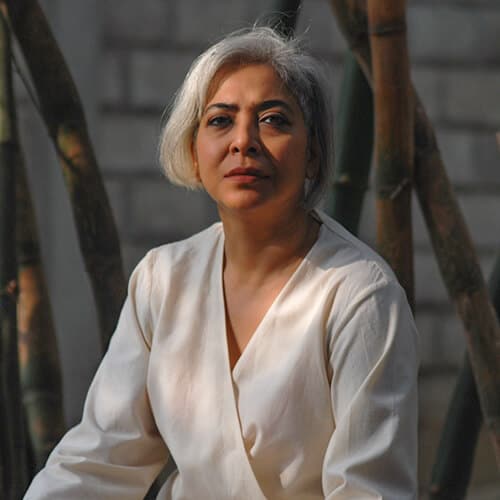
Julie in a muga mekhala chador that was gifted in her teens by her grandmother
As curator at Curtain Call Adventures, I believe travel is most meaningful when it encourages us to look beyond the finished object. A Muga mekhela or scarf may catch the eye with its gold, but it’s true story begins in the forest and continues through the care of families like Mira’s. At her table, I understood that Dhakuakhana’s heritage is neither frozen in the past nor guaranteed a future. It is being made, cooked, spun, woven, and defended every day.
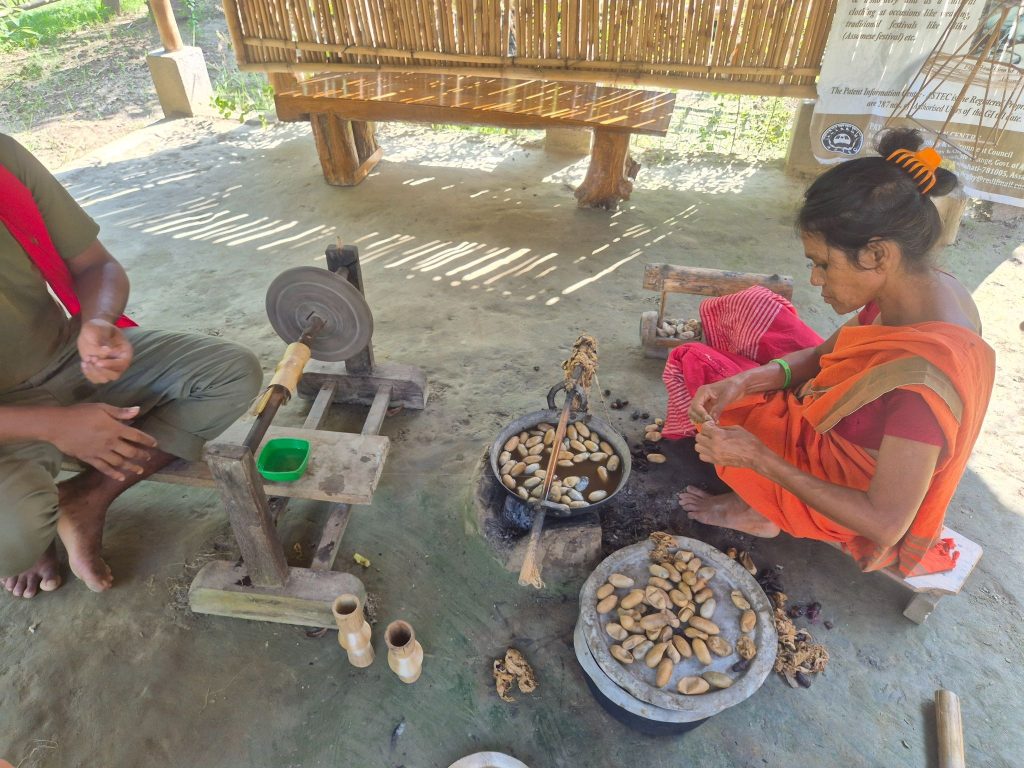
I left with faith that Assam’s golden yarn will live on—not as a relic, but as a resilient thread carried forward by its people.
References
[1] Raju Phukan, “Muga Silk Industry of Assam in Historical Perspectives,” Global Journal of Human Social Science, 2012.
[2] Bhaskar Saikia, Hui Tag, and A. K. Das, “Ethnobotany of Foods and Beverages among the Rural Farmers of Tai Ahom of North Lakhimpur District, Asom,” Indian Journal of Traditional Knowledge, 2007; Santanu Das et al., “Exploring the Microbiota and Metabolites of Traditional Rice Beer Varieties of Assam,” 3 Biotech, 2019.
[3] Raju Phukan, “Muga Silk Industry of Assam in Historical Perspectives,” 2012.
Created with AI assistance in research
subscription