A journey of taste and time through the hidden heart of Assam and Meghalaya.
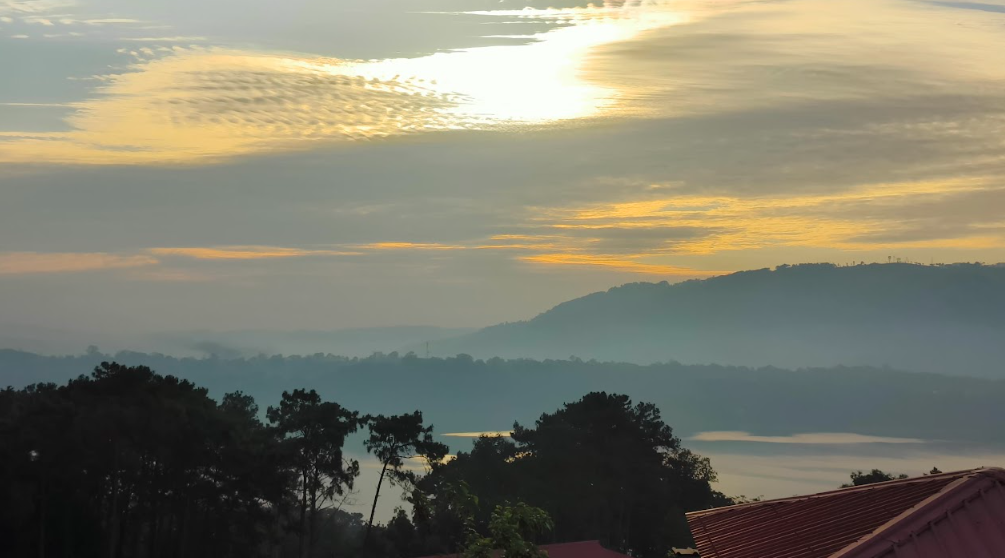
The morning mist was still clinging to the emerald slopes of the Khasi Hills when I realized that the best way to understand a culture is not through its monuments, but through its meals. My boots were muddy, my lungs filled with the crisp, rain-washed air of Meghalaya, and my hands were gently holding a bundle of tightly coiled, bright green fronds.
“These are the gifts of the forest,” our guide, a local Khasi elder named Bah Kyntiew, told me with a warm, weathered smile. “We do not just take from the earth; we listen to what it offers.”
This was day three of an extraordinary itinerary crafted by Curtain Call Adventures, aptly titled Roots, Rivers & Recipes. It was not just a tour; it was an intimate invitation into the very soul of Northeast India, where the landscape dictates the lifestyle, and every recipe holds a story of survival, ingenuity, and deep respect for nature.
Assam: The River’s Embrace and the Fiddlehead’s Tang

Our journey had begun in the sprawling plains of Assam, where the mighty Brahmaputra River carves its path like a lifeline through the state. The river is not just a body of water here; it is the silent orchestrator of Assamese culture, music, and, most importantly, food.
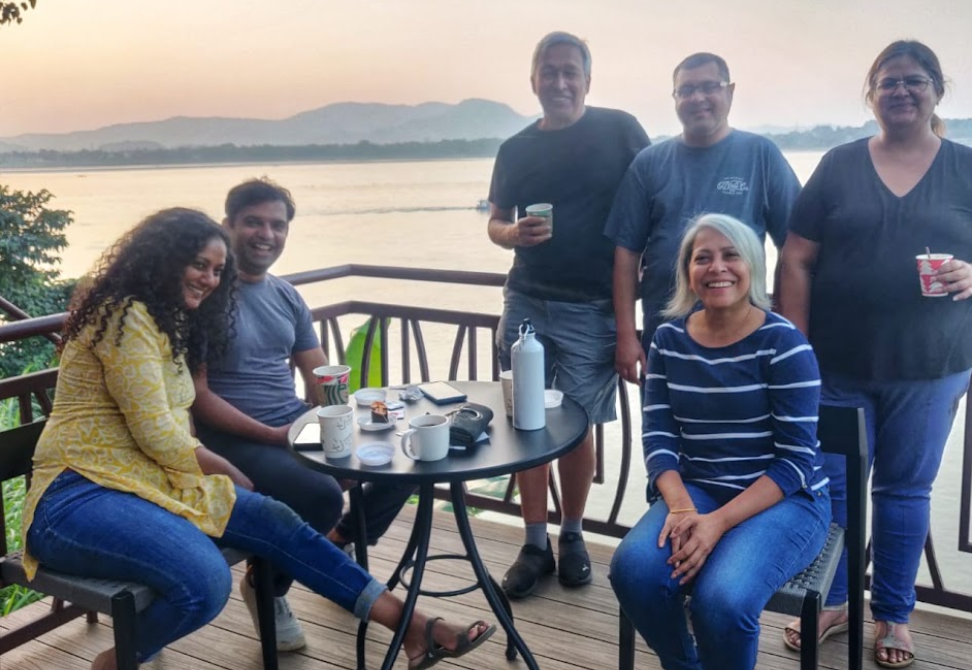
On our first afternoon, we found ourselves in a traditional Assamese courtyard in a village near Kaziranga. The air smelled of woodsmoke and roasting mustard seeds. Here, we were introduced to Dhekia Xaak, the fiddlehead fern that is the undisputed harbinger of spring in Assam.
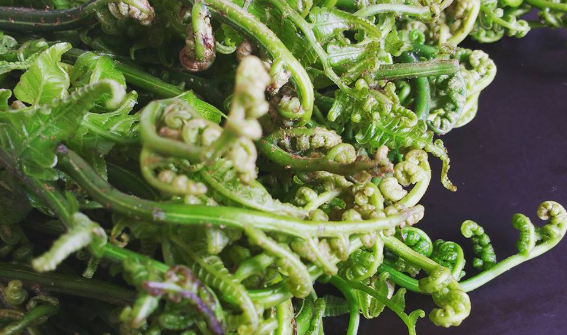
“You see how it curls?” explained Rumi, our host, as she deftly sorted the ferns on a woven bamboo tray. “It is like the river itself—always turning, always moving.” Rumi’s hands moved with practiced grace as she chopped the ferns, preparing them for a simple yet profound dish: Dhekia Xaak Bhaji.

The magic of Assamese cuisine lies in its simplicity. There is no heavy masking with spices; instead, the natural flavors are coaxed out and celebrated. Lunch was a revelation. We sat cross-legged on woven mats, presented with a traditional thali. The star was the Masor Tenga, a tangy fish curry that sang with the sourness of elephant apple (ou tenga) and tomatoes, perfectly complementing the earthy, slightly sweet crunch of the stir-fried fiddleheads. Beside it sat a humble mound of Aloo Pitika—mashed potatoes elevated with raw mustard oil, sharp onions, and fiery green chilies.
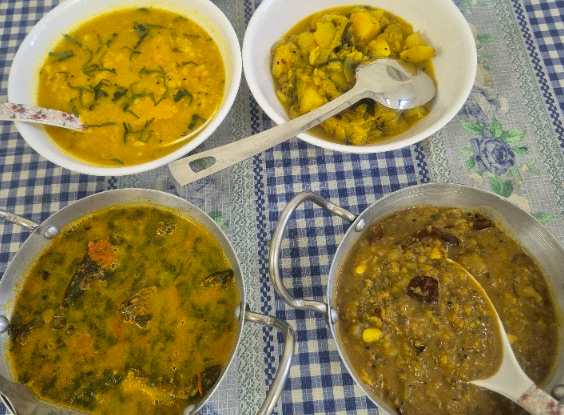
“I’ve traveled across India, but the Assamese thali was a revelation. It wasn’t just food; it was comfort. The crunch of the Dhekia Xaak against the sour tang of the fish curry is a flavor profile I will dream about for years. It felt less like a meal at a restaurant and more like being welcomed home.” — Sarah, Culinary Enthusiast from Melbourne
Meghalaya: Walking on Roots, Tasting the Clouds
If Assam was about the grounding flow of the river, Meghalaya was about reaching into the clouds and weaving the forest itself into existence.
Leaving the plains behind, we ascended into the misty embrace of the Khasi Hills. Our destination was Nongriat, home to the legendary Double Decker Living Root Bridge. The descent was a test of endurance—over 3,000 steep stone steps plunging into a dense, tropical gorge.
The bridges are a marvel of bio-engineering, born not of concrete and steel, but of patience and foresight. The Khasi people weave the pliable aerial roots of the Ficus elastica (rubber tree) across rivers, guiding them through hollowed betel nut trunks. It takes decades for a bridge to become strong enough to bear weight, meaning the elder who plants the tree will likely never walk across the finished bridge. It is an act of profound generational love.
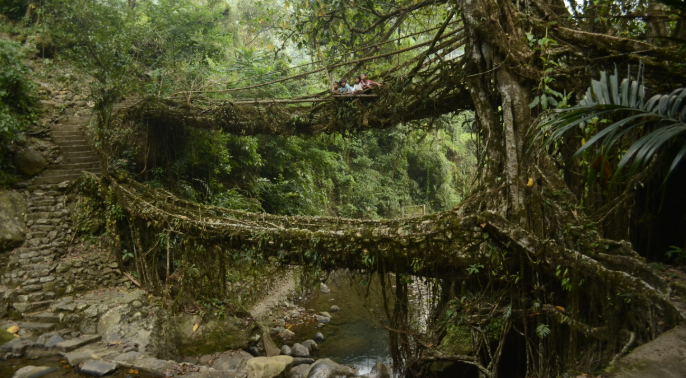
Standing on the lower deck of the Jingkieng Jri, suspended over a crystal-clear pool, I felt a profound sense of connection. The bridge was alive, breathing, and growing stronger with every passing monsoon.
That evening, exhausted but exhilarated, we gathered around a hearth in a local restaurant. The Khasi cuisine we were served was a stark, beautiful contrast to the Assamese fare. It was robust, deeply savory, and heavily reliant on fermentation and smoking—techniques necessary for preserving food in the wettest place on earth.
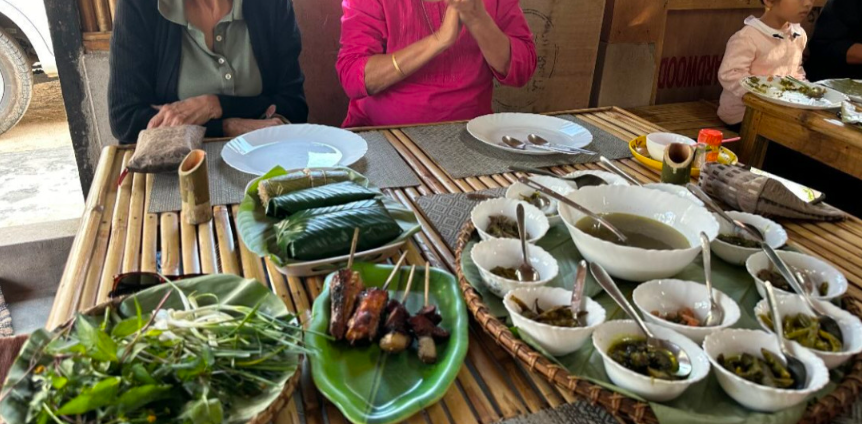
Our host, a vibrant woman named Kong Lamphrang, served us Tungrymbai, a pungent, deeply umami dish made from fermented soybeans, black sesame, and pork. It was an acquired taste, intense and unapologetic, but incredibly warming after a long trek.
“We smoke our meats and ferment our beans because the rain takes everything else away,” she laughed, handing me a bamboo cup filled with hot, clear broth. “But in doing so, we found our flavor.”
The Return to the Roots
On our final night, we sat under a canopy of stars that seemed close enough to touch. We were drinking rice beer from polished bamboo cups, the taste earthy and sweet.

The Roots, Rivers & Recipes itinerary had delivered exactly what it promised. It wasn’t just a tour of sights; it was an immersion into a way of life. We had traced the journey of the fiddlehead fern from the damp forest floor to the family kitchen. We had walked across living roots planted by ancestors long gone, and balanced on bamboo bridges that defied gravity.
We learned that in Assam and Meghalaya, food does not just sustain life; it tells the story of the land. It speaks of the river’s bounty, the forest’s secrets, and the enduring spirit of the people who call this wild, beautiful corner of the world home.
As I packed my bags the next morning, I carefully tucked away a small, dried bundle of Dhekia Xaak given to me by Rumi. It was just a fern, but to me, it was a memory of rivers, roots, and the profound warmth of family kitchens.
Ready to embark on your own culinary and cultural journey? Discover the untamed beauty and flavors of Northeast India with our bespoke itineraries.