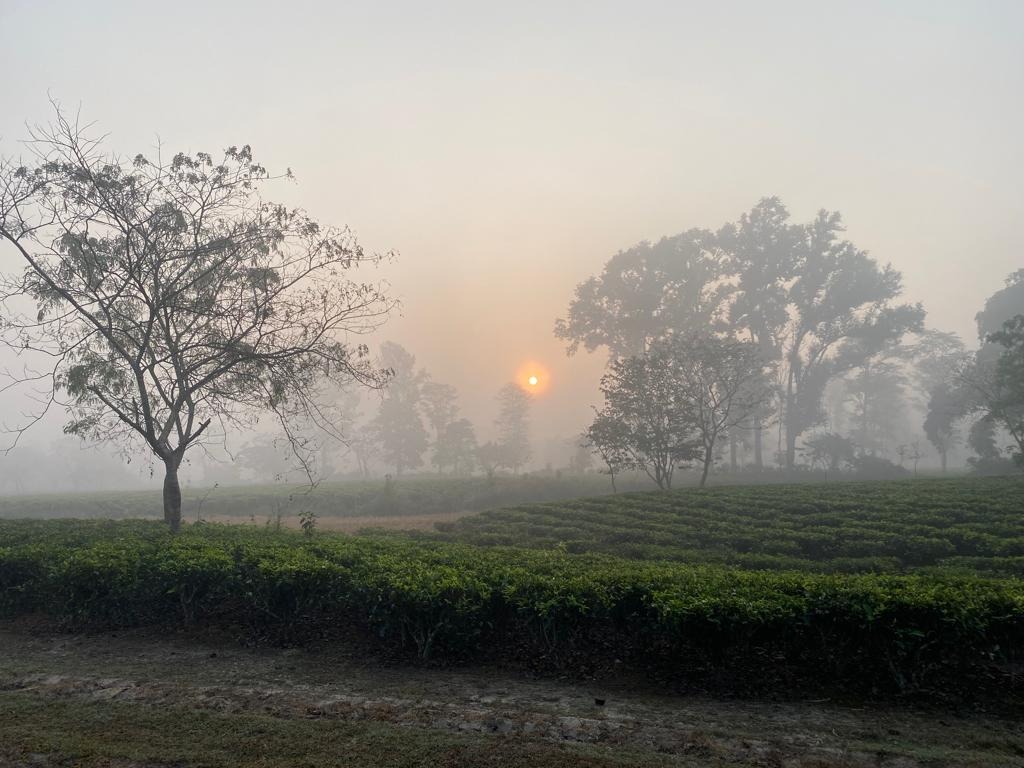
Growing up in the verdant, semi-tropical forests of the Brahmaputra Valley, my childhood was measured not by clocks, but by the rhythmic rituals of the tea estate. I remember the low, rolling mist that clung to the emerald bushes in the early morning, the distant, melodic chatter of the tea pluckers, and the deep, malty aroma that drifted from the factory as the leaves were fired. Life on a tea plantation moves at its own deliberate pace—a quiet, unhurried cadence that seems to stretch time itself.
When I founded Curtain Call Adventures, I knew I wanted to share this specific rhythm with our guests. For many travelers, Assam tea is merely a robust morning beverage. But to visit the heritage tea estates of Northeast India is to step into a living novel—a place where colonial history, indigenous culture, and profound tranquility intersect.
Living on “Tea Garden Time”
To truly understand the soul of Assam’s tea culture, you first have to understand how we measure our days. When you step onto a tea estate here, you are literally stepping into a different time zone. We call it Bagan Time (Tea Garden Time), and it runs exactly one hour ahead of Indian Standard Time (IST).
Because Assam is situated in the extreme east of India, the sun rises here as early as 4:30 AM in the summer. Over a century ago, the British planters realized that to make the most of the daylight hours and maximize productivity before the midday heat set in, they needed to shift their clocks. This tradition has survived for over 150 years. When you wake up on an estate, the early start doesn’t feel forced; it feels entirely natural. The world is awake, the birds are singing, and the dew is fresh on the leaves. It sets the tone for an unhurried day that honors the natural rhythm of the earth rather than the artificial constraints of a modern schedule.
The Unhurried Luxury of the Burra Bungalows
The history of Assam tea dates back to 1823, when wild tea plants were discovered growing in the region. Today, Assam is home to over 800 estates, including the staggering Monabarie Tea Estate—the largest tea garden in Asia, spanning over 1,300 hectares. But for me, the true magic lies in the intimate history preserved within the walls of the heritage Burra Bungalows (manager’s bungalows).
These magnificent structures were built with high ceilings, polished teakwood floors, elevated wooden stilts, and sweeping verandas designed to catch the evening breeze. Imagine waking up in a four-poster bed to the gentle sound of birdsong. A bearer arrives softly with “bed tea”—the freshest, most aromatic cup you will ever taste. You take your cup to the veranda, settling into a wicker planter’s chair.
The luxury here is not ostentatious; it is the luxury of profound stillness. Every bungalow holds its own legendary stories—whispered tales of British planters falling in love with local Assamese girls, of grand balls held under the glow of petromax lamps, and of the solitary, eccentric managers who ruled these vast green empires. The staff, often families who have worked on the estate for generations, anticipate your needs with a warmth and grace that feels more like returning home than checking into a hotel.
Wild Mahseer: A Sanctuary in the Addabarie Estate
When curating experiences for our guests, I often look for properties that seamlessly blend this colonial heritage with deep ecological consciousness. Wild Mahseer, nestled within the 145-year-old Addabarie Tea Estate in Balipara, is a perfect example.
Spread across 22 acres, this property doesn’t just offer a heritage stay; it is home to the Eastern Himalayan Botanic Ark. Staying in the Burra Bungalow here—which was once the residence of the visiting tea agent—is like stepping back in time. The rooms are named after varieties of tea, and the Victorian-style architecture has been impeccably preserved.
Yet, what makes the experience truly transformative is what lies just outside your door. You aren’t just surrounded by tea; you are immersed in a bio-diverse sanctuary of over 100,000 plants and dozens of bird species. Spending an afternoon here, walking through the botanical gardens before returning for a high tea of delicate sandwiches and robust Assam blends, is an exercise in pure rejuvenation.
The lovely Chai Seed Bari resort
offers another exquisite dimension of this heritage. This beautifully appointed retreat allows guests to experience the gentle hospitality and serene luxury of a tea planter’s lifestyle, complete with sprawling lawns and impeccably curated regional cuisine that perfectly complements the unhurried pace of the estate.
The Art of the Leaf and Grassroots Guardians
The journey from the bush to the cup is a delicate art form. During our curated stays, we ensure our guests don’t just look at the gardens, but truly engage with the process. A private tea-tasting session with a master tea sommelier reveals the nuances of the leaf—you learn to slurp the tea loudly to open up the palate, discovering notes of honey, dark chocolate, and the rich, loamy earth of the Brahmaputra valley.
But we also take our guests beyond the manicured lawns of the grand estates to visit small, independent tea gardens run by local tribal communities. Here, the scale is intimate. I remember sitting in the modest courtyard of a local organic grower as his wife hand-rolled freshly plucked leaves, roasting them over a small, open wood fire. We drank the smoky, green tea from bamboo cups, paired with simple, homemade rice cakes.
This contrast—between the grand history of places like Wild Mahseer and the humble, deeply personal enterprise of the tribal growers—is profound. It bridges the gap between the historical legacy of the region and the empowered, sustainable future of its indigenous people.
To travel to the tea estates of Assam is to give yourself permission to pause. It is a journey that honors the history of the land, supports the communities that nurture it, and ultimately, offers the traveler a deep, restorative peace. We invite you to come, set your watch to Bagan Time, sit on the veranda, and let the rhythm of the tea gardens recalibrate your soul.
Ready to experience the unhurried luxury of Assam’s tea estates? Explore our curated heritage itineraries in the Discover More section or Contact Us to begin planning your restorative journey to Northeast India.