The Threads That Bind Us: A Journey Through Northeast India’s Living Looms
I learned to weave from Aita, my Assamese grandmother, when I was just seven years old. During mid-mornings or late afternoons on our tea estate, when the heat of the day settled into a quiet hum, she would sit at her loom. To my young eyes, it was pure magic—watching her rhythmic, practiced hands transform raw, spun threads into exquisite fabric. The rhythmic clack-clack of the shuttle was the heartbeat of our home.
Long before I founded Curtain Call Adventures, and long before “sustainable fashion” became a global conversation, I understood that a piece of handwoven cloth is never just a garment. It is a canvas of identity, a repository of generational knowledge, and a profound act of love.
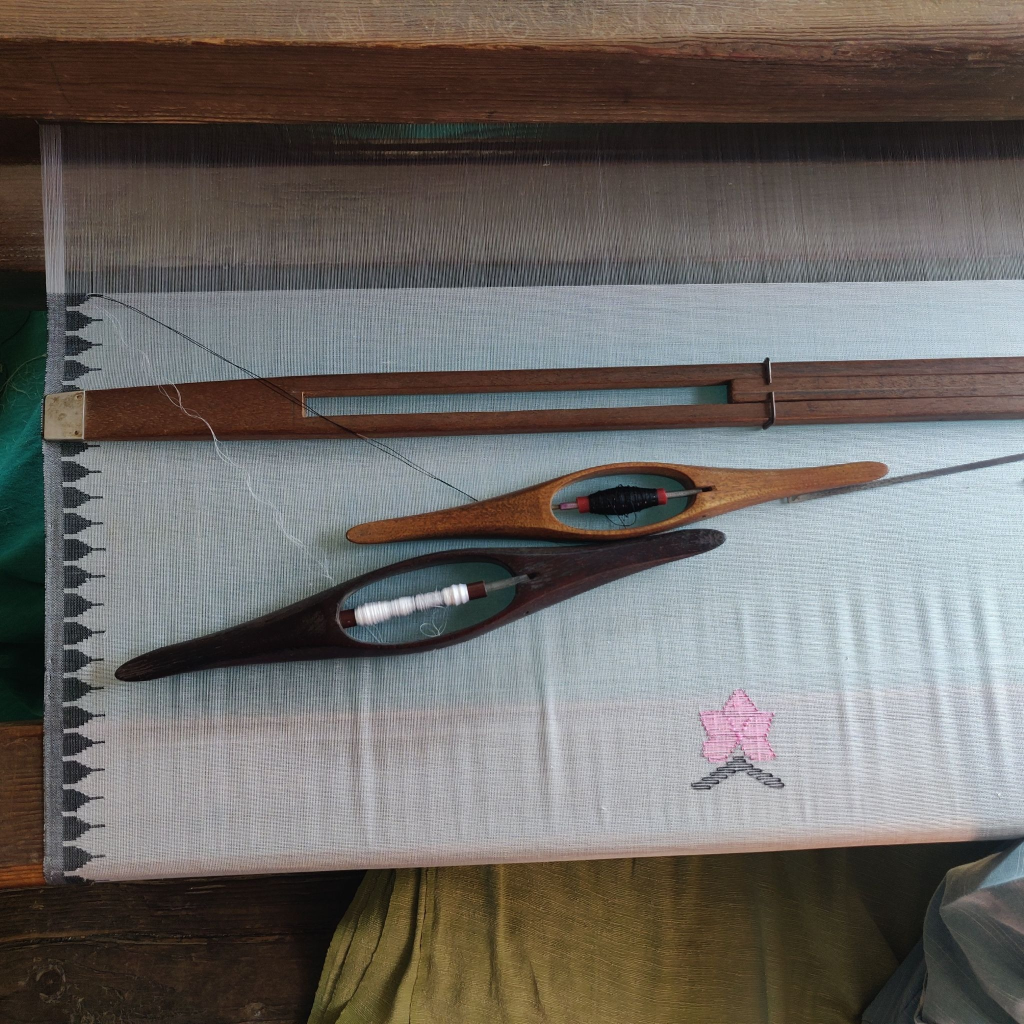
When our guests travel with us to Northeast India, they are often struck by the sheer diversity of the landscapes—from the mist-draped hills of Meghalaya to the sweeping valleys of the Brahmaputra. But the true soul of this region is woven into the textiles created by its indigenous communities. For the discerning traveler seeking more than just sightseeing, engaging with our living weaving traditions offers a rare, unhurried glimpse into the very fabric of our culture.
Assam: The Alchemy of Natural Dyes and Peace Silk
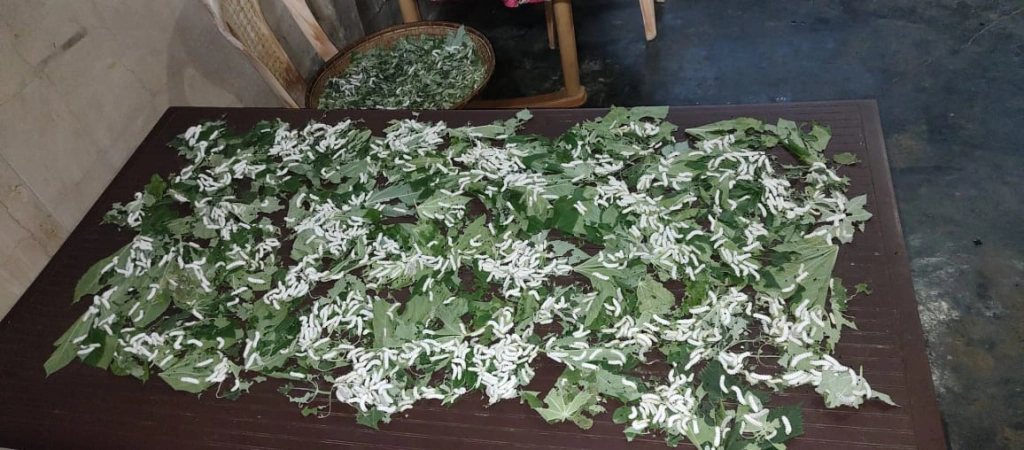
Our textile journey often begins in the villages of Assam, a state synonymous with silk. While the world knows of many silks, Assam is home to Eri, often called “peace silk” or Ahimsa silk. Unlike traditional silk production, Eri is spun from the open-ended cocoons of the Samia ricini moth only after the moth has safely flown away.
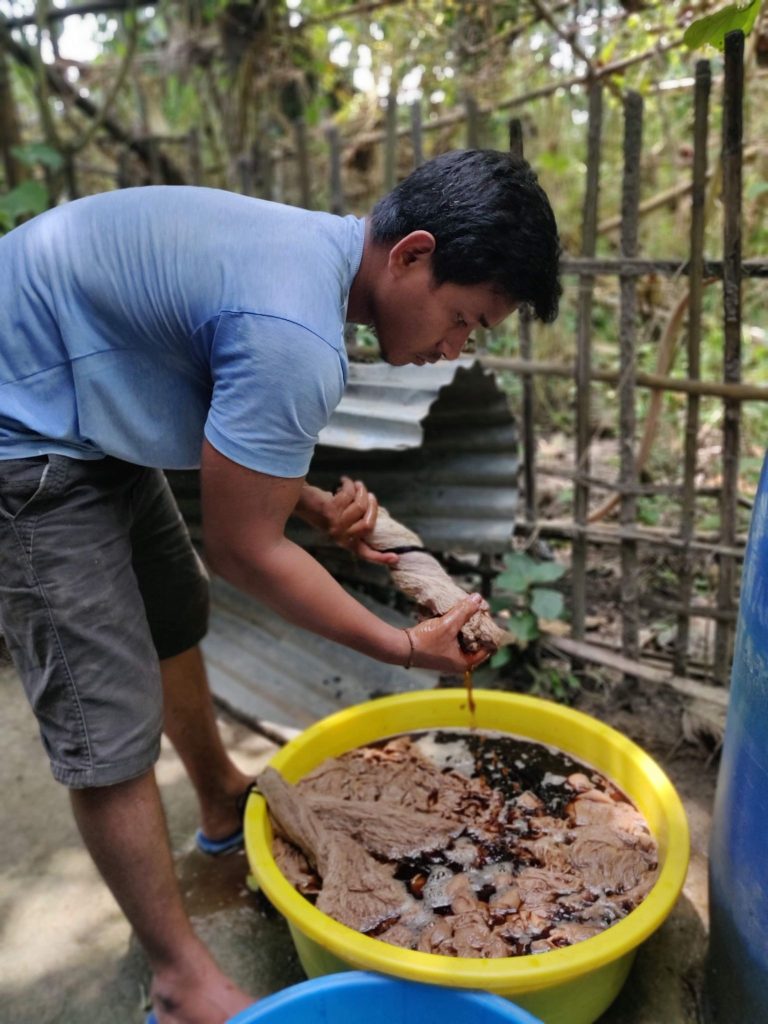
Visiting a weaving village in the Kamrup district is an exercise in slow travel, but the true magic happens in the dyeing vats. I recently sat in on a session with a master dyer, an experience that was nothing short of thrilling. The air was thick with the earthy scent of boiling roots and leaves. I watched, mesmerized, as the deep intensity of colors came to life. He moved with an effortless rhythm, pounding and mixing his next batch of dye material—a surprisingly simple yet potent mixture of dried onion skins.
To see pale, raw Eri yarn submerged into a vat and emerge as a vibrant, glowing amber is to witness a kind of ancient alchemy. When you purchase an Eri silk shawl directly from the woman who spun and wove it, you are holding a piece of her story. It is a luxurious, thermal textile that carries the warmth of the Assamese sun, the rich hues of the forest floor, and the gentle ethos of a community that respects all living things.
Nagaland: The Bold Narratives of the Loin-Loom
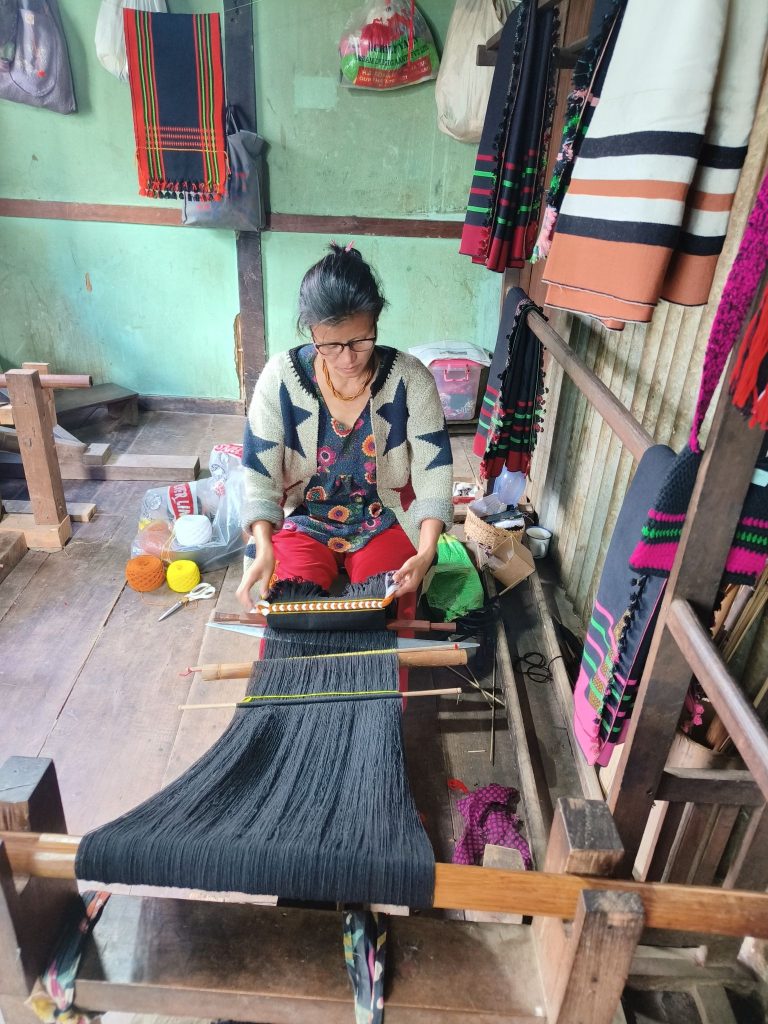
As we travel upward into the dramatic hills of Nagaland, the gentle hum of the Assamese loom is replaced by the striking, bold geometry of Naga textiles. Here, weaving is exclusively the domain of women, and the traditional backstrap or loin-loom is an extension of the weaver’s own body.
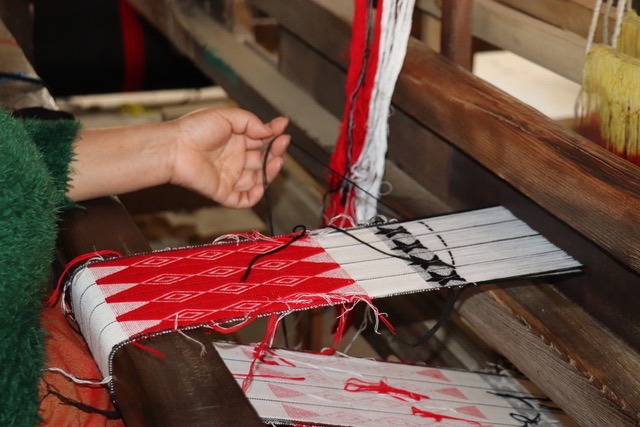
The Naga loin-loom is a marvel of indigenous engineering. It is portable, simple in its construction, yet capable of producing textiles of astonishing complexity. Each of the major Naga tribes has its own distinct patterns, colors, and motifs that historically served as a visual language.
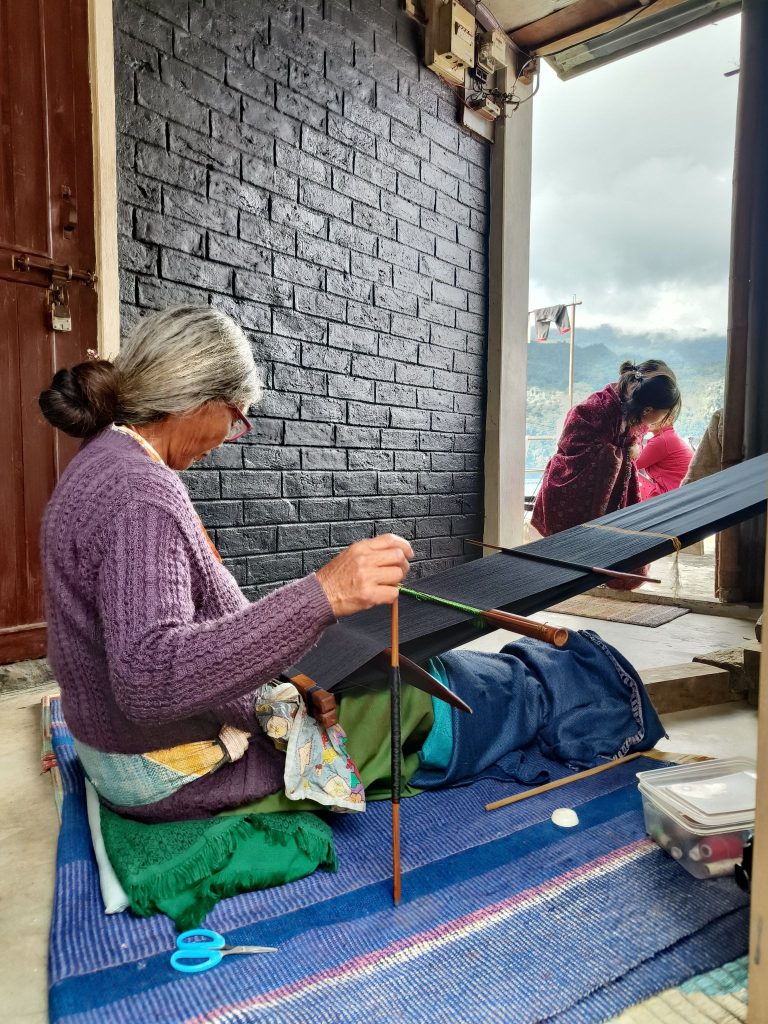
I recall a particularly poignant afternoon spent in a remote Naga village. I sat watching an elderly woman weave, the breathtaking expanse of the Naga hills rolling out behind her like a painted backdrop. She manipulated the tension of the warp threads with her body, weaving vibrant reds and blacks with intense focus. Beside her, on the very same woven mat, her young granddaughter sat playing with a stray ball of bright wool.
It was a quiet, powerful scene. There were no formal lessons being given, yet the transfer of knowledge from generation to generation was seamless. The child was absorbing the rhythm, the colors, and the discipline of the craft simply by being in its presence. To wear a Naga shawl is to drape yourself in this unbroken lineage—the bold, proud history of the hills passed from grandmother to child.
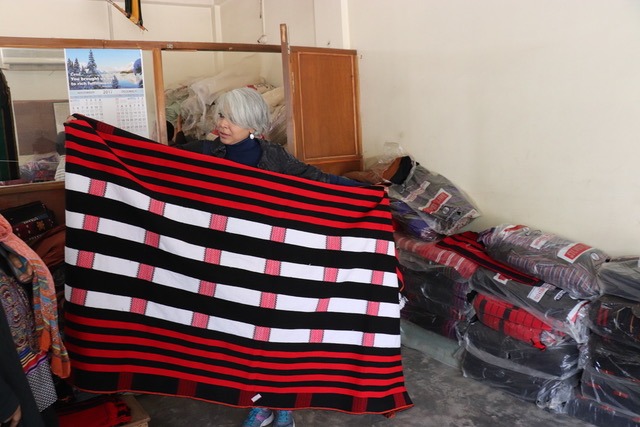
Manipur: Lotus Fibers and the Precision of Patience
Further east in the hills lies Manipur, a state where the weaving tradition is so deeply ingrained that a loom is considered an essential part of a bride’s dowry. While Manipuri textiles are renowned for their delicate, intricate embroidery, there is a new, quiet revolution happening in the state’s numerous water bodies.
Manipur is a land of lakes, and the lotus thrives in these waters. Recently, it was incredibly thrilling to visit the workshop of an artisan who has taken on the immense challenge of extracting fiber from the lotus plant. The process is painstaking. I watched as the artisan carefully snapped the lotus stems, gently pulling them apart to reveal the gossamer-thin, spiderweb-like filaments inside.
These fragile threads are rolled together by hand, inch by inch, to create a viable yarn. It takes thousands of stems and days of intense, focused labor to produce enough yarn for even a small piece of fabric. To see this raw, aquatic fiber being woven into a fabric so refined that it will eventually be converted into bespoke neckties for a foreign luxury market is astounding. It is a testament to the innovation and relentless patience of Northeast India’s artisans.
(Photo Suggestion: A macro shot focusing on the artisan’s hands as they gently pull apart a bright green lotus stem, revealing the delicate, almost translucent white fibers stretching between the broken halves.)
The True Luxury of Slow Craft
At Curtain Call Adventures, we don’t just talk about “slow travel”; we invite you to live it. Imagine waking up in a beautifully restored colonial tea bungalow, the morning mist still clinging to the Brahmaputra valley. Your day isn’t rushed by a rigid itinerary. Instead, you find yourself sitting on a shaded veranda in a rural village, sharing a cup of locally brewed tea with a master weaver.
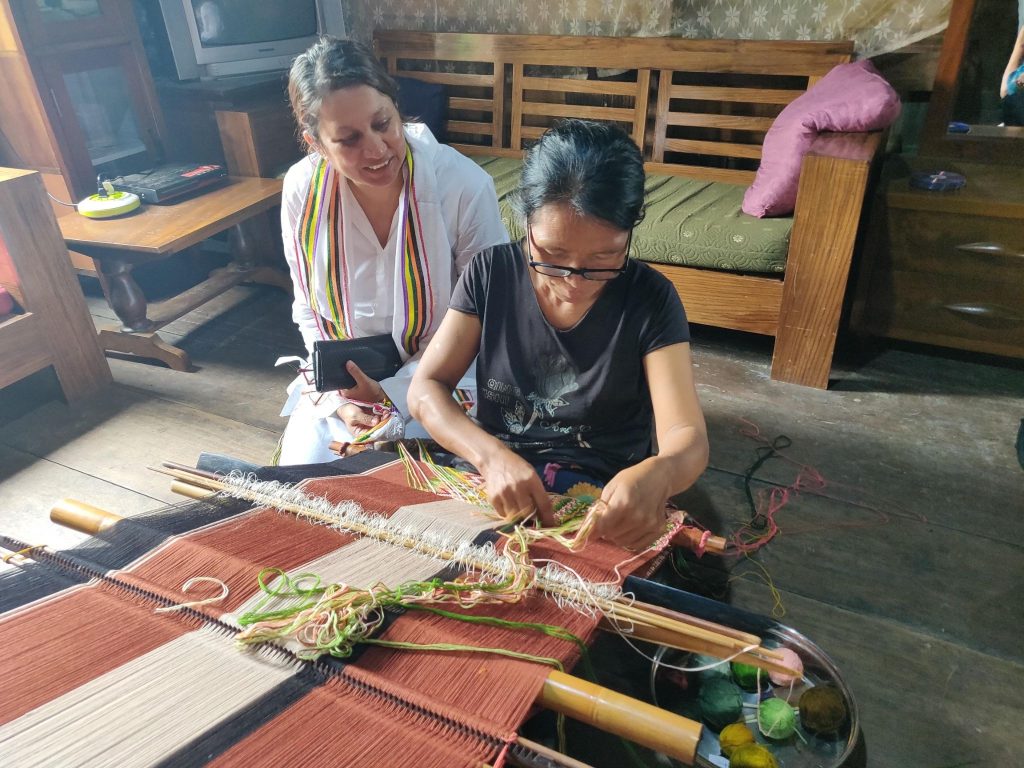
You aren’t just a spectator; you are a guest. You listen to the rhythmic clack of the loom and hear the stories behind the motifs, perhaps even trying your hand at the natural dye vats. The luxury here isn’t found in gold-plated fixtures; it is found in access, authenticity, and time. It’s the profound comfort of returning to your boutique lodge after a day of genuine connection, sitting by a fire with a glass of wine, and running your fingers over a piece of textile you watched come to life that very afternoon.
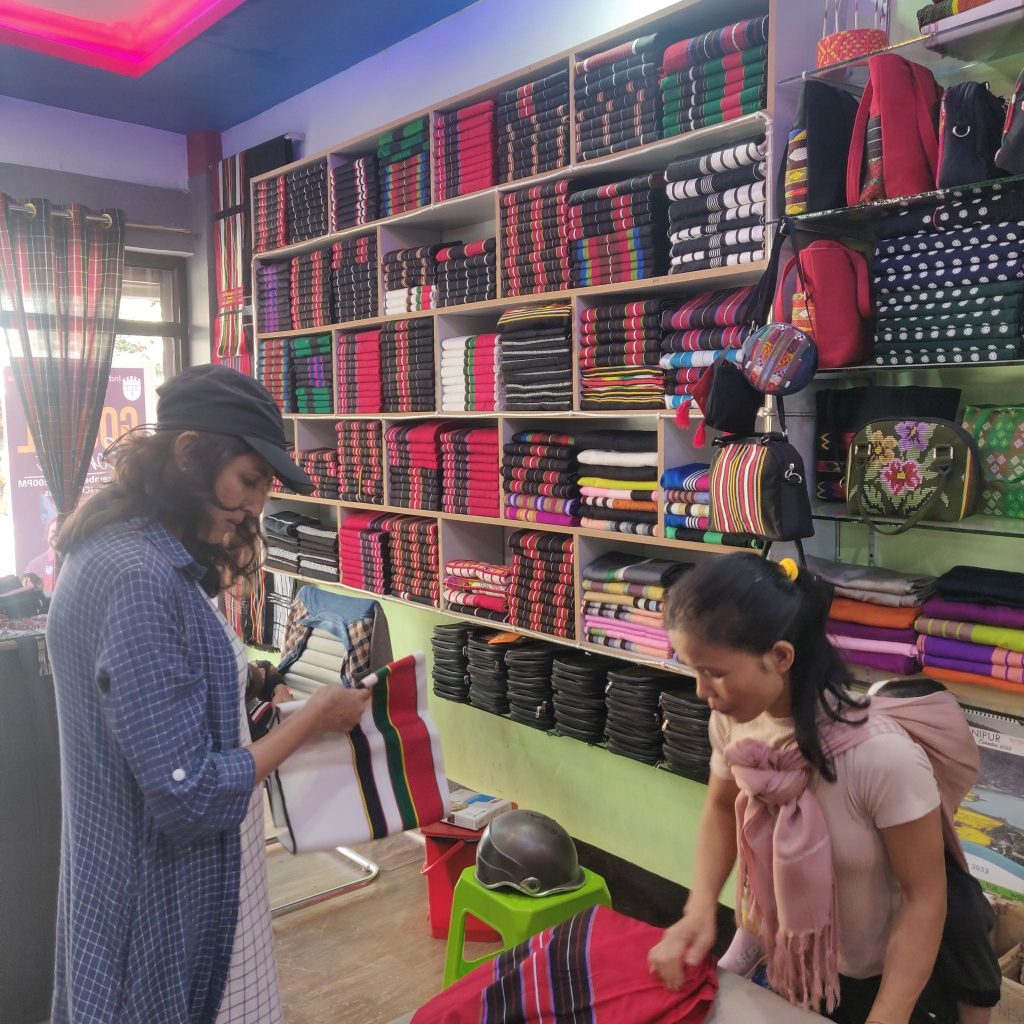
When you purchase a textile directly from these artisans, you are carrying home more than a souvenir. You are taking a tangible piece of their heritage, their time, and their story. You leave knowing your journey has directly supported these remarkable women, helping them sustain a livelihood that honors their ancestors.
The threads of Northeast India do more than bind garments together; they bind generations, communities, and eventually, they bind you to the soul of this incredible land. We invite you to come and unravel these stories with us.
Curious to weave your own story in Northeast India? Explore our curated cultural itineraries in the Discover More section or Contact Us to craft a bespoke journey tailored to your pace and interests.