
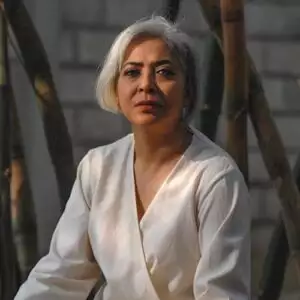
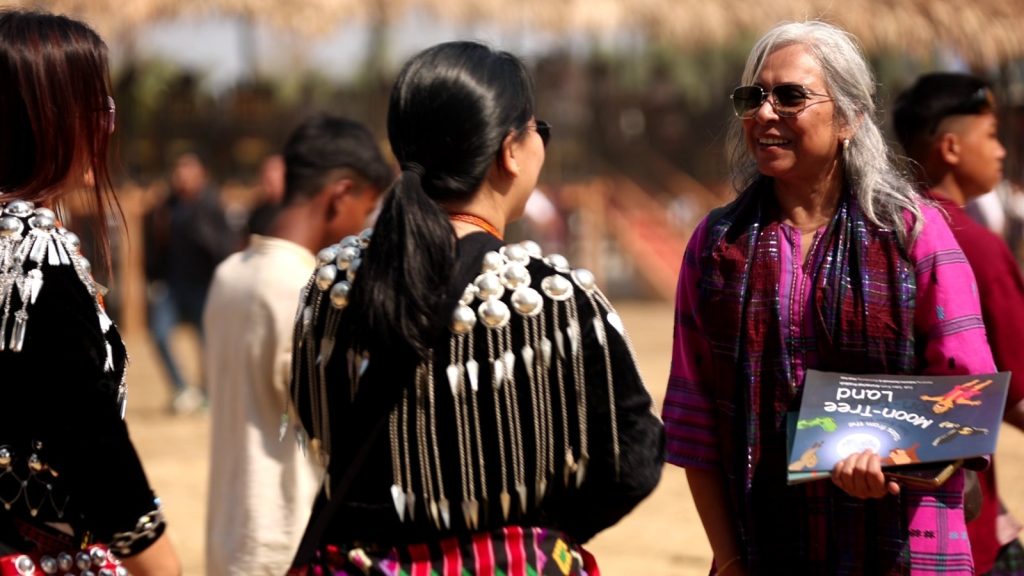
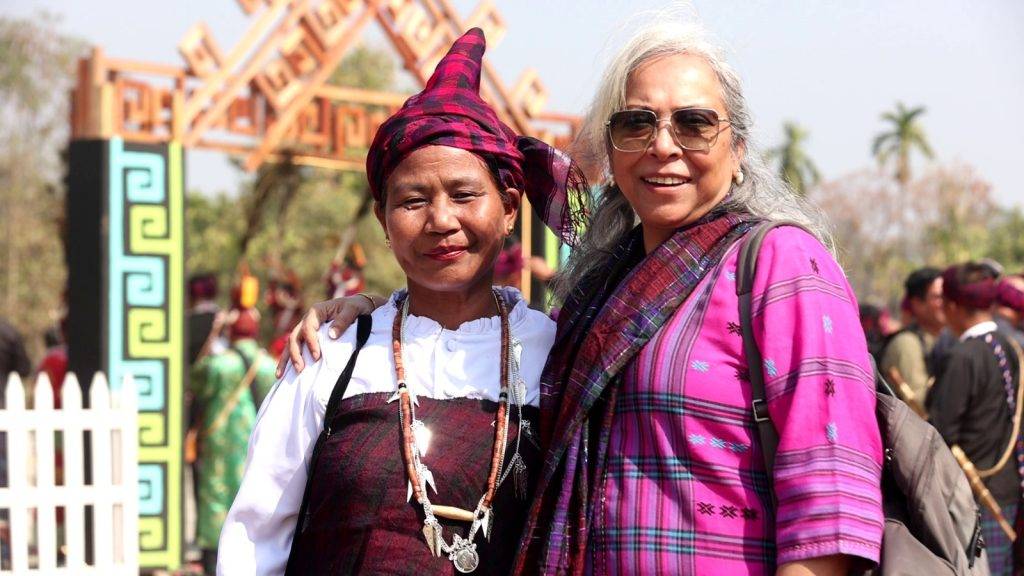
The first person I met at the festival grounds was Indarjit Tingwa, an esteemed member of the Singpho community with whom I had been corresponding for the past few years to clarify doubts about the tribe and region. He had given me a book on their textiles, and we had talked extensively about the festival and my interest to visit. It was wonderful to finally meet him in person and to be in Miao, Arunachal Pradesh, witnessing the 42nd Shapawng Yawng Manau Poi festival.
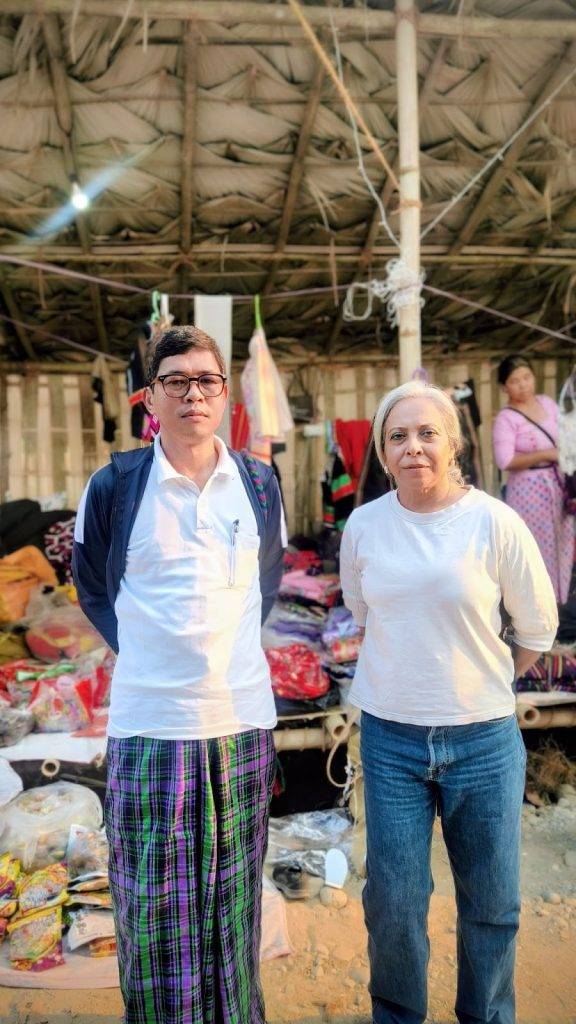
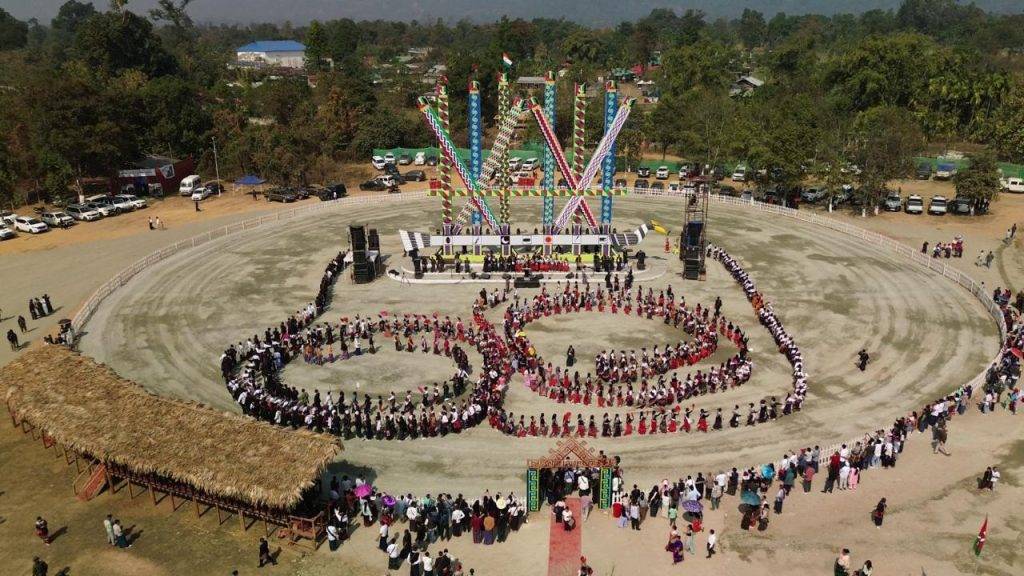
The air thrums with a rhythm I’ve never experienced before—an intoxicating hum woven from the thud of drums, the melodious clang of gongs, and the cheerful cadence of thousands of voices.
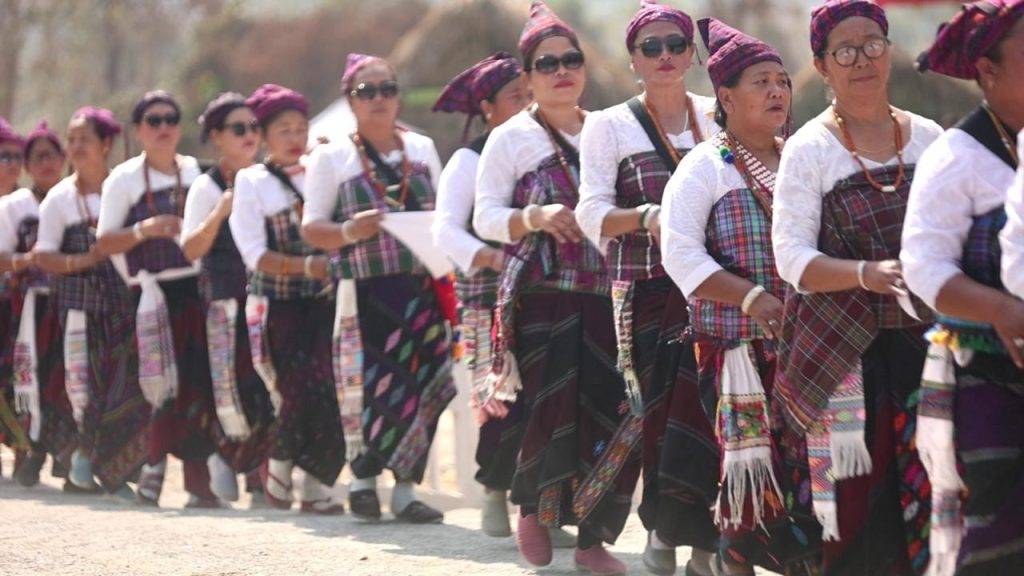
Almost immediately, a grandmother approaches me with warmth, her weathered hands pulling me close as if I’ve been gone for years rather than just meeting. She is adjusting her granddaughter’s bathang, the traditional wrap skirt, and I notice immediately that it’s new—a deep indigo with intricate geometric patterns woven in gold lurex thread. “Do you see this?” she asks, running her fingers along the border. “I spent three months on this loom. Every pattern tells a story of our ancestors.” I sit beside her, and she begins to explain the symbolism: the diamond shapes represent the strength of our people, the zigzag lines our journey through mountains and valleys. As she speaks, other guests gather around, and soon we’re all examining the fine details of each other’s garments, sharing techniques, laughing at the imperfections that somehow make each piece more precious.
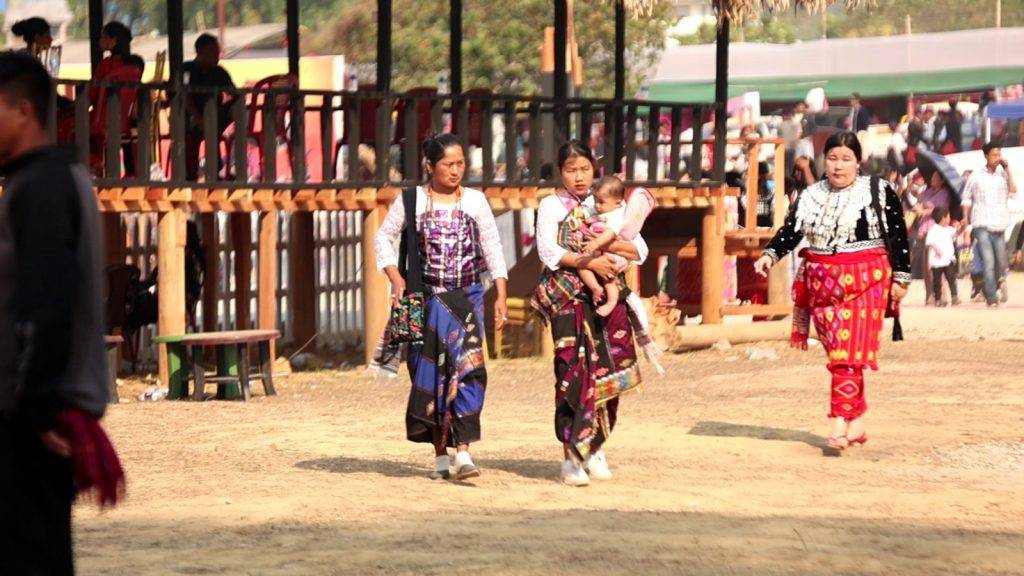
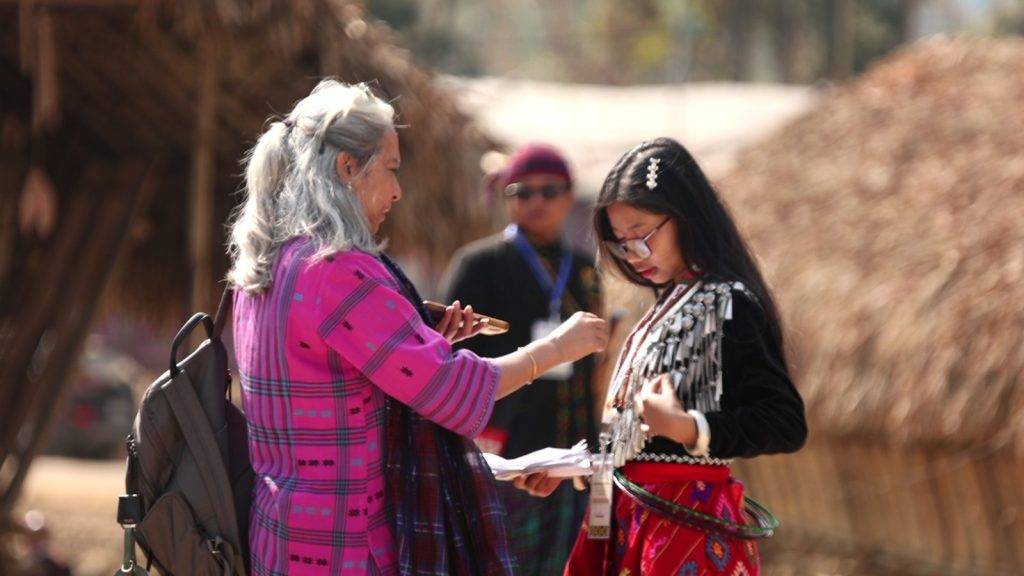
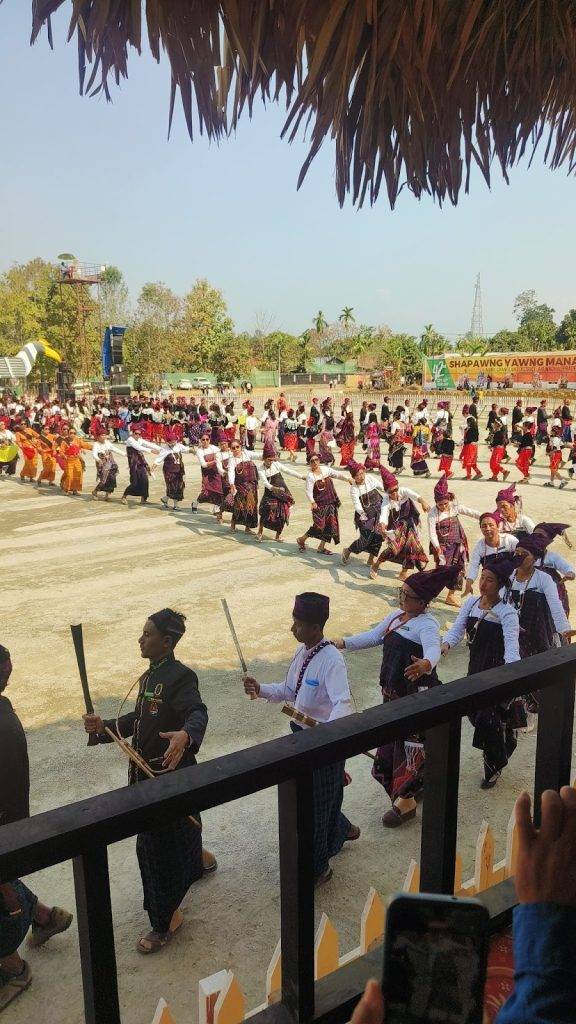
An elderly man, visiting from the Kachin region in Myanmar, overhears our conversation and joins us. His khaithung—the traditional checkered lungi of black and green with red and yellow accents—is worn but immaculate, speaking to years of careful wear and maintenance. “In my village,” he says, “the young people are forgetting how to wear these properly. But here, I see my culture alive in your hands, in your daughters’ hands. This gives me hope.” His eyes grow misty as he watches a group of teenagers practicing the Manau dance in their traditional attire. I spend the next hour listening to his stories of Kachin celebrations across the border, how similar yet different they are from what I’m witnessing here. He speaks of the same nats, the spirits that the community believes in, the same reverence for Shapawng Yawng. “We are the same people,” he tells me simply. “The river separates our villages, but nothing separates our hearts.” He explains that it is believed the Singphos of Arunachal Pradesh migrated from the Kachin region a long time ago, and this festival is a living reminder of that shared ancestry.
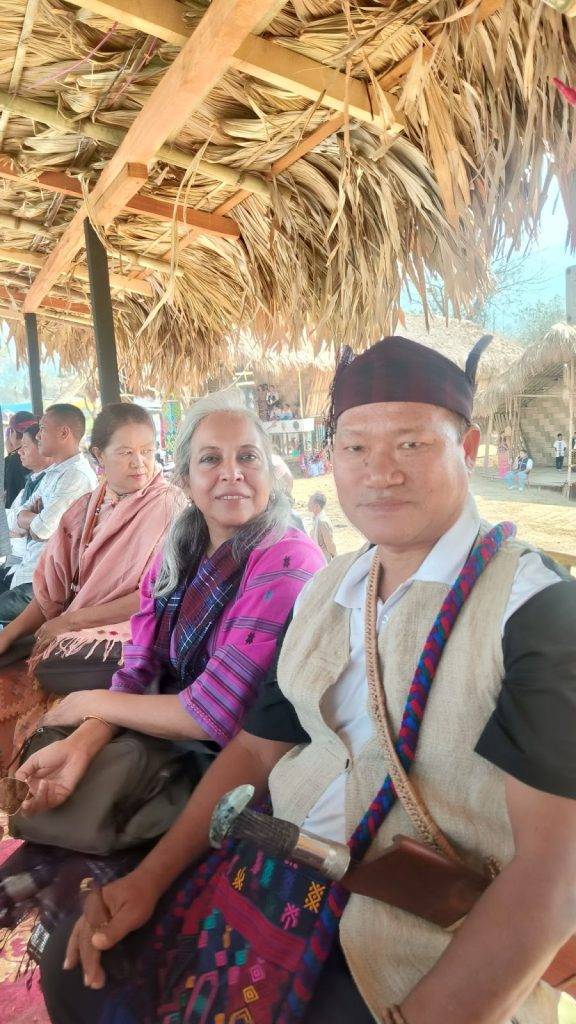
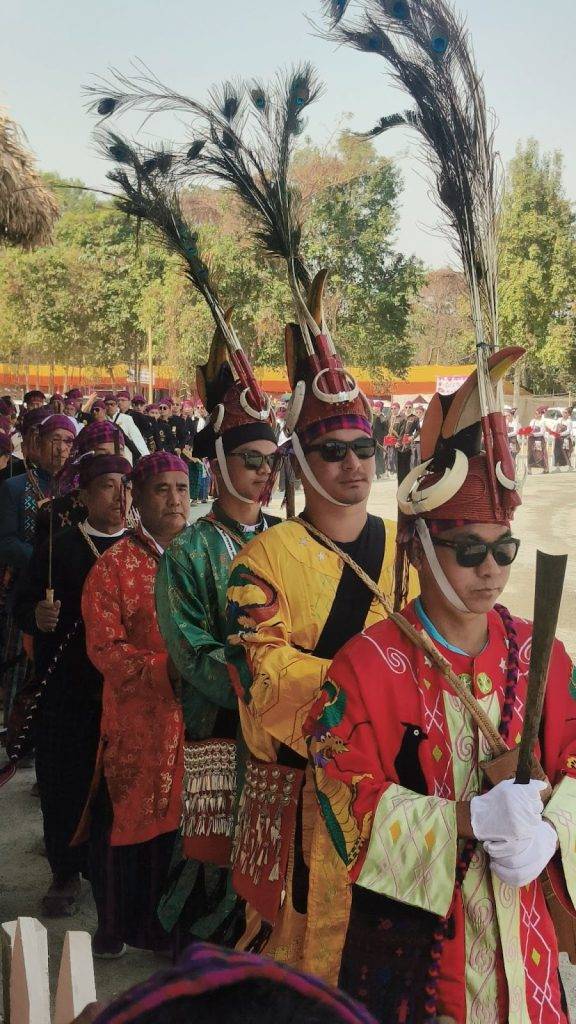
He then shows me his ceremonial sword known as Gumhro Nhtu and I cannot help but admire the handle, which has a solid piece of jade attached via very fine bamboo twines woven to a silver cap. The workmanship is exquisite—a level of detail and precision that speaks to a tradition of craftsmanship that is still being practiced, though perhaps more rarely, in the Kachin region. I am struck by how every object in this community tells a story of skill, patience, and cultural continuity.
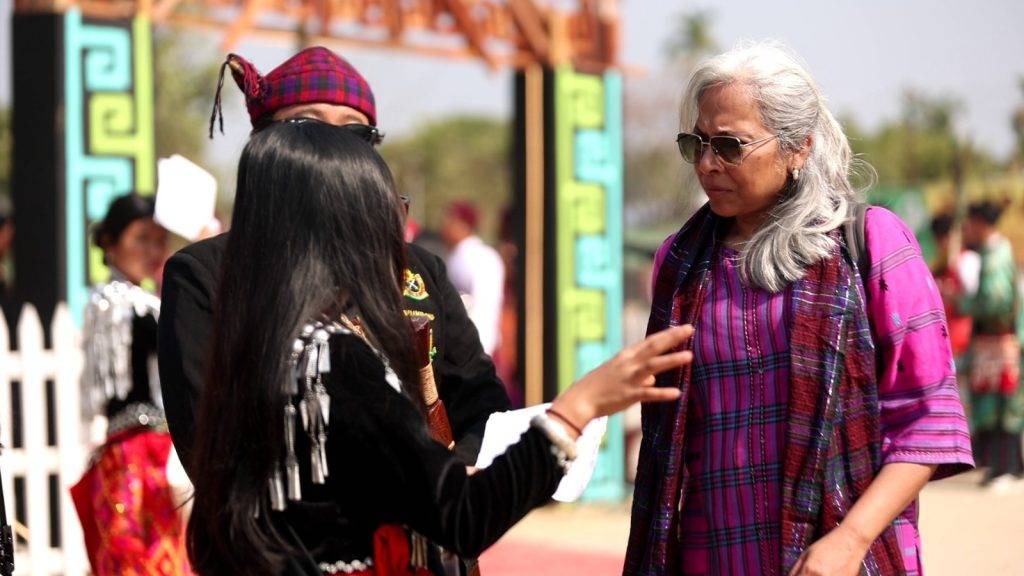
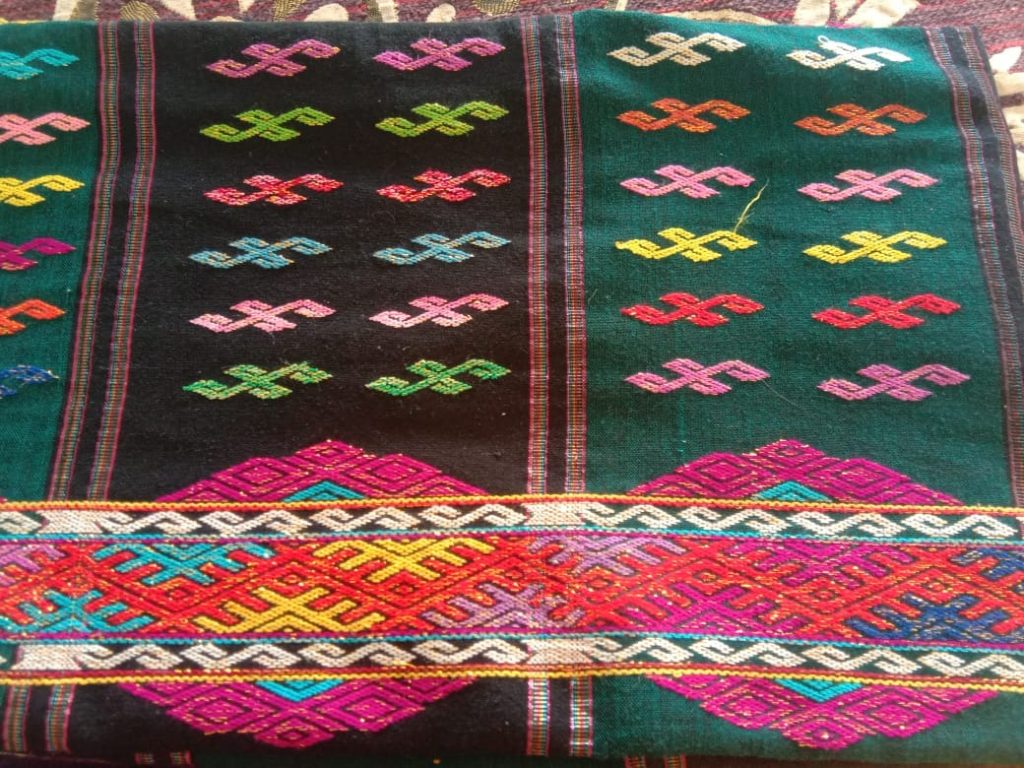
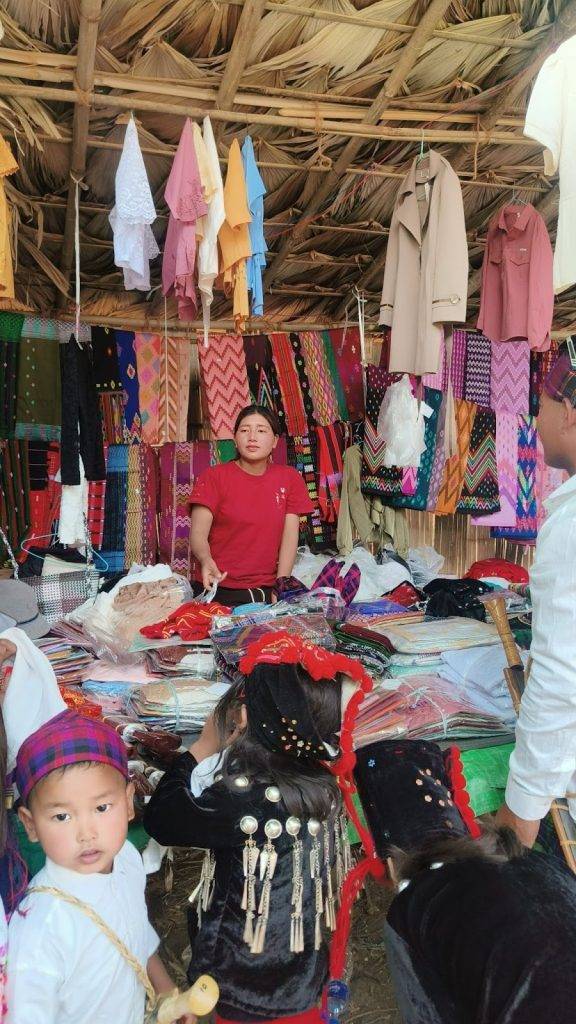
The admiration for the Singpho community’s weaving skills deepens as I walk around the little exhibition curated by the Singpho Women’s Association, spearheaded by Pinna Kitnal and a few others. I am thrilled to see older examples of their weaves—so intricate and detailed that I can barely comprehend the hours of labor involved in each piece. I learned that the Singpho community has been actively involved in securing Geographical Indication (GI) tags for their traditional products, a recognition of their craftsmanship and cultural significance. I find myself hoping that younger generations will be inspired to keep these intricate weaves alive, as the artistry represents centuries of accumulated knowledge and cultural pride. About 5 -4 years ago I had spent time at Inthong village near Margherita, Assam to learn and explore their weaving techniques, traditional wear and way of preparing smoke tea known as Phalap. So being at the festival was a reconnection to my previous trip.
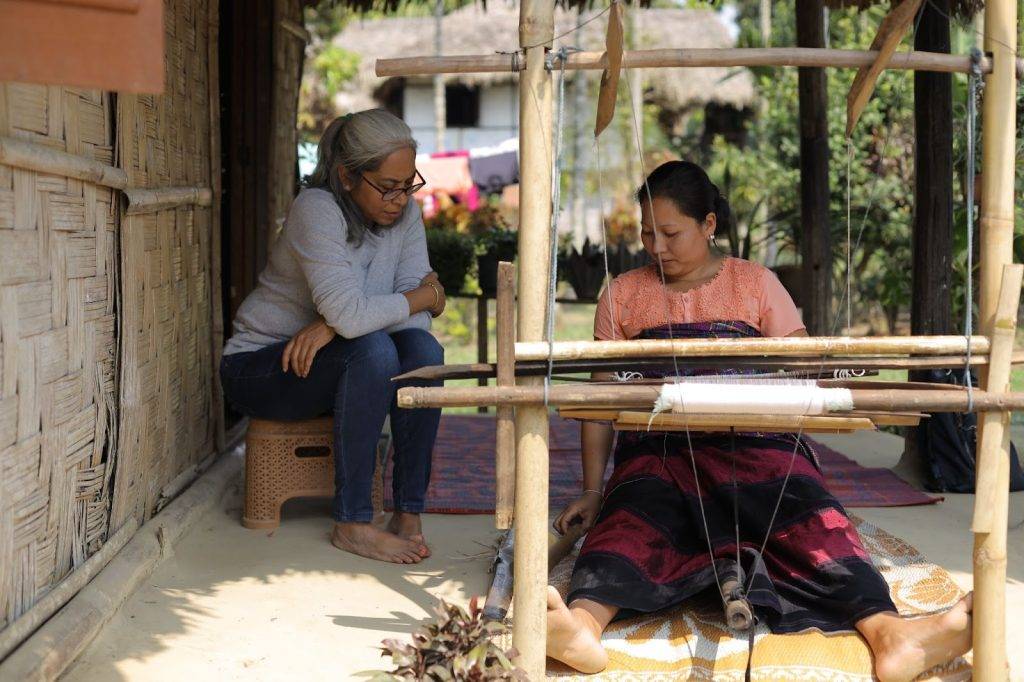
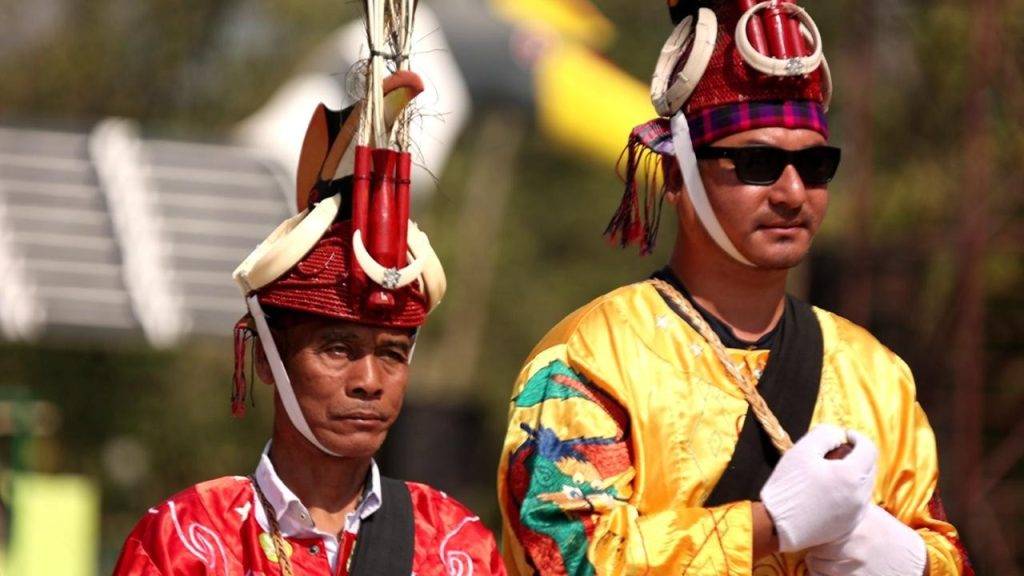
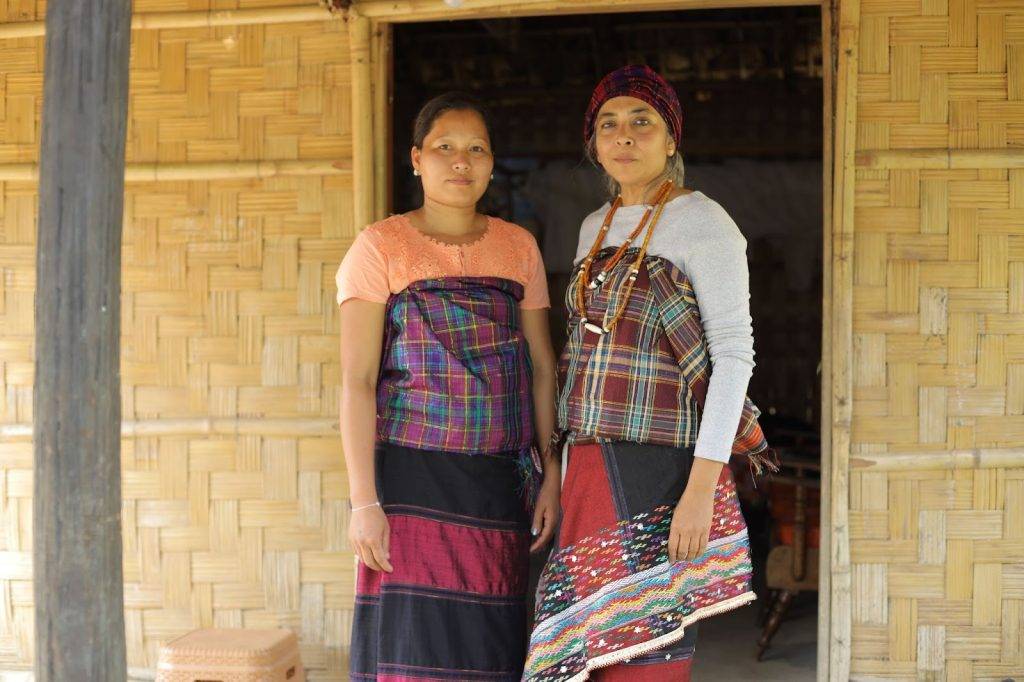
One of the highlights of my trip then was trying on the traditional wear. Singpho traditional dress is handwoven on backstrap looms, displaying radiant hues and elaborate geometric and floral patterns. Women’s attire includes brilliant tops (Choi/Pipa), wrap skirts (Singket/Babu), and chest wraps (Ningwat/Nungwat). Men wear patterned lungis (Khaithung/Lasababu-Bupa), shirts (Samtong), and turbans (Khuphok/Bum-Bam). Both genders complete their ensembles with accessories such as side bags (Khak) and traditional dao, reflecting the rich cultural identity of the Singpho people.
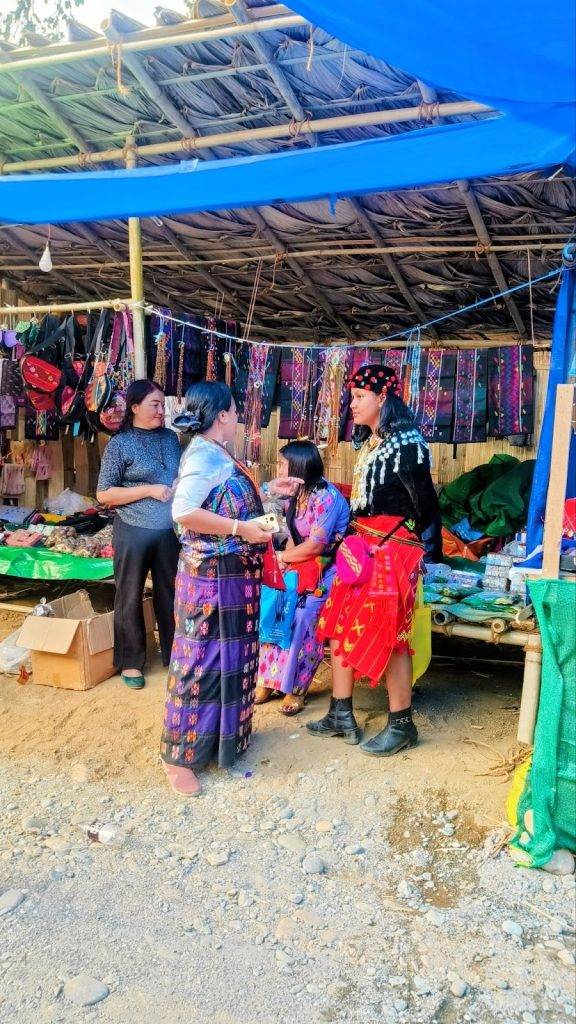
Later, as I wander around the Burma market area of the festival—so named because most of the vendors come from Myanmar using a 15-day pass to set up stalls—I chat with a group of Kachin youth who’ve traveled from across the border. One of them, Maung Kyaw, tells me about his life in Myitkyina, his work, his dreams. I share my own stories from my childhood of visiting Miao. The conversation flows effortlessly, as if we’ve known each other forever. “My grandfather told me we’re all one people,” Maung Kyaw says, “but I never really felt it until now, sitting here eating the same food, wearing clothes that look almost identical. It’s like looking in a mirror across the border.” At this moment, I understand that the festival is far more than a celebration of dance and tradition—it’s a powerful affirmation of shared identity and kinship that transcends the arbitrary lines drawn on maps.
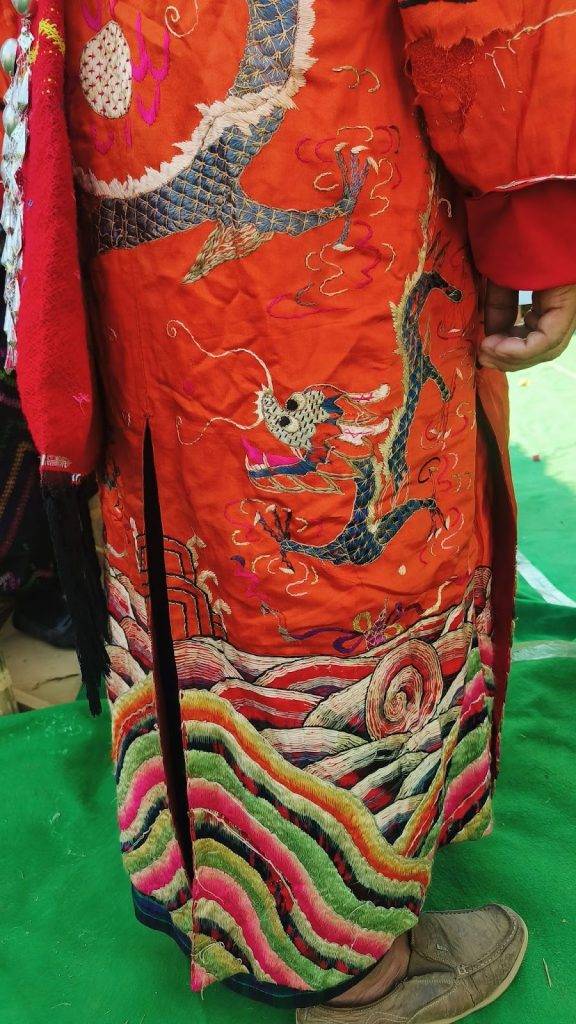
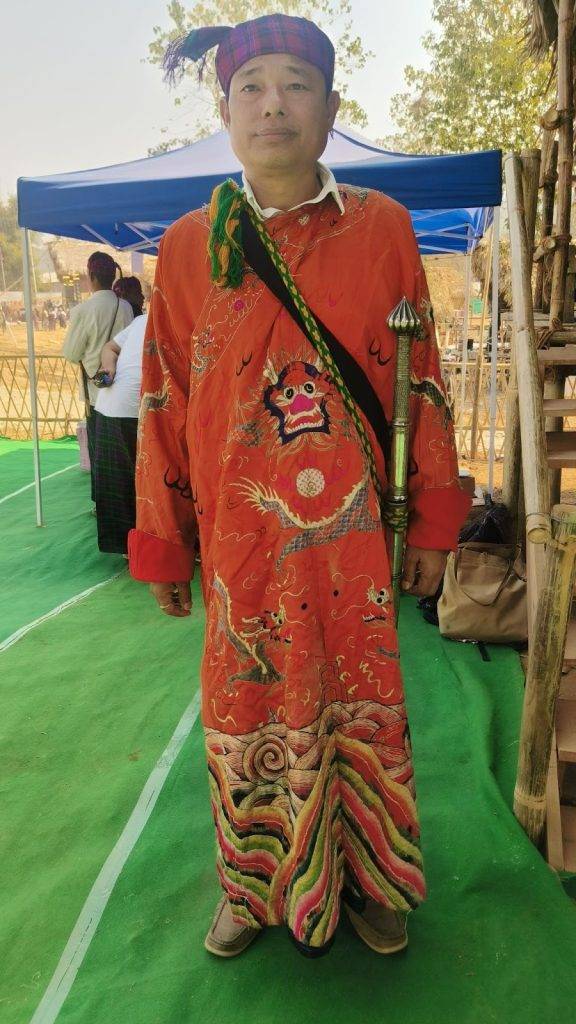
An elder then allows me to admire his ceremonial gown, which features intricate embroidery done in a style associated with Chinese embroidery satin stitch, executed with fine silk yarn. “This pattern,” he explains, “is over two hundred years old. My great-grandfather and his great-grandfather before him have worn it. When you wear this, you carry all of them with you.” I run my fingers carefully along the seams, marveling at the precision and artistry. This garment is not merely clothing; it is a repository of family history, cultural memory, and ancestral presence.
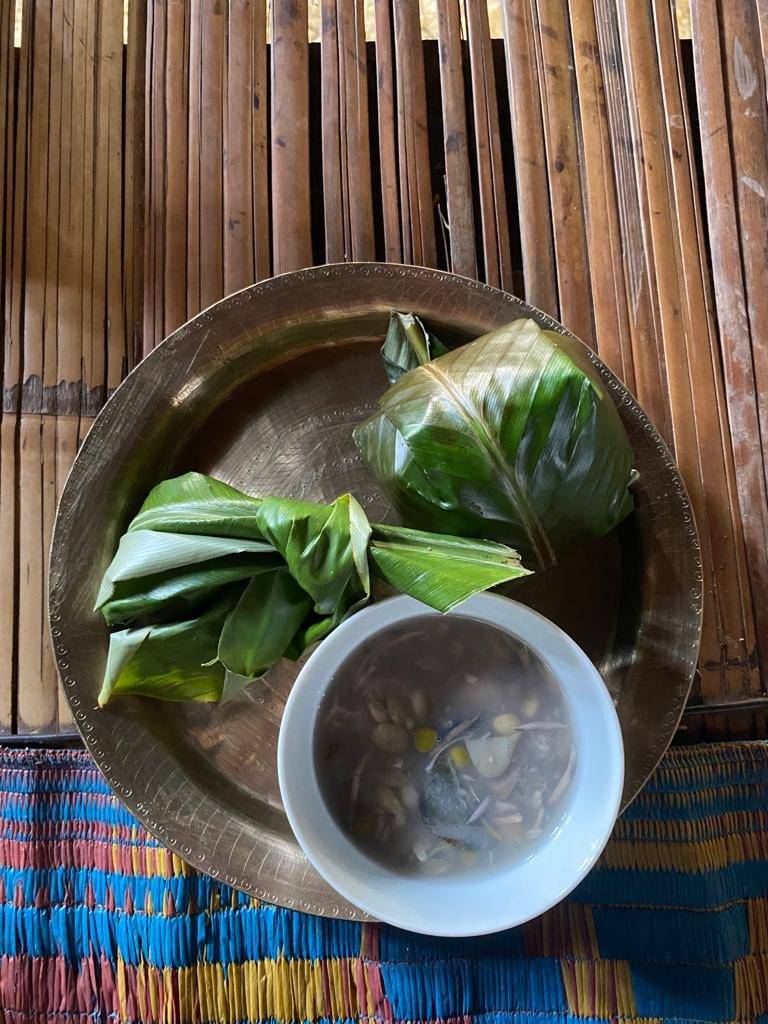
As I explore the festival grounds, I’m drawn to the food stalls where the aroma of traditional Singpho cuisine fills the air. A stall owner invites me to taste Pa-Sa, a special fish soup containing wild herbs and traditional spices, served with steamed sticky rice. The broth is complex and aromatic, with layers of flavor that speak to generations of culinary knowledge. She explains how bamboo shoots, both in wet and dry form, are staple components in their dishes, and how pork and chicken are cooked in various styles with indigenous herbs. She offered me a cup of smoked tea—a traditional beverage that tastes a little bitter and has this delicious smoky aroma. The tea has a distinctive smoky character, infused with local herbs and a subtle earthiness. “This is how we’ve always prepared tea,” she says, “long before the Assam tea plantations became famous.”
During my previous visit at Inthong, I learnt that the Singpho region has a deep connection to tea cultivation, and their traditional tea preparation methods predate the commercialization of Assam tea. While Assam tea became globally renowned, the Singpho have maintained their own tea traditions, which share similarities with the broader tea culture of the region but remain distinctly their own. The smoked tea, in particular, reflects their unique approach to tea preparation—a method that has been passed down through generations and remains an integral part of their hospitality and daily life. As I sip the warm, smoky brew, I realize that this is not just a beverage; it’s a connection to the land, to history, and to the community’s relationship with the forests and mountains that surround them.
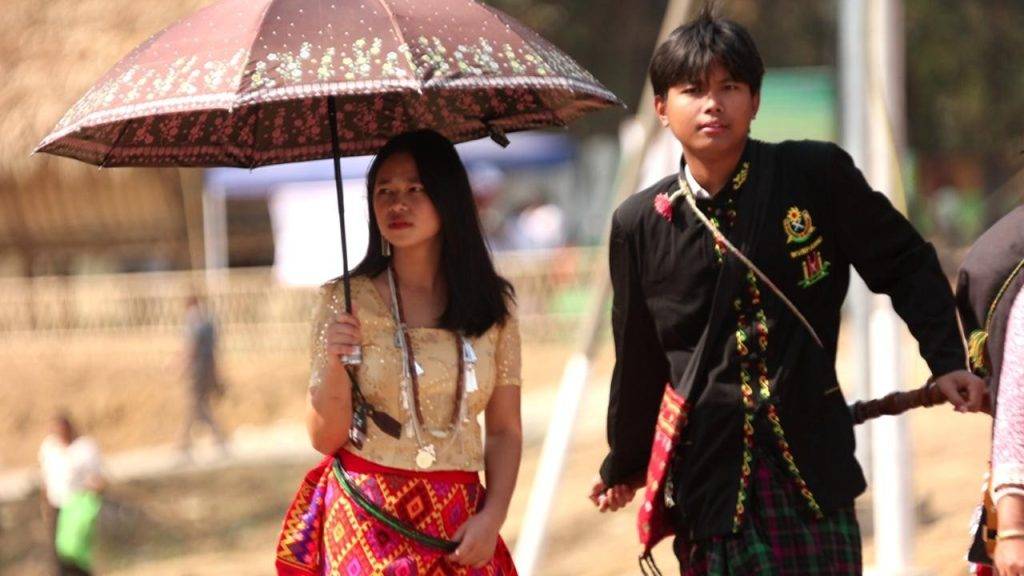
At the heart of the festival is the dance and the youth. The stage, music, games, and activities have been planned with the younger generation in mind, ensuring that this celebration remains vibrant and relevant to those who will carry these traditions forward. I watch as teenagers and young adults move through the ceremonial dances with a mixture of reverence and joy, their movements connecting them to generations past while simultaneously making the tradition their own.
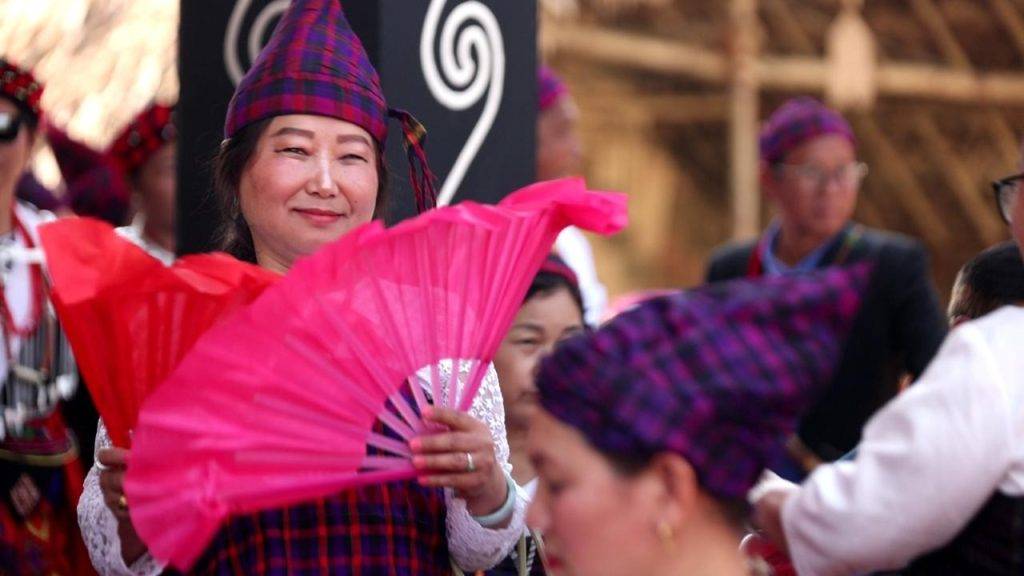
As the festival draws to a close, I find myself sitting with the grandmother again, watching the younger generation dance. She squeezes my hand and says, “This is why we gather. Not just to dance or eat, but to remember that we are not alone. Our cousins across the border, our elders, our children—we are all threads in the same cloth. The Manau keeps us woven together.”
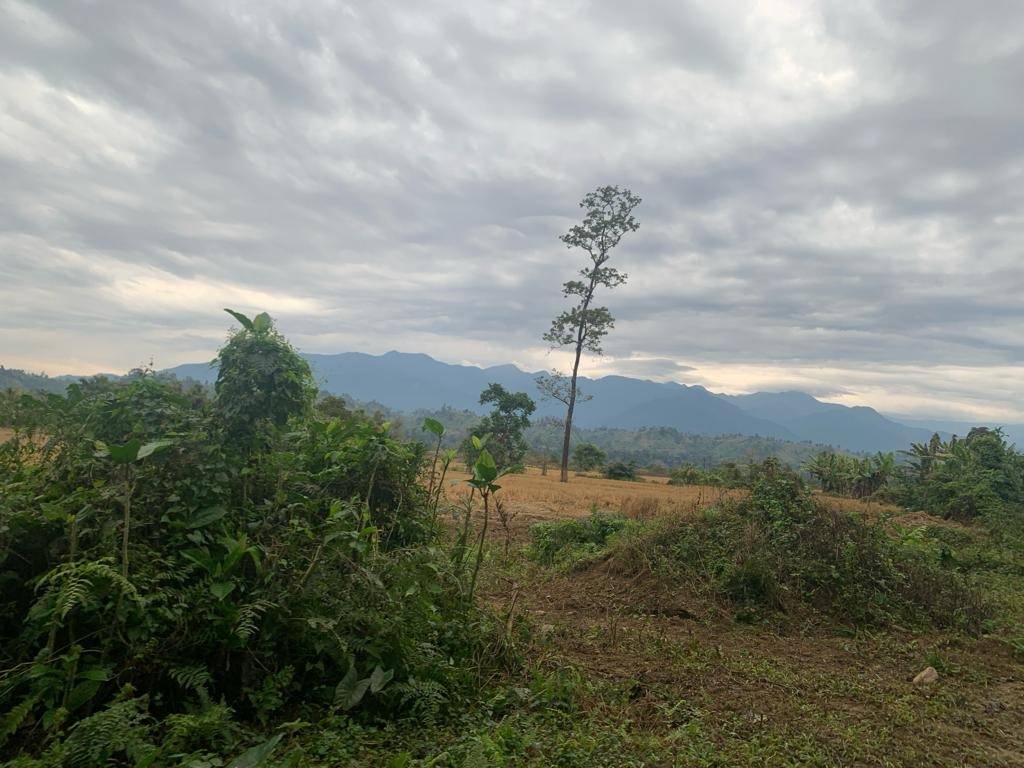
As I prepare to leave Miao, I carry with me something unexpected and profound: a deep appreciation for how cultural festivals can be acts of resistance and remembrance in an increasingly globalized world. The Shapawng Yawng Manau Poi is not just a celebration; it is a gathering of a family separated by borders but bound by blood, belief, and the unbreakable threads of shared identity. In witnessing these interactions—the patient teaching of elders, the laughter shared over intricate textiles, the unexpected kinship between young people from different countries, the meticulous craftsmanship of artisans, and the deliberate efforts to preserve and protect cultural heritage through GI tags and community initiatives—I have glimpsed something essential about what it means to belong to a community.
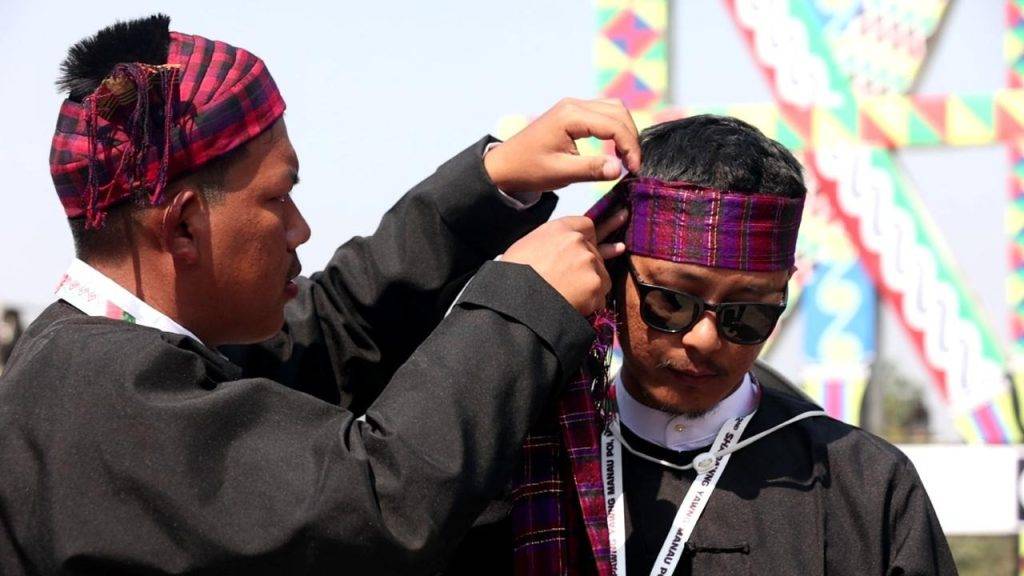
The Singpho and Kachin peoples have shown me that culture is not something preserved in museums; it is alive, vibrant, and continuously renewed through human connection and the deliberate choice to gather, remember, and celebrate together.
Some of the images were captured by Santosh Rai , on a collaborative consignment with The Unknown Planet. Inthong village images were captured by Dimpy Gogoi and a few are by the author herself.
6 Responses
hacklink,hacklink panel,hacklink satın al , hacklink,hacklink panel,hacklink satın al
, hacklink,hacklink panel,hacklink satın al
bedava bitcoin, ücretsiz kripto, casino bonus, casino sitesi, güvenilir casino,
online casino, canlı casino, slot oyunları, rulet oyna,
poker oyna, blackjack oyna, bahis sitesi, güvenilir bahis, canlı bahis, spor bahisleri, yüksek oran bahis, kaçak bahis,
bedava bahis, deneme bonusu, hoşgeldin bonusu, casino
free spin, slot free spin, kumar sitesi, kumarhane, çevrimiçi kumar, illegal bahis, yasa dışı bahis, illegal casino, yasadışı kumar,
kayıt olmadan bahis, kimlik doğrulama yok bahis, bahis
para yatır, bahis para çek, casino para çekme, casino para yatırma, slot jackpot, jackpot casino, bedava casino, ücretsiz casino,
casino demo, canlı krupiye, canlı rulet, canlı blackjack, canlı poker,
canlı baccarat, baccarat oyna, baccarat sitesi,
çevrimsiz bonus, yatırımsız bonus, çevrim şartsız bonus, kayıp bonusu,
kayıp iadesi, free bet, freespin, casino cashback, bahis cashback,
bedava iddaa, maç izle bahis, canlı maç bahis, futbol bahis,
basketbol bahis, tenis bahis, esports bahis, sanal bahis,
sanal spor bahis, köpek yarışı bahis, at yarışı bahis, greyhound bahis, poker freeroll, escort bayan, escort istanbul, escort ankara, escort izmir, escort bursa,
escort adana, escort kocaeli, escort mersin, escort
antalya, escort gaziantep, escort konya, escort diyarbakır,
escort aydın, escort kayseri, vip escort, ucuz escort, eve gelen escort, otele gelen escort,
saatlik escort, gecelik escort, haftalık escort, çıkmalık escort,
rezidans escort, öğrenci escort, yabancı escort, rus escort, ukraynalı
escort, arap escort, sarışın escort, esmer escort, olgun escort
bedava bitcoin, ücretsiz kripto, casino bonus,
casino sitesi, güvenilir casino, online casino, canlı casino, slot oyunları,
rulet oyna, poker oyna, blackjack oyna, bahis sitesi, güvenilir bahis, canlı
bahis, spor bahisleri, yüksek oran bahis, kaçak bahis, bedava bahis, deneme bonusu, hoşgeldin bonusu,
casino free spin, slot free spin, kumar sitesi, kumarhane,
çevrimiçi kumar, illegal bahis, yasa dışı bahis, illegal casino, yasadışı kumar, kayıt
olmadan bahis, kimlik doğrulama yok bahis, bahis para yatır, bahis para
çek, casino para çekme, casino para yatırma, slot jackpot, jackpot
casino, bedava casino, ücretsiz casino, casino demo,
canlı krupiye, canlı rulet, canlı blackjack,
canlı poker, canlı baccarat, baccarat oyna, baccarat sitesi,
çevrimsiz bonus, yatırımsız bonus, çevrim şartsız bonus, kayıp bonusu, kayıp iadesi, free bet, freespin, casino cashback,
bahis cashback, bedava iddaa, maç izle bahis, canlı maç bahis,
futbol bahis, basketbol bahis, tenis bahis, esports bahis, sanal bahis, sanal spor bahis,
köpek yarışı bahis, at yarışı bahis, greyhound
bahis, poker freeroll, escort bayan, escort istanbul,
escort ankara, escort izmir, escort bursa, escort adana, escort kocaeli,
escort mersin, escort antalya, escort gaziantep, escort konya, escort
diyarbakır, escort aydın, escort kayseri, vip escort, ucuz escort, eve gelen escort, otele gelen escort, saatlik
escort, gecelik escort, haftalık escort, çıkmalık escort, rezidans escort,
öğrenci escort, yabancı escort, rus escort, ukraynalı escort, arap escort, sarışın escort, esmer escort, olgun escort
bedava bitcoin, ücretsiz kripto, casino bonus, casino sitesi, güvenilir casino, online casino, canlı
casino, slot oyunları, rulet oyna, poker oyna, blackjack oyna,
bahis sitesi, güvenilir bahis, canlı bahis, spor bahisleri, yüksek oran bahis, kaçak bahis, bedava bahis, deneme bonusu,
hoşgeldin bonusu, casino free spin, slot free spin, kumar sitesi, kumarhane,
çevrimiçi kumar, illegal bahis, yasa dışı bahis, illegal
casino, yasadışı kumar, kayıt olmadan bahis, kimlik doğrulama yok bahis, bahis para yatır, bahis
para çek, casino para çekme, casino para
yatırma, slot jackpot, jackpot casino, bedava casino,
ücretsiz casino, casino demo, canlı krupiye, canlı rulet,
canlı blackjack, canlı poker, canlı baccarat, baccarat oyna,
baccarat sitesi, çevrimsiz bonus, yatırımsız bonus, çevrim şartsız bonus,
kayıp bonusu, kayıp iadesi, free bet, freespin,
casino cashback, bahis cashback, bedava iddaa, maç
izle bahis, canlı maç bahis, futbol bahis, basketbol bahis, tenis bahis, esports bahis, sanal bahis, sanal
spor bahis, köpek yarışı bahis, at yarışı bahis, greyhound bahis, poker freeroll, escort bayan, escort istanbul,
escort ankara, escort izmir, escort bursa, escort adana, escort kocaeli, escort mersin, escort antalya, escort gaziantep,
escort konya, escort diyarbakır, escort aydın, escort kayseri, vip escort, ucuz escort, eve gelen escort,
otele gelen escort, saatlik escort, gecelik escort,
haftalık escort, çıkmalık escort, rezidans escort, öğrenci escort, yabancı escort, rus escort, ukraynalı escort, arap escort,
sarışın escort, esmer escort, olgun escort
May you always find beauty and joy in the simple things of life
bedava bitcoin, ücretsiz kripto, casino bonus, casino sitesi,
güvenilir casino, online casino, canlı casino,
slot oyunları, rulet oyna, poker oyna, blackjack oyna, bahis sitesi, güvenilir bahis, canlı bahis,
spor bahisleri, yüksek oran bahis, kaçak bahis, bedava bahis, deneme bonusu,
hoşgeldin bonusu, casino free spin, slot free spin, kumar sitesi, kumarhane, çevrimiçi kumar, illegal bahis, yasa dışı
bahis, illegal casino, yasadışı kumar, kayıt
olmadan bahis, kimlik doğrulama yok bahis, bahis para yatır,
bahis para çek, casino para çekme, casino para yatırma, slot jackpot, jackpot
casino, bedava casino, ücretsiz casino, casino demo,
canlı krupiye, canlı rulet, canlı blackjack,
canlı poker, canlı baccarat, baccarat oyna, baccarat sitesi,
çevrimsiz bonus, yatırımsız bonus, çevrim şartsız bonus, kayıp
bonusu, kayıp iadesi, free bet, freespin, casino cashback, bahis cashback,
bedava iddaa, maç izle bahis, canlı maç bahis, futbol bahis, basketbol bahis, tenis bahis, esports bahis, sanal bahis, sanal spor
bahis, köpek yarışı bahis, at yarışı bahis, greyhound bahis, poker freeroll, escort bayan,
escort istanbul, escort ankara, escort izmir, escort bursa, escort adana, escort kocaeli, escort
mersin, escort antalya, escort gaziantep, escort konya, escort diyarbakır,
escort aydın, escort kayseri, vip escort, ucuz escort, eve gelen escort, otele gelen escort, saatlik escort,
gecelik escort, haftalık escort, çıkmalık escort, rezidans escort, öğrenci escort, yabancı escort, rus escort, ukraynalı escort, arap escort, sarışın escort, esmer
escort, olgun escort