As part of the larger “Journey across the Himalayas – Ours to Tell” event, a first-of-its-kind multidisciplinary festival celebrating the stories of and from the Himalayas, the “Echoes of the East” exhibition, focussed on Intangible cultural practises of the northeast.
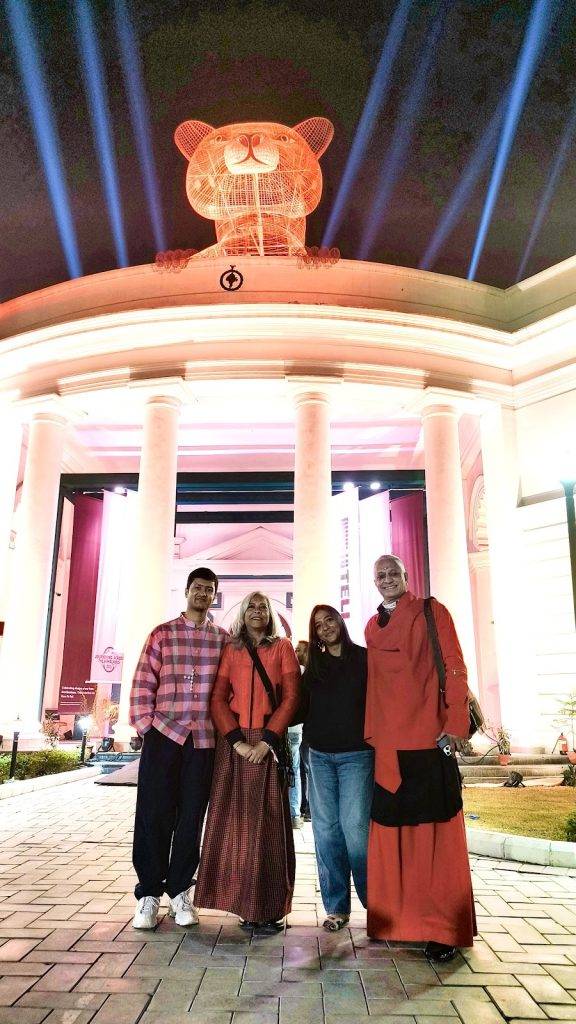
A Royal Enfield social mission, this initiative brought together 50 communities, partners, and artists to showcase the diverse projects and facets of life in the Himalayas.In the bustling heart of Delhi, a quiet yet profound echo from the Eastern Himalayas resonated within the walls of Travancore House.
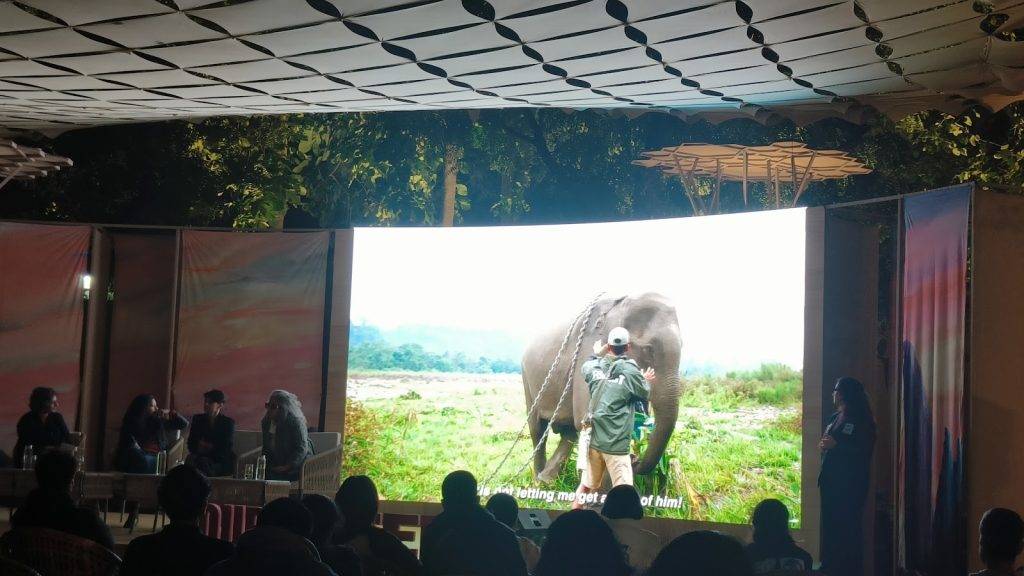
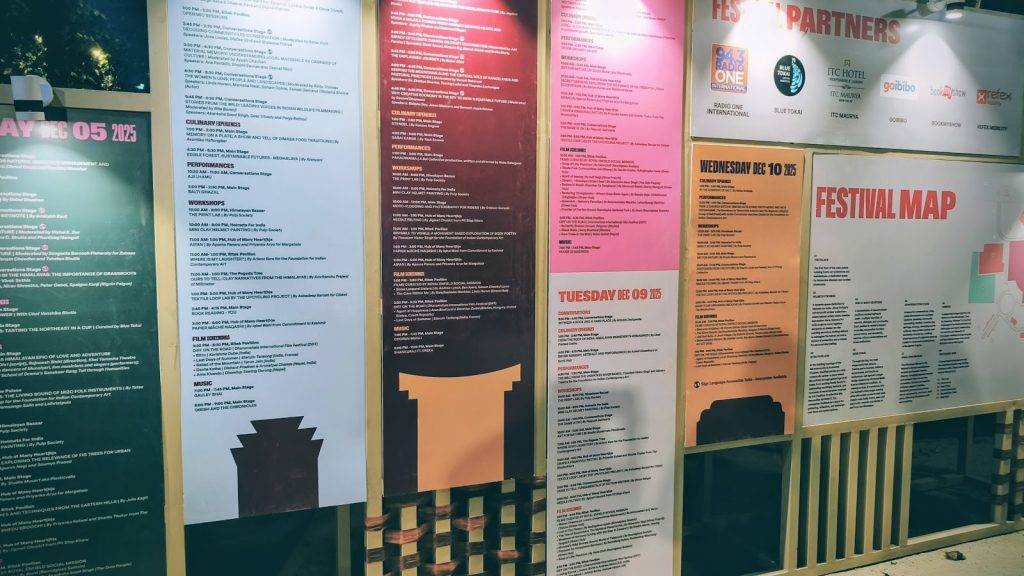
This was the “Journeying Across The Himalayas” festival, a vibrant and multidisciplinary celebration of the stories, traditions, and living heritage of the Himalayan region. With the theme “Ours to Tell,” the festival beckoned visitors to look at the Himalayas as a living archive of stories, identities, and traditions, reclaimed and retold by those to whom they belong.
The festival spanned art, music, dance, theatre, culinary journeys, and conversations, bringing together travellers and communities through a rich tapestry of installations, exhibitions, and experiences.
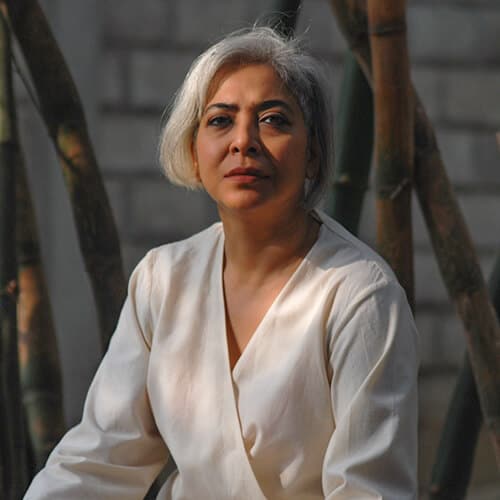
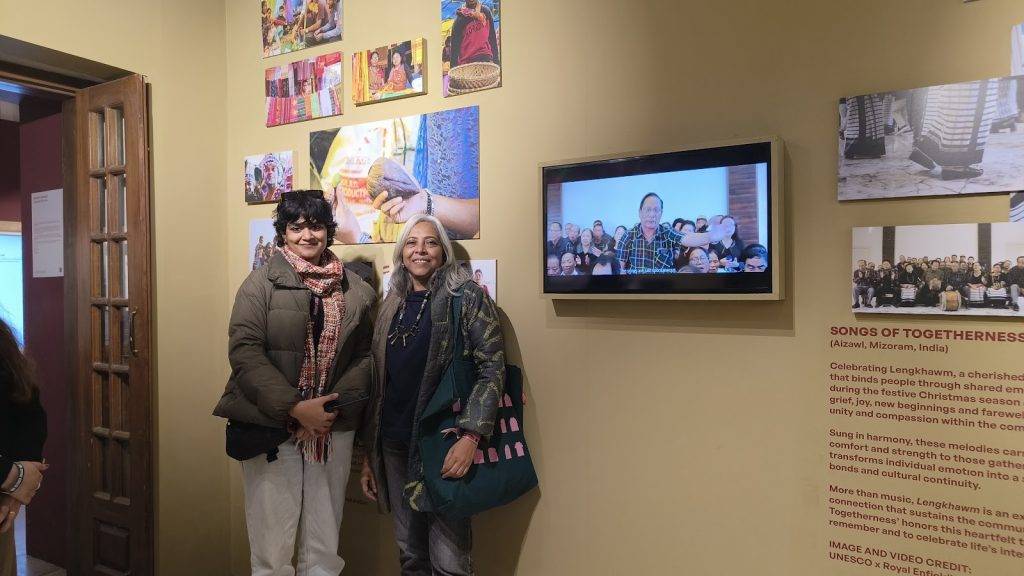
At the heart of this cultural confluence was the “Echoes of the East” exhibition, an immersive journey into the intangible cultural heritage of Northeast India. Curated by me, the founder of Curtain Call Adventures, the exhibition was conceived as a “living archive,” a sensory journey that centered the unheard, untranscribed, and unseen traditions that are deeply woven into the fabric of Himalayan life. It was a space to listen, witness, and reflect on the resilience of these traditions in the face of modern challenges.
The exhibition was thoughtfully structured into three interwoven zones: “Wind Song,” “It’s a Wrap,” and “Memory Keepers.” Each zone acted as a sensory “echo,” a resonance of lived knowledge passed down through generations, through voice, thread, and land.
Wind Song: Tongues and Tunes of the Eastern HillsThe first zone,
“Wind Song,” was an intimate audio room that immediately transported visitors to the heart of the Eastern Himalayas. It was a space dedicated to the endangered languages, folk songs, chants, and lullabies that form the oral heritage of the region.
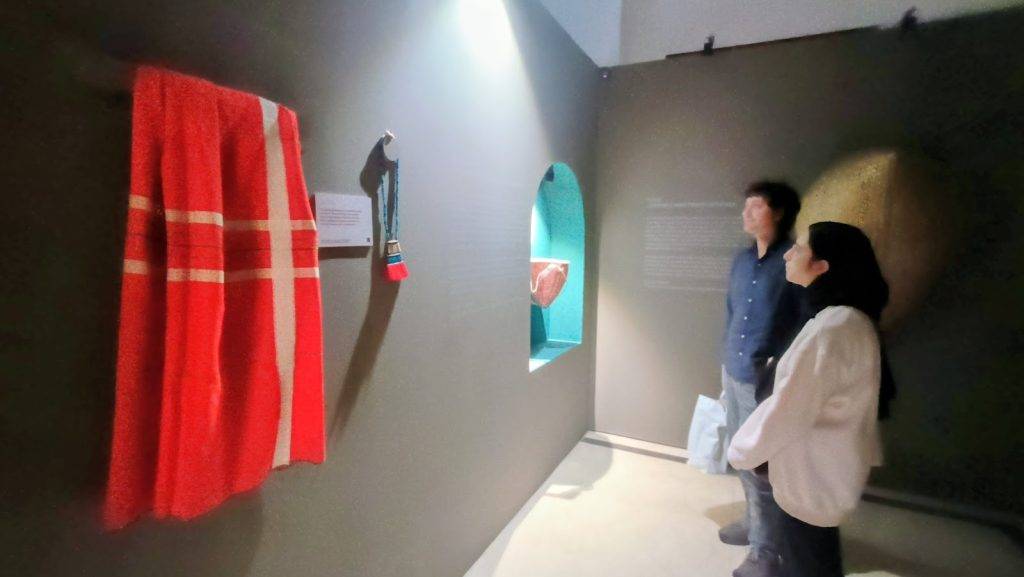
Here, one could hear the fragile yet vital Hrusso Aka language, spoken by fewer than 4,000 people in Arunachal Pradesh, a language that holds invaluable knowledge of the environment and community life.
The haunting melody of the Lepcha Puntong Pulit flute, a bamboo instrument from Sikkim used to mark the Dzo Maal festival, filled the air, its notes echoing the natural world.
Visitors could also listen to the unique Khasi tradition of Jingrwai Lawbei, or whistled names, where mothers compose melodies for their children, creating a lifelong sound signature of love and identity.
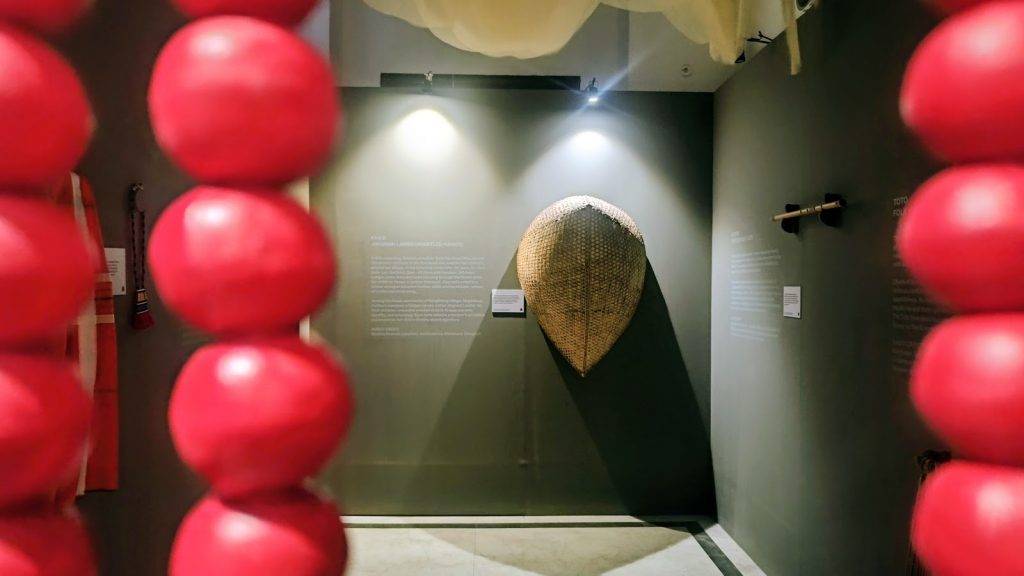
A folk song from Totopara, West Bengal, recounts the legend of Tunthungkamu, the sacred Black-necked Crane of the Toto Community, categorized by the government of India as a vulnerable tribal group.
Chanting by an Adi Miri (shaman) from Arunachal Pradesh, the chant invokes Donyi-Polo — the Sun and Moon deities who embody truth, balance, and cosmic order.
It’s a Wrap: Drapes, Layers, and Living Textiles
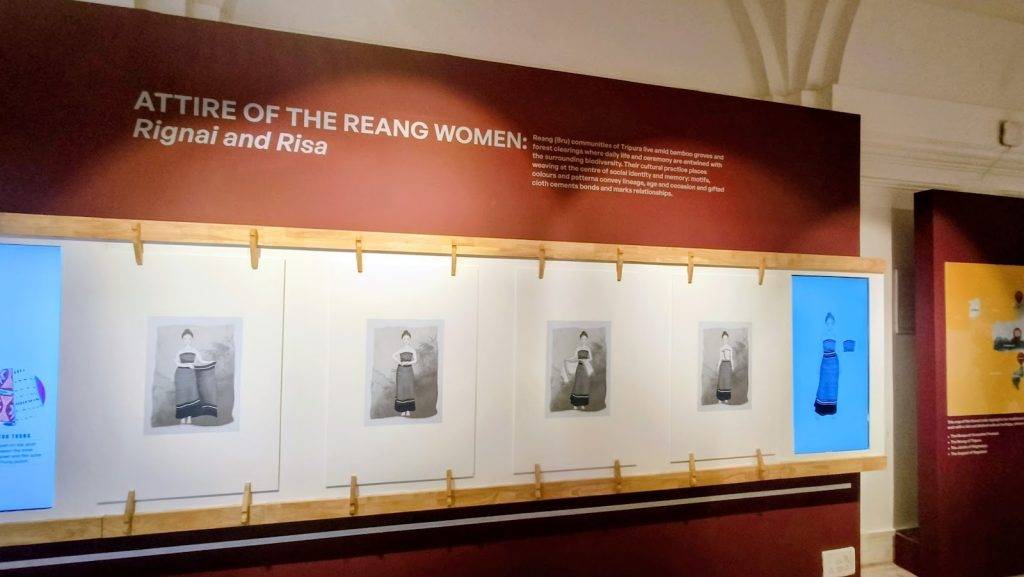
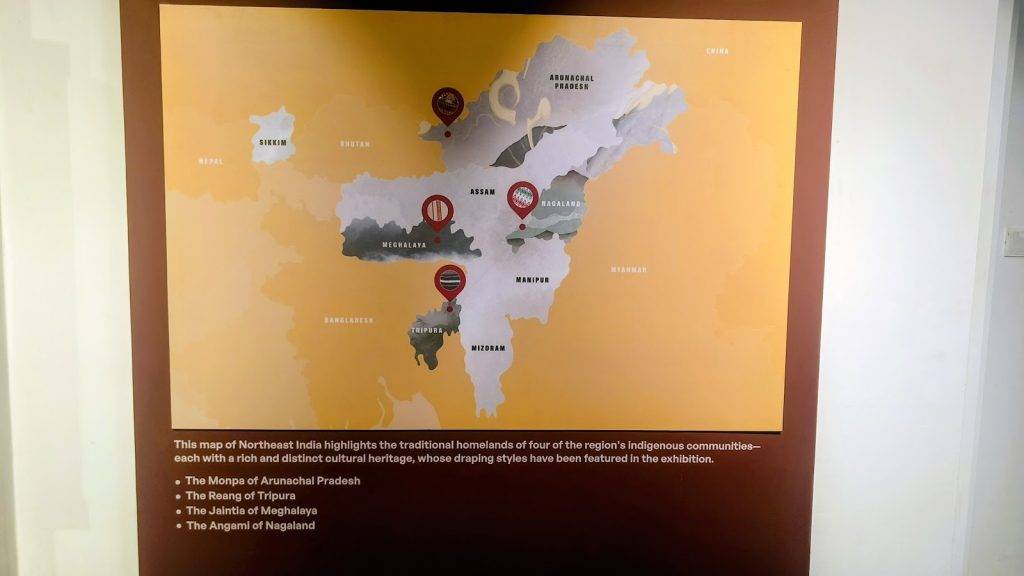
Moving from the auditory to the tactile, the “It’s a Wrap” zone explored how clothing in the Himalayan and Northeastern landscapes transcends mere function to become a living expression of identity, artistry, and adaptation. The exhibition showcased four distinct traditions of wrapping and layering, each a testament to the ingenuity and grace of the weavers.
From the insulated layers of the Monpa women of Arunachal Pradesh, echoing Tibetan Buddhist aesthetics, to the breathable weaves of the Reang women of Tripura, every fold and drape told a story. The Angami men’s Lohe shawl, a “Cloth of Honour” from Nagaland, spoke of valor and status, while the unstitched elegance of the Jaintia women’s Jainsem from Meghalaya reflected the matrilineal heritage of the community. These garments were not just cloth; they were memory, woven with the threads of history, belief, and environment.
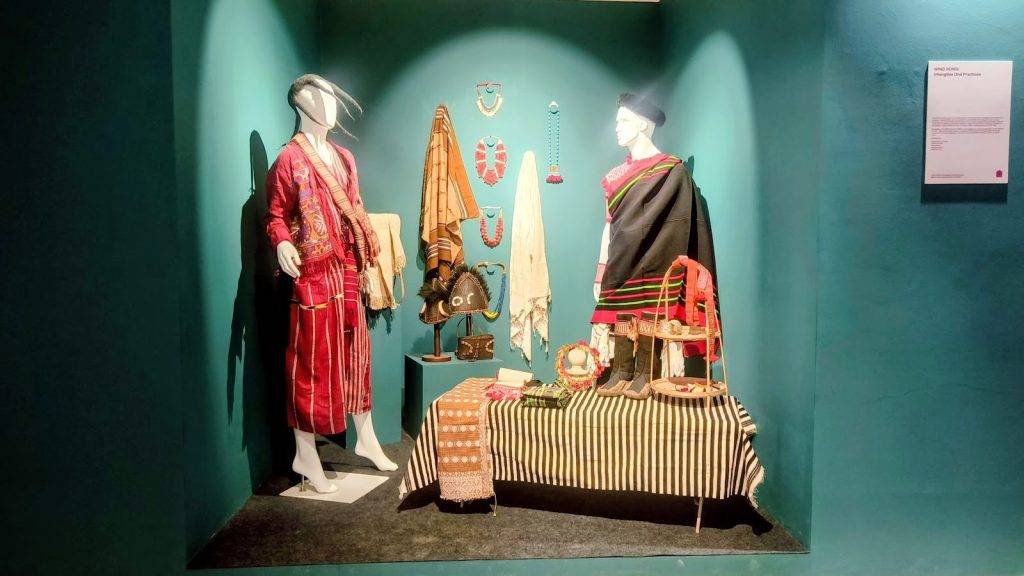
Memory Keepers: Living with the Land,
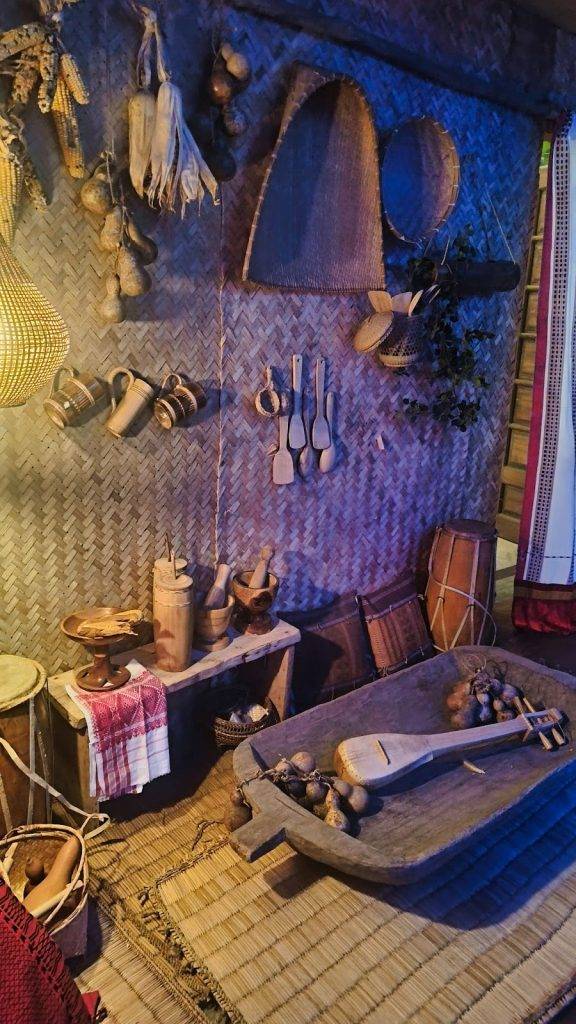
“Memory Keepers,” delved into the deep, intrinsic connection between the communities and their land. It was a celebration of the agrarian intangible traditions that express a profound harmony with nature. The zone was a vibrant collage of harvest festivals, barter systems, shamanistic rituals, and nature worship.
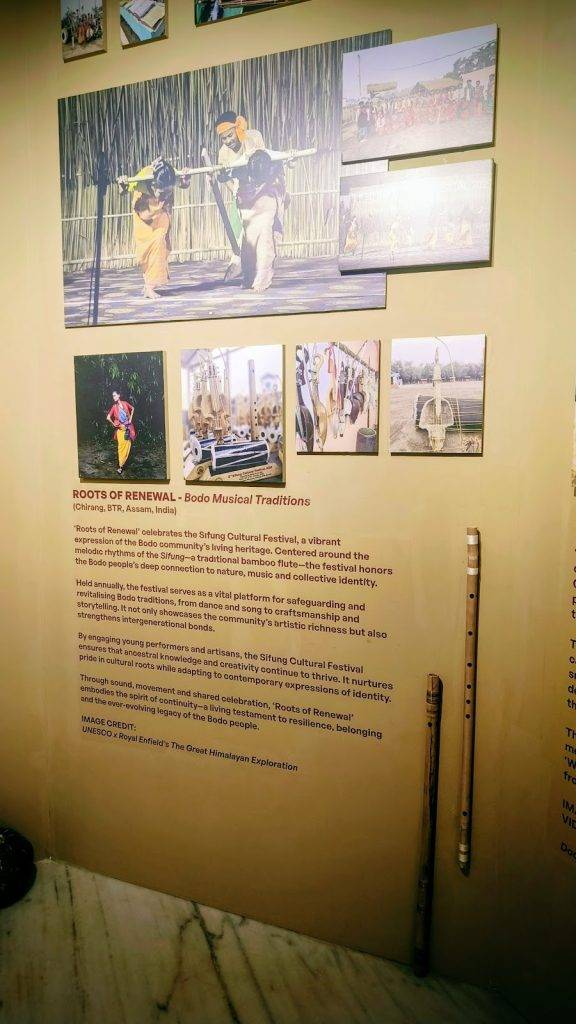
Visitors could witness the spectacle of the Heikru Hidongba, the Meitei community’s boat race in Manipur, a vibrant expression of faith and devotion. The ancient Jonbeel Mela, a barter fair in Assam where hill and plains communities exchange goods, showcased a system of trade built on trust and reciprocity. The exhibition also highlighted the Lengkhawm, a cherished singing tradition of the Zo community, the Mopin dance of the Galo tribe in Arunachal Pradesh, the sacred healing rituals of the Lepcha Muns, the Sifung Cultural Festival of the Bodo community, and the vibrant Wangala Festival of the Garo community. Each of these traditions, captured in photographs, videos, and artifacts, was a testament to a culture that thrives by honoring its environment.
“Echoes of the East” was a powerful and moving component of the larger “Journeying Across The Himalayas” festival. It stood alongside other compelling exhibitions like “Hub of Many Heart(h)s,” which explored conservation and responsible tourism, and “The Himalayan Knot: A Journey Through Pashmina,” which delved into the intersection of the fabric with Jamdani weaving techniques. The festival was a holistic experience, where visitors could savor authentic Himalayan flavors at ‘Thap,’ be captivated by musical performances from across the mountains, from Balti Ghazals to the folk-fusion of The Pandavaas, and delve into the everyday lives of Himalayan communities through curated film screenings and the Himalayan Bazaar.
Ultimately, the festival was a profound reminder of the rich cultural tapestry of the Himalayas. It was a call to listen to the stories the mountains have to tell, to appreciate the diversity that enriches our world, and to recognize the urgency of preserving these traditions. As visitors left Travancore House, they carried with them not just the memory of beautiful objects and sounds, but the enduring echoes of the East – a testament to the enduring spirit of the Himalayan communities and their stories, which are, as the event so aptly declared, “Ours to Tell.”